By 2026, the boundary between social media and search engines has effectively vanished. Data from late 2025 indicates that over 55% of Gen Z and Alpha consumers prefer TikTok and YouTube Shorts over Google for "how-to" queries and product discovery. This shift has birthed a new discipline: Vertical Video SEO.
Optimizing short-form video is no longer just about catching a trend or using a popular song. It is about technical metadata, semantic relevance, and understanding how Generative Engine Optimization (GEO) influences which videos appear in the "AI Overviews" of search results. To rank in 2026, you must treat your 60-second clip with the same analytical rigor as a 3,000-word whitepaper.
The Mechanics of Vertical Search Engines
To optimize effectively, we first have to understand how TikTok and Google (for YouTube Shorts) parse video content. Unlike traditional web SEO, which relies heavily on backlinks and HTML tags, short-form SEO is multi-modal. The algorithms use:
- Natural Language Processing (NLP): Analyzing the transcript of what is said in the video.
- Optical Character Recognition (OCR): Reading the text overlays and captions appearing on-screen.
- Computer Vision: Identifying objects, environments, and even brand logos within the frames.
- User Behavior Signals: Specifically, the "Search-to-Watch" ratio and the "Re-watch Rate."

Keyword Intelligence: Moving Beyond Guesswork
In 2026, keyword stuffing is penalized by sophisticated AI filters. Instead, successful creators use Entity-Based SEO. This means identifying the "entities" (people, places, things, or concepts) that relate to your topic.
1. Mining the Search Bar for Intent
The most accurate data source for TikTok SEO is the TikTok search bar itself. When you type a seed keyword, the "Others searched for" section provides a real-time map of user intent. These aren't just keywords; they are the specific pain points your video needs to solve.
2. YouTube Studio Research Tab
For YouTube Shorts, the "Research" tab in Analytics reveals "Content Gaps." These are search terms that have high volume but low-quality video results. Mapping your Shorts content to these gaps is the fastest way to achieve "Suggested Video" status.
3. Cross-Platform Parity
A technical mistake many make is using the same keywords for TikTok and Shorts. While TikTok users search for "hacks" and "aesthetic," YouTube users tend to use more functional language like "tutorial," "review," and "comparison." Your SEO strategy must be bifurcated to match these linguistic nuances.
The Technical Stack: Captions, OCR, and Metadata
If the algorithm cannot "read" your video, it cannot rank it. Technical optimization involves four distinct layers of data.
Layer 1: Speech-to-Text Optimization
The script you read is your primary SEO asset. You must mention your target keyword within the first 3 seconds. However, avoid "mechanical" speech. Modern NLP can detect forced keyword mentions. Instead, use "Latent Semantic Indexing" (LSI) terms: words naturally related to your topic: to build a web of relevance.
Layer 2: On-Screen Text (OCR)
Search engines prioritize videos where the on-screen text reinforces the audio. If you are talking about "Sustainable Gardening," having that phrase as a H1-style text overlay in the first frame tells the algorithm exactly how to categorize the content.
Layer 3: The Metadata File
Before uploading, rename your raw video file. Moving from IMG_9402.mov to how-to-optimize-ai-seo-2026.mp4 provides an additional crawlable signal to the platform’s backend database.
Layer 4: Automated Closed Captions
Always use the platform’s native captioning tools. While third-party apps (like CapCut or Submagic) are great for aesthetics, the native captions on TikTok and YouTube are directly indexed as text files. Ensure you manually edit these for 100% accuracy; a typo in your keyword within the captions can break the search connection.

Platform-Specific Optimization Frameworks
TikTok SEO: The "High-Context" Strategy
TikTok’s algorithm favors "High-Context" videos. This means your description shouldn't just be a witty one-liner.
- The 500-Character Description: In 2026, TikTok allows up to 4,000 characters, but the "sweet spot" for SEO remains the first 500. Write a blog-style summary that includes 3-4 primary keywords.
- Hashtag Clusters: Use the 3×3 rule. Three broad hashtags (e.g., #Marketing), three niche hashtags (#ShortFormSEO), and three branded or specific hashtags (#SmallBizTips2026).
- Location Tagging: For local businesses, the location tag is a non-negotiable SEO signal. TikTok’s local feed is now a direct competitor to Google Maps.
YouTube Shorts SEO: The "Google Bridge"
YouTube Shorts have a unique advantage: they appear in Google Search’s "Video Carousel."
- The Title is the H1: Treat your Shorts title like a blog post headline. Use "Power Words" and include the year (2026) to signal freshness.
- The Description Box: Unlike TikTok, YouTube's description box is heavily indexed by Google’s main search engine. Use the first two lines to describe the video's value proposition using "Long-Tail Keywords."
- The #Shorts Tag: While the algorithm is smarter now, including #Shorts in the title or description is still the "handshake" that ensures the video is processed in the Shorts player rather than the standard VOD player.
The Impact of AI and GEO (Generative Engine Optimization)
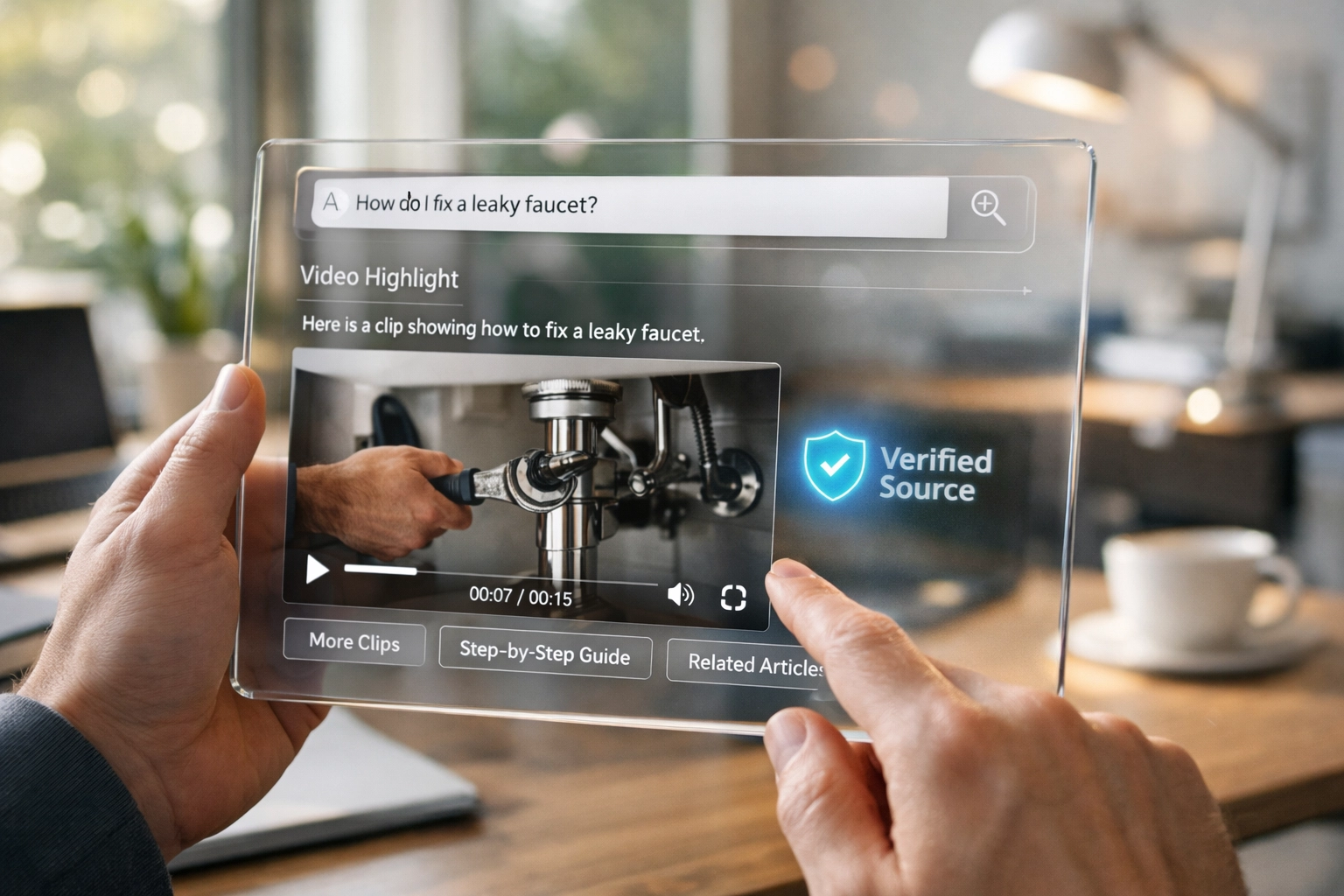
We are entering the era of GEO. AI search engines like Perplexity, SearchGPT, and Google’s Gemini-powered search now summarize video content for users. If a user asks, "How do I fix a leaky faucet?" the AI may pull a specific 15-second segment from a YouTube Short.
To be the video the AI chooses, you must utilize Timestamp Logic. Even in a 60-second video, clear visual transitions between "The Problem," "The Solution," and "The Result" allow AI agents to "clip" and "cite" your video as a source. This is the new frontier of backlinking.
High-Retention Editing as an SEO Signal
Is retention really SEO? Yes. In 2026, "Dwell Time" is a primary ranking factor. If users search for a term, click your video, and leave after 2 seconds (a "bounce"), the algorithm learns that your video is not a relevant result for that keyword.
The "Pattern Interrupt" Strategy
To maintain the high retention required for search dominance:
- The Visual Hook: A change in camera angle or a significant visual movement every 2-3 seconds.
- The Information Gap: Start with a question or a bold claim that is only resolved at the end.
- The Micro-CTA: Instead of asking for a follow at the end, ask a specific question in the middle to trigger comments. Comments are a "Velocity Signal" that tells the search engine your content is engaging.
Metrics That Matter (And Those That Don't)
Stop looking at "Likes" as your primary SEO metric. To understand if your SEO is working, look at these three technical data points:
- Traffic Source – Search: On TikTok and YouTube, check what percentage of your views come from "Search." If it is above 15%, your SEO strategy is successfully bypassing the "For You" feed lottery and building sustainable, long-term traffic.
- Watched Full Video %: A search-optimized video should ideally have a 60%+ completion rate for videos under 30 seconds.
- Top Search Queries: Both platforms now show you exactly what terms people typed to find your video. If these terms don't match your intended keywords, your metadata is confusing the algorithm.

Step-by-Step Optimization Workflow for 2026
- Keyword Research: Use TikTok Creative Center to find "High Opportunity" keywords with low competition.
- Scripting: Write a script that mentions the keyword in the first 3 seconds and twice more throughout.
- Filming: Ensure high contrast and clear audio. Use a 9:16 aspect ratio.
- Editing: Add keyword-rich text overlays. Export the file with a keyword-optimized name.
- Uploading: Use native captions. Write a 300-word keyword-rich description.
- Engagement: Reply to comments containing your keywords within the first hour to increase "Topic Authority."
Conclusion: The Future of Search is Vertical
The shift from text-based search to video-based search represents the most significant change in digital marketing since the invention of the smartphone. By 2026, "searching" is no longer about reading a list of links; it’s about watching a curated feed of expert-led, short-form insights.
If you aren't optimizing your TikToks and Shorts for search, you are essentially building a library in the dark. By focusing on technical metadata, OCR indexing, and AI-friendly structures, you ensure that your content doesn't just "go viral" for a day, but continues to provide value and generate leads for years to come.
About the Author: Malibongwe Gcwabaza
Malibongwe Gcwabaza is the CEO of blog and youtube, a premier digital strategy firm specializing in the intersection of AI, video content, and search algorithms. With over a decade of experience in the evolving landscape of digital media, Malibongwe has helped hundreds of brands transition from legacy SEO to modern, multi-modal discovery strategies. He is a frequent speaker at global tech conferences and a passionate advocate for democratizing high-level digital marketing insights for creators and small businesses alike. Under his leadership, blog and youtube has become a thought leader in Generative Engine Optimization (GEO) and high-impact vertical video production.
About the Author


