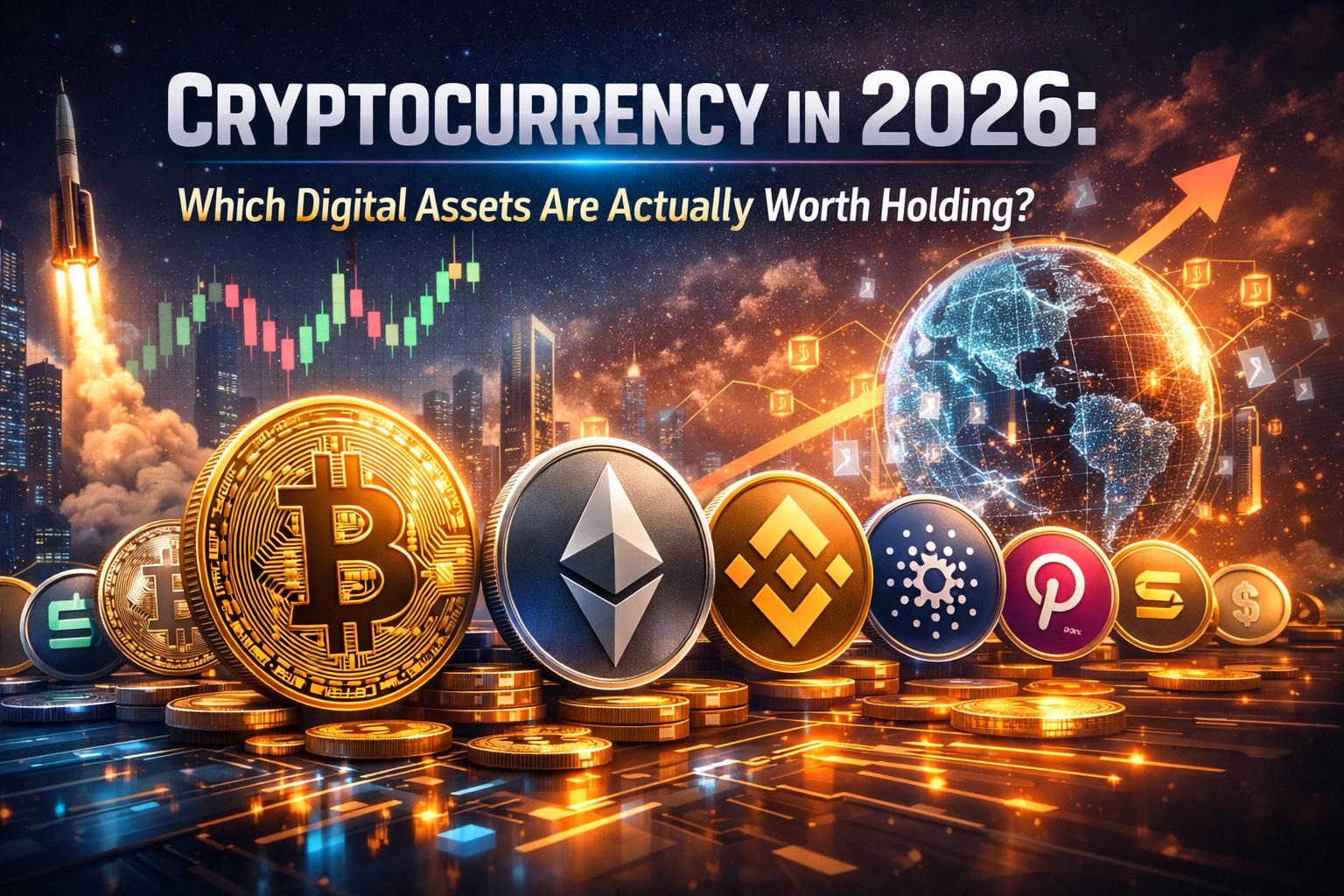
As we move through the first quarter of 2026, the cryptocurrency market has fundamentally decoupled from the wild, speculative "moon-shot" era of the early 2020s. Today, the conversation has shifted from "when Lambo?" to "which protocol settles the most value?"
In 2026, the market is defined by institutional absorption. With over 100 crypto-linked ETFs now active in the U.S. and global markets, the volatility that once defined the space has been dampened by the steady, systematic buying of pension funds and corporate treasuries. However, this maturation has made picking winners harder. You can no longer throw a dart at a list of top 100 coins and expect a 10x return.
If you're looking to build or rebalance a portfolio today, you need to understand the technical moats and economic flywheels of the assets you hold. Here is an in-depth analysis of the digital assets worth holding in 2026.
The Foundation: Bitcoin (BTC) as the Global Settlement Layer
As of March 2026, Bitcoin remains the undisputed king, trading around $65,750 with a market capitalization of $1.31 trillion. But its role has changed. It is no longer a "tech play"; it is a global, neutral settlement layer and the primary collateral for the digital economy.
The most significant data point for BTC holders in 2026 is the ETF Absorption Rate. Institutional demand is currently outpacing new issuance (even after the 2024 halving) by a factor of nearly 2:1. When asset managers like BlackRock and Fidelity buy, they rarely sell with the frequency of retail "paper hands." This creates a supply-side liquidity crunch that provides a structural floor for the price.
Why it’s worth holding:
- Institutional Integration: Bitcoin is now a standard line item in diversified 60/40 portfolios.
- L2 Expansion: The development of the BitVM and various Layer-2 solutions on Bitcoin is finally bringing smart contract utility to the most secure network in existence without compromising its base-layer decentralization.
The Utility Powerhouse: Ethereum (ETH) and the "Glamsterdam" Upgrade
Ethereum continues to be the most active developer ecosystem. While critics often point to its fluctuating price: currently sitting near $1,940: the underlying metrics tell a story of dominance.
The mid-2026 "Glamsterdam" upgrade is the current technical focal point. This upgrade aims to push Ethereum's execution environment to handle 10,000 transactions per second (TPS) across its integrated Layer-2 ecosystem (Arbitrum, Optimism, and Base). By optimizing data availability and refining the "blob" space introduced in earlier versions, Ethereum is cementing itself as the primary settlement layer for decentralized finance (DeFi) and tokenized real-world assets (RWAs).
Technical Data Point: Ethereum’s fee-burn mechanism (EIP-1559) combined with high staking participation (currently over 30% of the total supply) has turned ETH into a "triple-point" asset: a store of value, a capital asset (via staking yield), and a consumable commodity (gas).
High-Performance Contenders: Solana (SOL) and the "Firedancer" Reality
In 2025, Solana proved the skeptics wrong by becoming the most-used blockchain for consumer-facing applications. In early 2026, it maintains this lead. The launch of the Firedancer independent validator client has effectively eliminated the network outages that plagued Solana’s early years, providing a theoretical throughput of 1 million TPS.
Solana’s strength lies in its vertical integration. Because it doesn't rely on fragmented Layer-2s for scaling, the user experience is seamless. This has made it the home for:
- DePIN (Decentralized Physical Infrastructure Networks): Projects like Helium and Hivemapper leverage Solana’s low costs to coordinate real-world hardware.
- Payments: Major payment processors have now fully integrated Solana for USDC settlements, bypassing the high costs of traditional rails.
Strategic Holding Note: Solana is no longer an "Ethereum killer." It is a specialized high-frequency execution environment that captures the retail and physical-infrastructure markets.

The Rise of Agentic AI Assets: Bittensor (TAO)
A new category that has matured significantly by 2026 is the intersection of AI and Blockchain. Bittensor (TAO) is the standout asset here. Unlike generic "AI coins" that are just wrappers for marketing, Bittensor provides a decentralized protocol for training and sharing machine learning models.
In a world where centralized AI (OpenAI, Google) is increasingly restricted by censorship and geographic barriers, Bittensor offers a permissionless alternative. TAO tokens are used to incentivize "miners" who provide compute and "validators" who rank the quality of the AI outputs.
Hold value: As AI agents begin to conduct their own transactions on-chain in 2026, holding the tokens that power the underlying intelligence infrastructure is a high-conviction move for technical investors.
Real-World Assets (RWA) and the Avalanche (AVAX) Subnets
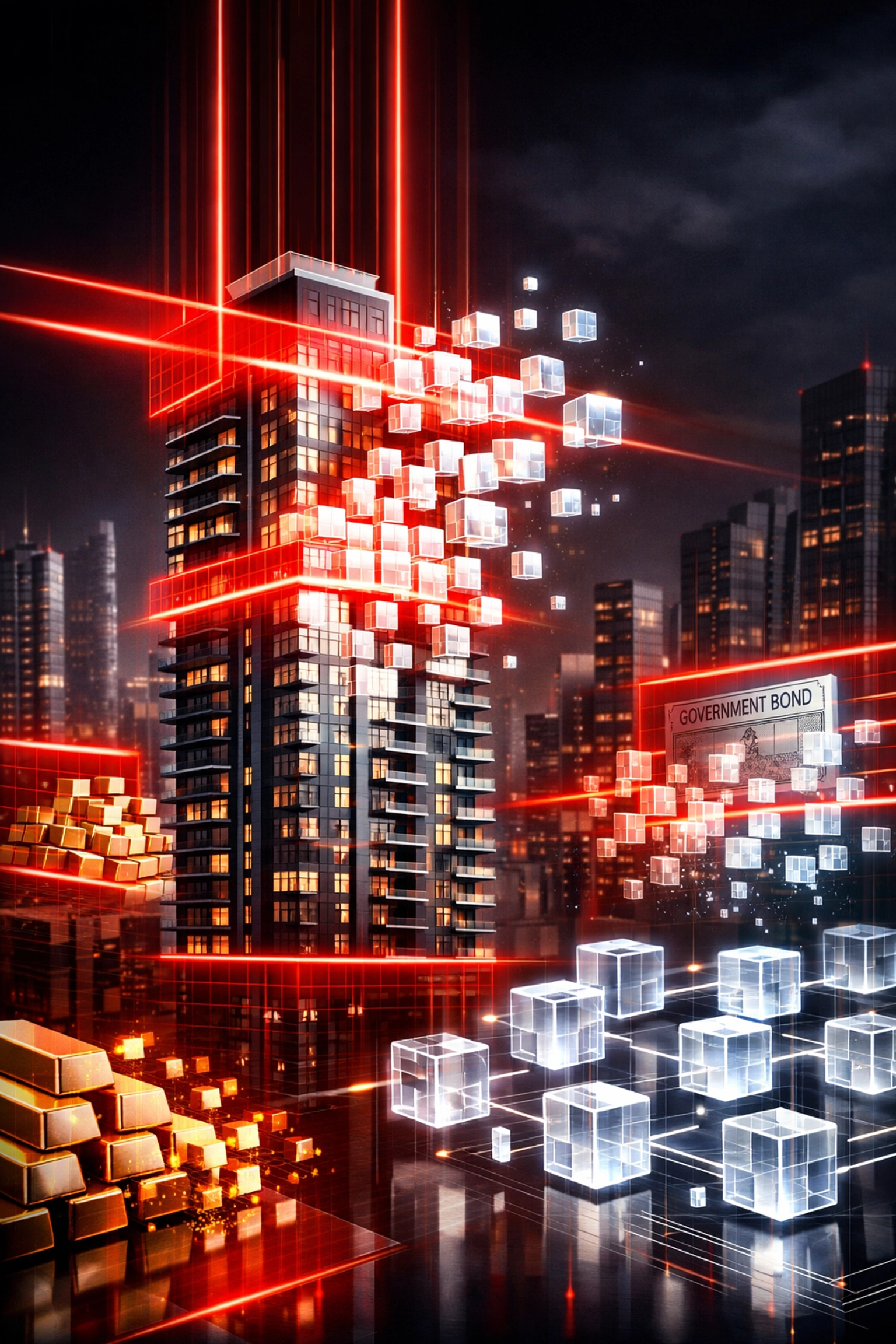
If 2024 was the year of the RWA pilot, 2026 is the year of RWA scale. Avalanche has carved out a massive niche in the institutional space through its "Subnet" architecture. These are customizable, sovereign blockchains that benefit from the security of the main Avalanche network but can implement their own KYC/AML rules.
Major global banks are now using Avalanche Subnets to tokenize private equity, real estate, and government bonds.
- Asset: AVAX
- The Moat: The "Evergreen" subnets specifically designed for institutional compliance.
- Current State: The SEC's recent stance on crypto ETFs (including pending AVAX applications) has turned Avalanche into a favorite for those betting on the "Wall Street-ification" of crypto.
Specialized Liquidity: Hyperliquid (HYPE) and On-Chain Derivatives
One of the most impressive technical shifts in 2026 is the migration of high-frequency trading from centralized exchanges (like Binance or Coinbase) to on-chain perpetual platforms. Hyperliquid has emerged as the leader in this space.
By building its own L1 optimized specifically for a transparent, on-chain order book, Hyperliquid offers the speed of a centralized exchange with the self-custody of DeFi. In a market where transparency is now a regulatory requirement, Hyperliquid’s HYPE token captures the value of the massive trading volumes moving away from opaque centralized entities.
Stablecoins: The Silent Giant
While not "investments" in the sense of capital appreciation, USDT (Tether) and USDC (Circle) have become the backbone of global commerce in 2026.
On the Tron (TRX) network, USDT volume continues to dominate emerging markets in Southeast Asia and Latin America. Tron has effectively become the "Visa of the Unbanked." For an investor, this provides a fundamental reason to hold TRX, as the demand for energy to move these stablecoins creates a constant buy-pressure and burn-rate for the native token.
Why "Altcoin Seasons" Look Different in 2026
In previous cycles, Bitcoin would lead, and then everything else would pump regardless of quality. In 2026, this is no longer the case. We are seeing a "Selection Era."
Data shows that while Bitcoin and Solana might be up 50%, older "legacy" alts with no clear utility or active developer base are essentially flat. To be worth holding in 2026, an asset must pass the Three-Filter Test:
- Revenue Generation: Does the protocol collect fees?
- Token Sink: Is there a reason for people to hold the token beyond speculation (e.g., staking, governance, gas)?
- Institutional Viability: Could a regulated fund hold this asset without triggering a compliance nightmare?
Risks to Consider in 2026
Despite the maturity of the market, risks remain.
- Quantum Concerns: While still early, the conversation around quantum-resistant cryptography is beginning to influence long-term "HODL" strategies.
- Hyper-Regulation: While ETFs provide a bridge, the "self-custody" debate continues to rage in legislative bodies.
- L2 Fragmentation: For Ethereum, the risk is that too many Layer-2s dilute liquidity, making the user experience clunky compared to Solana's monolithic approach.
Conclusion: Building Your 2026 Portfolio
If I were building a portfolio today, it would follow a "Core-Satellite" structure:
- The Core (60%): A 50/50 split between BTC and ETH. These are your "Blue Chips" that provide exposure to the total growth of the asset class.
- The Growth Engine (25%): Heavy weight in SOL and AVAX. These represent the "Infrastructure" play for consumer apps and institutional tokenization.
- The High-Conviction Satellites (15%): Smaller positions in TAO (AI), HYPE (On-chain trading), and perhaps TRX for its role in global stablecoin payments.
The 2026 market rewards patience and technical understanding. The days of "easy money" are over, but the era of "sustainable wealth" through digital assets has just begun.
About the Author: Malibongwe Gcwabaza
Malibongwe Gcwabaza is the CEO of blog and youtube and a seasoned veteran in the fintech and blockchain space. With over a decade of experience navigating market cycles, Malibongwe focuses on identifying the intersection of technical innovation and macroeconomic trends. He is a frequent speaker at global crypto summits and a proponent of decentralized financial systems as a tool for economic empowerment in emerging markets. When he’s not analyzing on-chain data, he’s exploring the latest in AI-driven content creation and digital media.
About the Author


