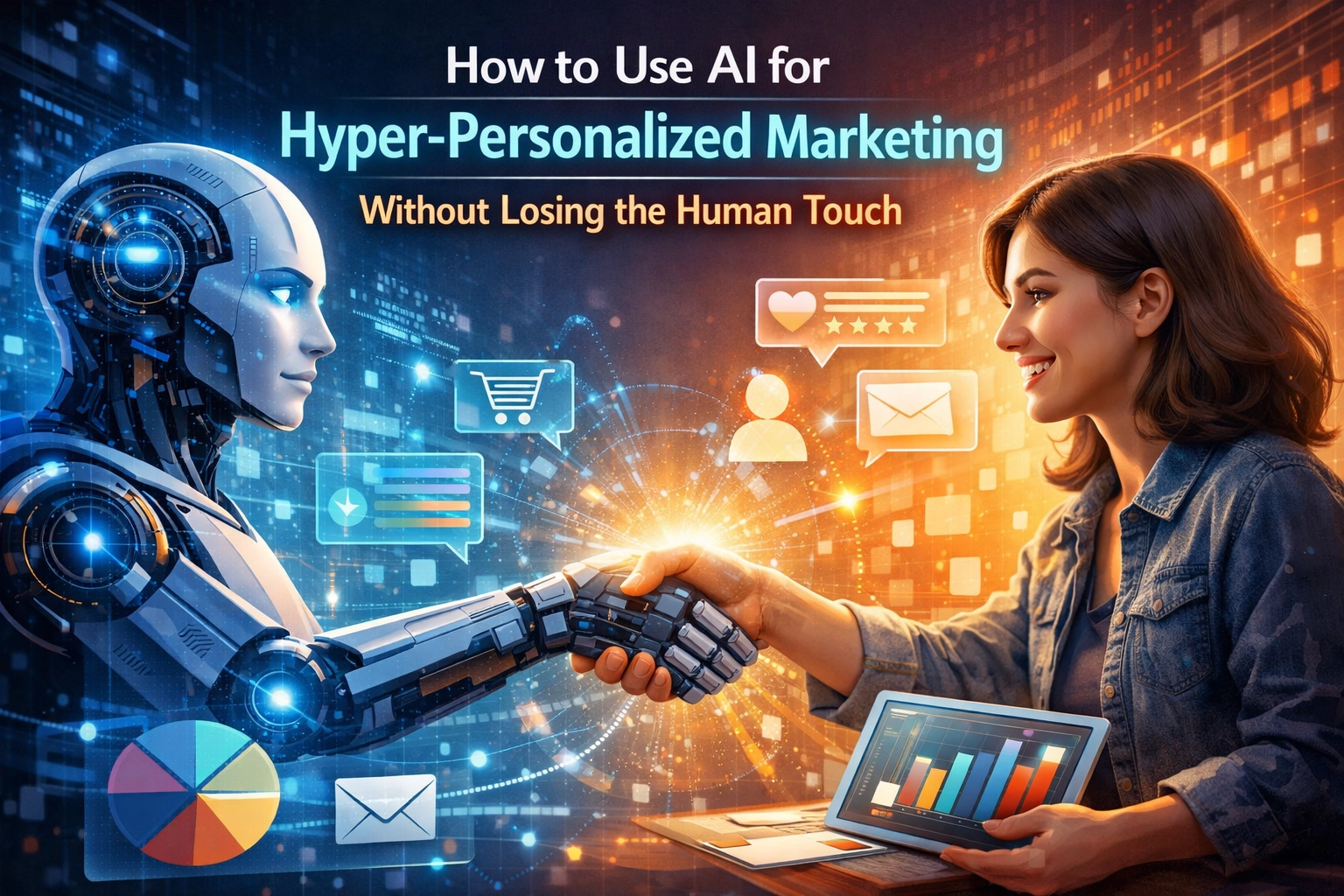
In 2026, the marketing landscape has shifted from "mass-market" to "market-of-one." We have moved past the era where basic segmentation: grouping users by age or location: sufficed. Today, consumers demand hyper-personalization: an experience where every touchpoint feels specifically curated for their current context, emotional state, and immediate needs.
However, as we lean deeper into algorithmic decision-making, a significant risk emerges: the "uncanny valley" of marketing. This is the point where automation becomes so pervasive that it feels sterile, invasive, or robotic, ultimately eroding the very brand loyalty it was meant to build. To succeed today, CMOs and digital marketers must balance the raw computational power of Generative AI and Predictive Analytics with the irreplaceable nuances of human empathy and creative intuition.
The Architecture of Hyper-Personalization in 2026
To understand how to maintain a human touch, we must first define the technical foundation of hyper-personalization. Unlike traditional personalization, which relies on historical data and static rules, hyper-personalization utilizes real-time data and Large Language Models (LLMs) to dynamically adjust content.
1. Unified Customer Data Platforms (CDPs)
The prerequisite for any AI marketing strategy is a robust CDP. In 2026, these platforms integrate zero-party data (data intentionally shared by consumers) with behavioral signals. By centralizing data from mobile apps, IoT devices, and web interactions, AI can create a "Living Persona" that updates in milliseconds.
2. Predictive Analytics and Propensity Modeling
We no longer react to what a customer did; we predict what they will do next. Using machine learning models like XGBoost or specialized neural networks, brands can calculate a "Propensity Score" for specific actions, such as churning or purchasing a high-ticket item.
3. Retrieval-Augmented Generation (RAG)
For content creation, RAG allows AI to pull from a brand’s unique knowledge base (style guides, past successful campaigns, and specific product technicalities) to ensure that the generated output isn't just generic AI text, but sounds like the brand itself.

Strategy 1: Integrating Emotional Intelligence (EQ) into AI Models
One of the primary reasons AI-driven marketing feels "cold" is the lack of emotional resonance. In 2026, sentiment analysis has evolved into Emotion AI. Instead of just identifying if a customer is "happy" or "angry," modern models can detect frustration, urgency, or skepticism in real-time text and voice interactions.
How to Implement EQ:
- Dynamic Tone Adjustment: Configure your AI agents (chatbots or email generators) to adjust their linguistic style based on the user's input. If a customer is reporting a technical failure, the AI should immediately pivot to a concise, empathetic, and professional tone. If the user is celebrating a milestone, the AI can adopt an enthusiastic and congratulatory style.
- Contextual Saliency: Use AI to identify why a customer is reaching out. If the data shows a customer has been browsing "beginner guides" for three days, the personalized outreach should be educational, not sales-driven. Pushing a "Buy Now" button when a customer is clearly in the "Learning Phase" is a quick way to lose the human connection.
Strategy 2: The "Human-in-the-Loop" (HITL) Framework
Automation should never be "set it and forget it." To maintain a human touch, human intervention is required at critical nodes of the marketing funnel.
High-Stakes Interactions
While AI can handle 90% of routine customer inquiries, high-value clients or complex grievances must be routed to human experts. Use AI as a "Co-pilot" for these humans: providing them with summarized histories and suggested solutions: but allow the human to deliver the final message.
Creative Direction and Brand Guardrails
AI is excellent at optimization but mediocre at original "Big Idea" thinking. Humans should define the creative concept and the "Soul" of the campaign, while AI handles the 10,000 variations of that concept for different micro-segments.
Table: AI vs. Human Roles in Hyper-Personalization
| Task | AI's Role | Human's Role |
|---|---|---|
| Data Analysis | Processing millions of data points for patterns. | Interpreting the "Why" behind the patterns. |
| Content Creation | Generating 1,000 versions of an ad copy. | Setting the brand voice and ethical boundaries. |
| Customer Service | Handling FAQs and logistics. | Resolving complex emotional or unique issues. |
| Strategy | A/B testing and tactical optimization. | Long-term vision and market positioning. |

Strategy 3: Moving from Third-Party Cookies to Zero-Party Intimacy
The death of the third-party cookie has actually helped the "human touch" movement. Why? Because it forces brands to talk to customers instead of spying on them.
Hyper-personalization feels creepy when it uses data the customer didn't know they were giving. It feels helpful when it uses data the customer provided to get a better experience.
Building the "Value Exchange"
To get the data required for deep personalization, you must offer immediate value.
- Interactive Quizzes: Instead of tracking clicks, use an AI-driven "style finder" quiz. The customer provides their preferences, and the AI provides a curated list.
- Preference Centers: Allow users to tell the AI exactly what they want to see. "I only want to hear about sustainable products," or "Don't email me more than once a week."
When the AI respects these human-defined boundaries, it builds trust. Trust is the foundation of any human relationship.
Strategy 4: Avoiding the "Recommendation Loop"
A common technical failure in AI personalization is the "Filter Bubble." If a customer buys a red shirt, the AI shows them nothing but red shirts for the next month. This is robotic and frustrating.
Humans are multifaceted and unpredictable. To keep the human touch, your AI models must include Stochasticity (Randomness).
Implementing "Discovery" Moments
Program your recommendation engines to include "Discovery" items: products or content that are slightly outside the user's predicted profile but aligned with broader brand trends. This mimics the human experience of browsing a physical store and finding something unexpected. It makes the brand feel like it has a personality and a "curated" point of view, rather than just being a mirror of the user's past actions.
Case Study: The 2026 Starbucks "MyBrew" Evolution
Starbucks has long been a leader in AI personalization via their Deep Brew platform. In 2026, they evolved this to include "Contextual Humanization."
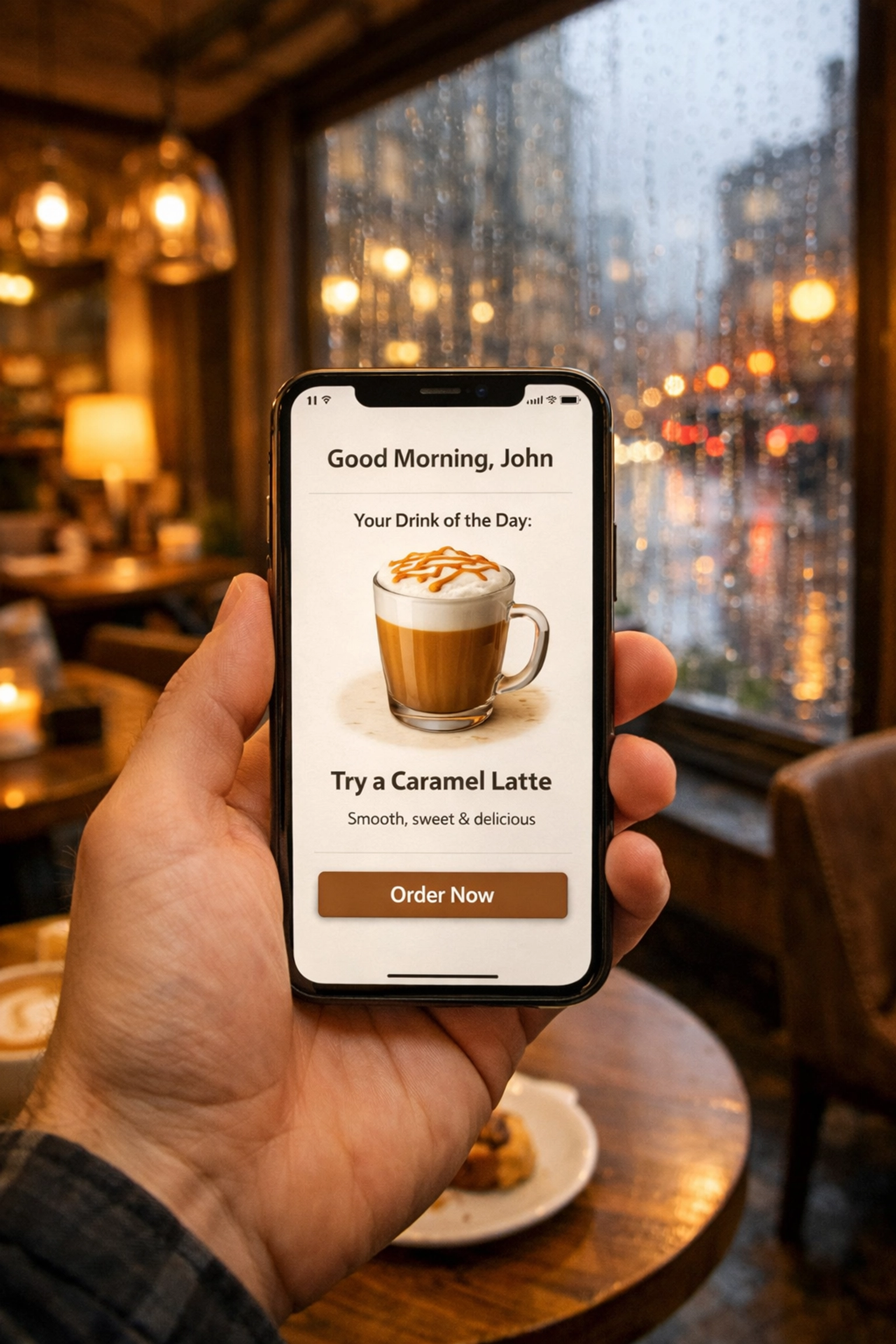
When a user opens the app, the AI doesn't just look at their past orders. It looks at the local weather, the time of day, and even the user's integrated calendar (with permission). If the user has a "Back-to-Back" meeting block on a rainy Tuesday morning, the app suggests a high-caffeine "Efficiency Order" with a one-tap checkout.
However, they kept the human touch by allowing the AI to generate "Barista Notes": short, personalized digital notes that appear on the order confirmation, simulating the handwritten names on cups. These notes are generated by AI but reviewed for "warmth" scores to ensure they don't sound like code.
Ethical AI Governance: The Ultimate Human Touch
Finally, the most "human" thing a brand can do is act ethically. Hyper-personalization requires a vast amount of personal data. Losing the human touch often manifests as a violation of privacy.
Transparency is Key
If a customer asks, "Why am I seeing this ad?", your AI should be able to provide a human-readable explanation. "We’re showing you this because you recently expressed interest in sustainable fashion and we have a new collection that matches your style."
Bias Auditing
AI models can unintentionally learn biases from historical data. A brand that ignores this loses its "humanity" by becoming discriminatory. Regular audits of your personalization algorithms are essential to ensure that your "market-of-one" approach isn't unfairly excluding or targeting specific demographics.
Conclusion: The "Centaur" Marketer
The future of marketing isn't AI-only; it’s the "Centaur" model: the half-human, half-AI approach. By using AI to handle the scale and technical complexity of data, and humans to provide the empathy, ethics, and creative spark, brands can achieve a level of intimacy that was previously impossible.
Hyper-personalization should feel like a conversation with a very smart friend who knows you well: not a surveillance state that predicts your every move. Start by fixing your data architecture, but never stop asking: "Does this message make our customer feel seen, or just watched?"
Author Bio: Malibongwe Gcwabaza
Malibongwe Gcwabaza is the CEO of blog and youtube, a leading digital strategy firm specializing in the intersection of AI technology and human-centric brand growth. With over 15 years of experience in the tech sector, Malibongwe focuses on helping small to medium enterprises leverage cutting-edge automation without sacrificing brand integrity. His philosophy centers on "Simple Excellence": using complex technology to create seamless, human experiences. When he isn't deep in data sets, he’s exploring the latest in video content trends and sustainable business scaling.
About the Author


