The barrier to entry for high-production video has collapsed. In 2026, the distance between a viral concept and a finished, 4K high-fidelity video is no longer measured in weeks of editing or thousands of dollars in gear: it is measured in the quality of your prompt and the efficiency of your AI model.
Viral content on TikTok, Reels, and YouTube Shorts relies on three pillars: the hook, the visual retention, and the "uncanny" or "spectacular" factor. Traditional editing tools like Premiere Pro are becoming secondary to generative video engines that can simulate complex physics, photorealistic human expressions, and surreal visual effects from a single line of text.
To dominate social feeds today, you need to understand the technical nuances of these tools. This isn't just about "making a video"; it’s about leveraging latent diffusion models and temporal consistency to create content that stops the scroll.
1. Runway (Gen-3 Alpha & Beyond): The Professional Standard
Runway has long been the industry leader, and by 2026, their Gen-3 Alpha and subsequent iterations have set the benchmark for creative control. Unlike "one-click" generators, Runway offers a suite of technical tools: most notably the Multi-Motion Brush: that allow creators to isolate specific areas of an image and dictate their movement vectors.
Technical Deep Dive:
Runway excels in Temporal Consistency. In AI video, "flicker" occurs when the model loses track of a subject’s form between frames. Runway’s architecture uses advanced attention mechanisms to ensure that if a character is wearing a red hat in frame one, that hat doesn't morph into a bird by frame sixty.
Why it goes viral:
Runway is the "director’s tool." It’s best for high-concept storytelling where you need specific camera movements (pans, tilts, zooms) that feel intentional rather than randomized. Use it for cinematic "Day in the Life" parodies or hyper-real product showcases that look like $50,000 commercials.
2. Kling AI: The King of Photorealistic Human Physics
Coming out of the massive advancements in Chinese AI research, Kling AI has become the go-to for creators who need long-form (up to 2-minute) AI generations that respect the laws of physics.
The Competitive Edge:
Kling’s model architecture is built on a 3D Spatio-Temporal Joint Attention mechanism. This allows the AI to understand how human joints move and how light reflects off skin in a 3D space. While other models might struggle with "spaghetti eating" or complex hand movements, Kling handles these with eerie precision.
Viral Application:
Social media thrives on "Did that actually happen?" content. Kling is perfect for creating photorealistic "impossible" stunts or historical recreations. Its ability to generate high-quality lip-syncing natively makes it a powerhouse for meme accounts that want to put famous figures in absurd, hyper-real situations.
3. Luma Dream Machine: Unmatched Speed and Cinematic Depth
Luma Labs pivoted from 3D NeRFs (Neural Radiance Fields) to video generation with "Dream Machine," and it quickly became the darling of X (formerly Twitter) and Instagram.
Technical Deep Dive:
Dream Machine is built on a highly efficient transformer model trained directly on video. Its biggest strength is its understanding of lighting and depth. It creates a sense of "cinematic weight": shadows move realistically as objects pass light sources. It is also one of the fastest generators on the market, producing 5-second clips in under 120 seconds.
Viral Application:
Because of its speed, Luma is the "newsroom" of AI video. When a trend breaks, you can generate 10 variations of a meme in 20 minutes. It excels at the "first-person" (POV) perspective, which is the most engaging camera angle for TikTok and Reels.

4. Pika: The Creative VFX Sandbox
Pika (formerly Pika Labs) isn't trying to be the most "realistic"; it wants to be the most creative. With features like Pika Effects, it has democratized high-end VFX.
Technical Features:
- Sound Effects (SFX) Integration: Pika was one of the first to offer automated, context-aware audio generation that matches the video.
- Regional Modification: You can highlight a piece of clothing on a subject and prompt the AI to change its color or texture while keeping the rest of the video intact.
Viral Application:
Pika is the ultimate tool for "Surrealist" content. Features like "Melt it," "Crush it," or "Cake-ify it" allow creators to turn everyday objects into something else entirely. These 5-second visual "gags" are algorithm gold, often racking up millions of views because they trigger a "wait, let me see that again" response.
5. Pixverse AI: Aesthetic Cohesion and Stylization
If your brand relies on a specific "vibe": be it 80s synthwave, Studio Ghibli anime, or dark academia: Pixverse is the tool of choice.
Technical Deep Dive:
Pixverse uses a specialized Style Reference (SREF) system. By uploading a single image, you can "lock" the aesthetic of the video generation. This solves the biggest problem in AI social media: brand inconsistency.
Viral Application:
Pixverse is ideal for "Aesthetic" accounts. It generates vibrant, color-saturated clips that perform exceptionally well on Pinterest and Instagram. Use it for "Lo-Fi" music backgrounds or "Vibe-based" storytelling that relies more on mood than a complex plot.
6. Higgsfield: Mobile-First Social Engineering
While most AI video tools were built for the desktop, Higgsfield was built for the phone. It is a multi-model platform designed specifically for the social media workflow.
Technical Deep Dive:
Higgsfield includes built-in Auto-Reframing. Most AI models generate in 16:9 (horizontal) by default, leading to awkward crops when moving to vertical (9:16) formats. Higgsfield’s "Social-Aware" cropping uses saliency maps to ensure the most important part of the action is always centered for mobile viewers.
Viral Application:
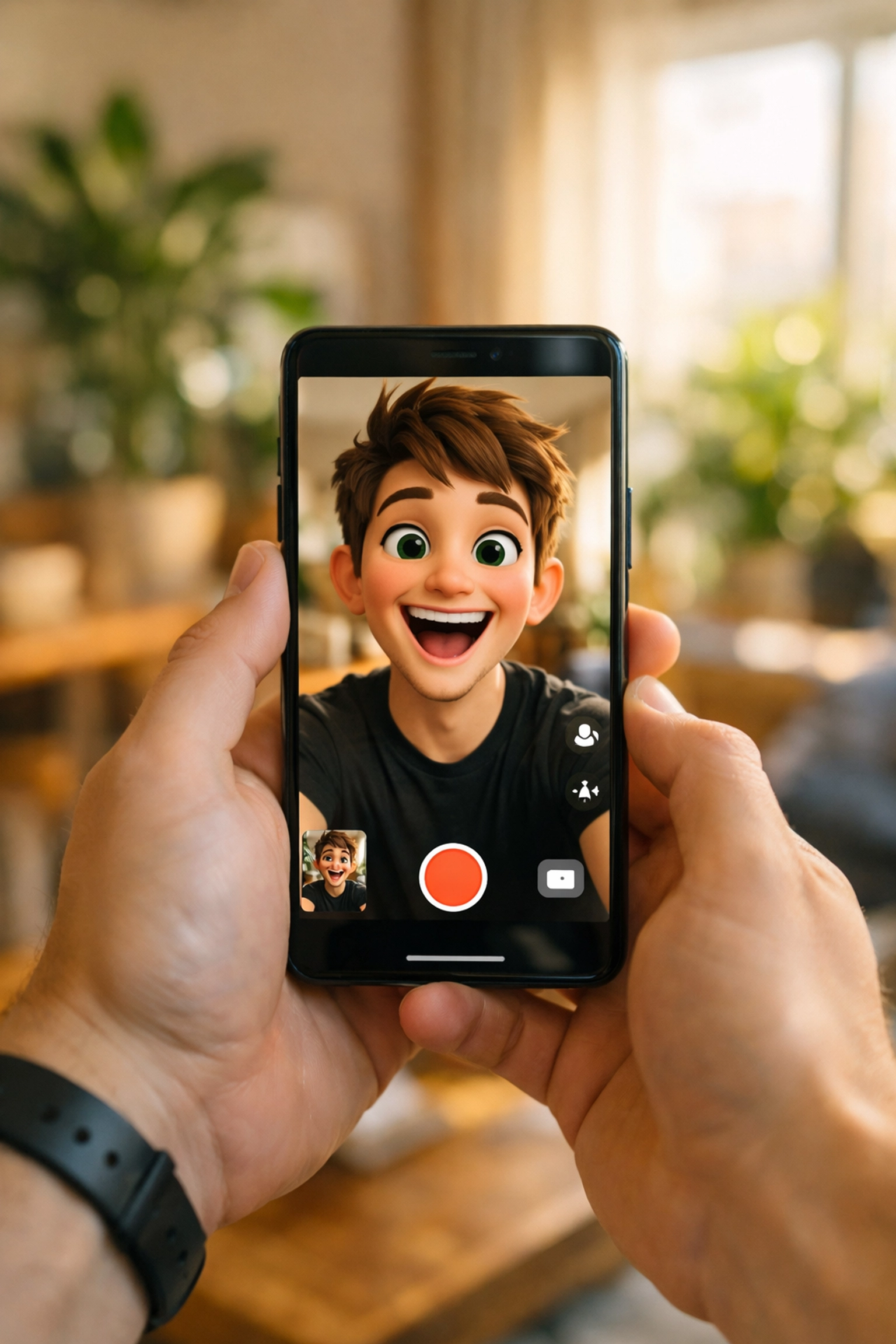
Higgsfield is best for "Face-Swaps" and "Motion-Cloning." You can film yourself doing a dance and have the AI "skin" you as a 3D character or a different person while maintaining your exact movements. This is the future of viral dance trends and personalized creator content.
7. Synthesia: The Global "Talking Head" Disruptor
Viral content isn't just about explosions and VFX; it’s also about information. Synthesia allows you to create high-authority "Talking Head" videos without ever stepping in front of a camera.
Technical Deep Dive:
Synthesia uses Neural Voice Cloning and Micro-Expression Synthesis. It doesn't just move the lips; it moves the eyebrows, the cheeks, and the eyes in a way that matches the emotional tone of the script. In 2026, its multilingual capabilities allow you to upload a script in English and have an avatar deliver it in 120+ languages with perfect local accents.
Viral Application:
This is the "Scale" play. A creator can take a high-performing English video and localize it for the Spanish, Hindi, and Mandarin markets in minutes. Educational "Did You Know?" accounts use Synthesia to pump out high-quality, informative content that establishes authority and drives massive engagement through shareable facts.
Data-Driven Strategy: How to Actually Go Viral with AI Video
Having the tools is only 20% of the battle. The other 80% is the strategy. According to 2025-2026 social media engagement data, AI videos have a 34% higher "save" rate than standard videos, but a 12% lower "initial view" rate if they look too fake.
1. The 1.5-Second Rule
AI video often has a "ramp-up" period where the movement starts slow. To go viral, you must trim the first half-second of the generation. Use a "Hard Cut" to the peak of the action.
2. Hybrid Editing
The most successful creators aren't using 100% AI. They are using AI for the "Visual Hook" (the first 3 seconds) and then switching to B-roll or talking-head footage. This maintains the "Human Touch" that the Google and Meta algorithms are increasingly prioritizing.
3. Audio-Visual Synergy
An AI video with a generic stock track will fail. Use tools like Udio or Suno to generate a custom soundtrack that matches the "beat" of your AI video. If you are using Pika or Luma, ensure the foley sounds (footsteps, wind, metal clashing) are exaggerated.

Ethical Considerations and "The AI Label"
Platforms like TikTok and Instagram now have automated systems to detect AI-generated content. Attempting to hide your use of AI can lead to "shadowbanning" or reduced reach. The pro-tip for 2026? Own it.
Label your content as #AIVideo or #GenerativeArt. The audience is no longer repelled by AI; they are fascinated by it. Use the "uncanny" nature of AI as a stylistic choice rather than a flaw you’re trying to hide.
Conclusion: The Future of "Generative Native" Content
We are moving toward a "Generative Native" era where the most successful creators won't be those with the best cameras, but those with the best Latent Space Navigation skills. Tools like Runway, Kling, and Luma are the new brushes and canvases.
The "Top 7" list will inevitably shift as models iterate, but the underlying principle remains: Viral content is about surprise. Use these tools to show your audience something they have never seen before: something that was literally impossible to film until now.
About the Author: Malibongwe Gcwabaza
CEO of blog and youtube
Malibongwe Gcwabaza is a veteran digital strategist and the CEO of blog and youtube, a premier agency at the intersection of generative AI and social media growth. With over a decade of experience in content architecture and SEO, Malibongwe specializes in helping brands leverage emerging technologies to capture attention in hyper-competitive markets. He is a frequent speaker on the ethics of AI and the future of the creator economy. When he’s not deconstructing the latest diffusion models, he’s helping businesses transition into the "AI-First" era of digital marketing.
About the Author


