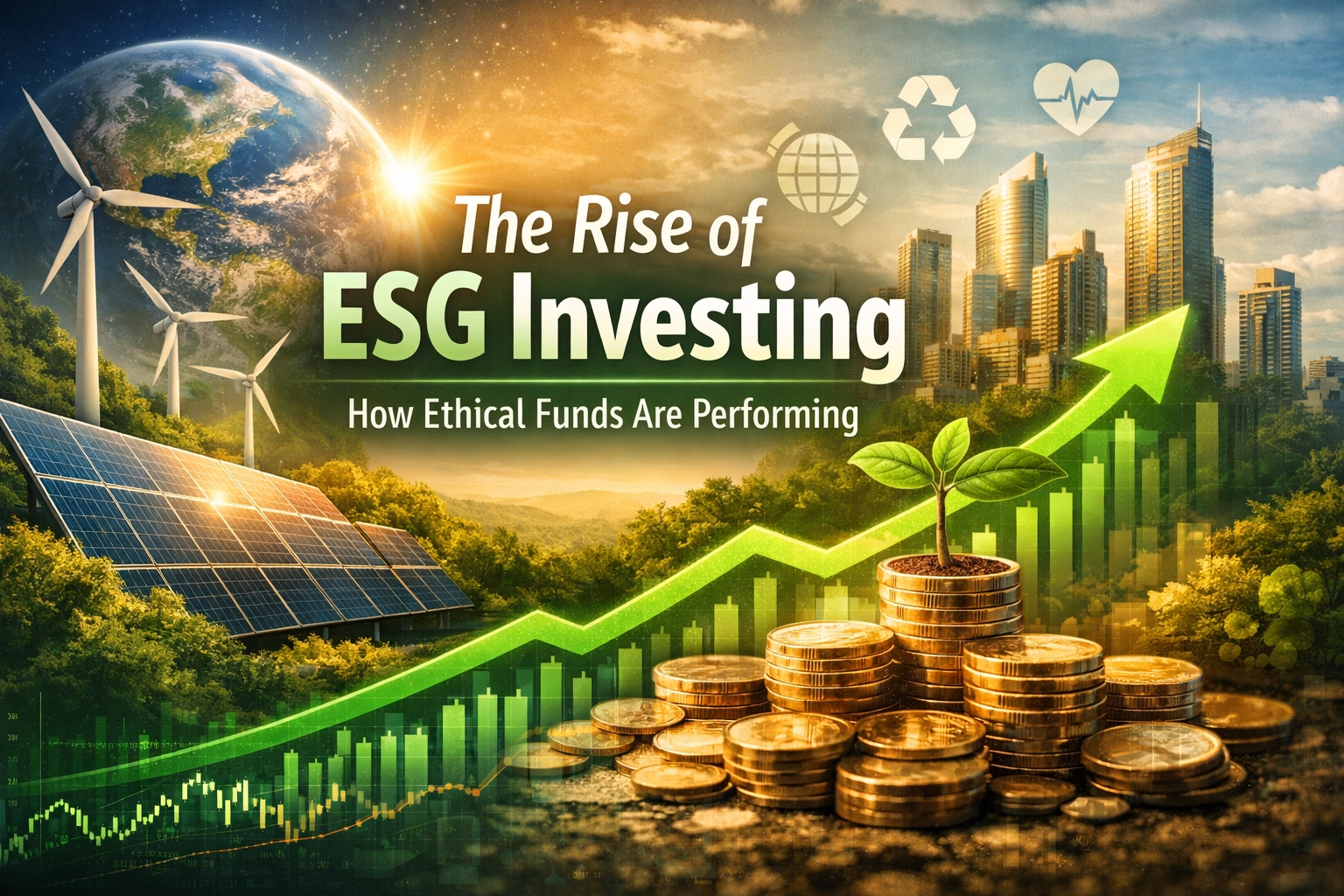
By March 2026, the conversation around Environmental, Social, and Governance (ESG) investing has shifted from a "nice-to-have" ethical overlay to a core component of risk management and alpha generation. We’ve moved past the era of vague promises and "greenwashing" into a period of hard data, strict regulatory oversight, and massive capital reallocation.
As of early 2026, the numbers are staggering. ESG-focused institutional assets have surged toward the projected $33.9 trillion mark, now representing over 20% of all global assets under management (AUM). But for the individual investor or the fund manager, the question remains: is the "virtue" actually paying off in the portfolio?
The Performance Reality: Alpha vs. Ethics
The most persistent myth in finance was that choosing ethical funds meant sacrificing returns. Data from the first quarter of 2026 suggests the opposite is increasingly true. Approximately 60% of institutional investors now report that their ESG-integrated portfolios are yielding higher returns than their non-ESG benchmarks.
This isn’t just about feeling good; it’s about "financial materiality." In 2026, companies with poor governance or high carbon exposure are facing higher costs of capital, more frequent regulatory fines, and supply chain disruptions. Conversely, firms with high ESG scores: particularly those focusing on governance strength and climate resilience: are proving to be more durable during market volatility.
Nine out of ten asset managers now integrate ESG criteria not because of a moral imperative, but because they believe it improves the risk-adjusted return profile of their portfolios. We are seeing a "flight to quality" where ESG serves as a proxy for high-quality management.

Regional Divergence: Where the Capital is Flowing
The growth of sustainable finance isn't uniform. As we move through 2026, we’re seeing distinct regional trends:
- Europe (The Vanguard): Europe continues to lead, with assets expected to hit nearly $20 trillion this year. The maturity of the SFDR (Sustainable Finance Disclosure Regulation) framework has provided a level of clarity that other markets are still chasing.
- United States (The Growth Engine): Despite political headwinds in certain states, the US ESG market has more than doubled since 2021, reaching over $10 trillion. The focus here is increasingly on "pragmatic ESG": using sustainability data to hedge against physical climate risks and transition risks.
- Asia-Pacific (The Rising Star): This region has tripled its ESG AUM in the last five years. With massive infrastructure projects and a shift toward green manufacturing in China and India, Asia-Pacific is becoming the hub for "Impact Investing."
The Technical Shift: From Broad ESG to Thematic "E"
The most interesting data point from early 2026 is the divergence within ESG categories. While broad-market ESG funds saw some outflows (nearly $935 million in January alone), Environmental-focused funds bucked the trend with over $512 million in net inflows.
Investors are becoming more surgical. They are moving away from "generic ESG" and toward specific themes:
- Decarbonization Technology: Investing in Carbon Capture and Storage (CCS).
- Green Hydrogen: Moving from pilot projects to industrial-scale application.
- Circular Economy: Companies that have mastered closed-loop manufacturing.
This surgical approach is a response to the "greenwashing" scandals of 2023-2024. Investors now want to see the "Scope 3" emissions data: the indirect emissions that occur in a company’s value chain: rather than just a glossy sustainability report.
Deep Dive: The Green Energy Transition and Interest Rates
One cannot discuss ESG performance in 2026 without looking at the cost of capital. Renewable energy projects (Wind, Solar, and Storage) are capital-intensive. The high-interest-rate environment of 2024 and 2025 put a squeeze on these projects. However, as rates stabilized in early 2026, we’ve seen a resurgence in the performance of "Green Bonds" and sustainable finance instruments.
Green energy funds are now outperforming traditional energy benchmarks in terms of long-term volatility. While oil and gas remain subject to geopolitical shocks, the localized nature of renewable energy grids offers a "security premium" that institutional investors are willing to pay for.
Technical Insight: The Impact of AI on ESG Scoring
A major driver of the 2026 ESG performance surge is the integration of AI into ESG analysis. Previously, ESG scores were based on self-reported data that was often 12-18 months old. Today, real-time satellite imagery, NLP (Natural Language Processing) of local news, and IoT sensors in factories provide investors with "live" ESG scores.
For example, if a mining company in South America has a tailings dam leak, AI algorithms detect this via satellite data and adjust the fund’s exposure before the company even issues a press release. This technical edge is where the "alpha" is being generated in 2026.

Governance: The Unsung Hero of Performance
While the "E" (Environmental) gets all the headlines, it’s the "G" (Governance) that is currently providing the most significant downside protection. In 2026, the definition of good governance has expanded to include Cybersecurity Oversight and AI Ethics.
Funds that weight heavily toward companies with diverse boards, transparent executive compensation, and robust data privacy protocols have shown a lower "drawdown" during the market corrections we saw in late 2025. Institutional investors are treating governance as a proxy for operational excellence. If a company can’t manage its social impact or its board diversity, can it really manage its global supply chain?
Challenges: Outflows and the "Anti-ESG" Sentiment
It hasn't been entirely smooth sailing. In early 2026, we noticed a dip in "Religious Values" and "Broad Focus" ESG funds. Part of this is due to a consolidation phase. Investors are realizing that some "ethical" funds were simply overpriced index trackers with a slightly higher fee and a fancy name.
The "Anti-ESG" movement in the US also forced a rebranding. Many funds have dropped the "ESG" label while keeping the same data-driven sustainability processes. They are now marketing these as "Resource Efficiency Funds" or "Long-term Risk Mitigation Funds." The label is changing, but the underlying methodology: valuing sustainability: is becoming the industry standard.
Sustainable Finance: The Growth of Green Bonds
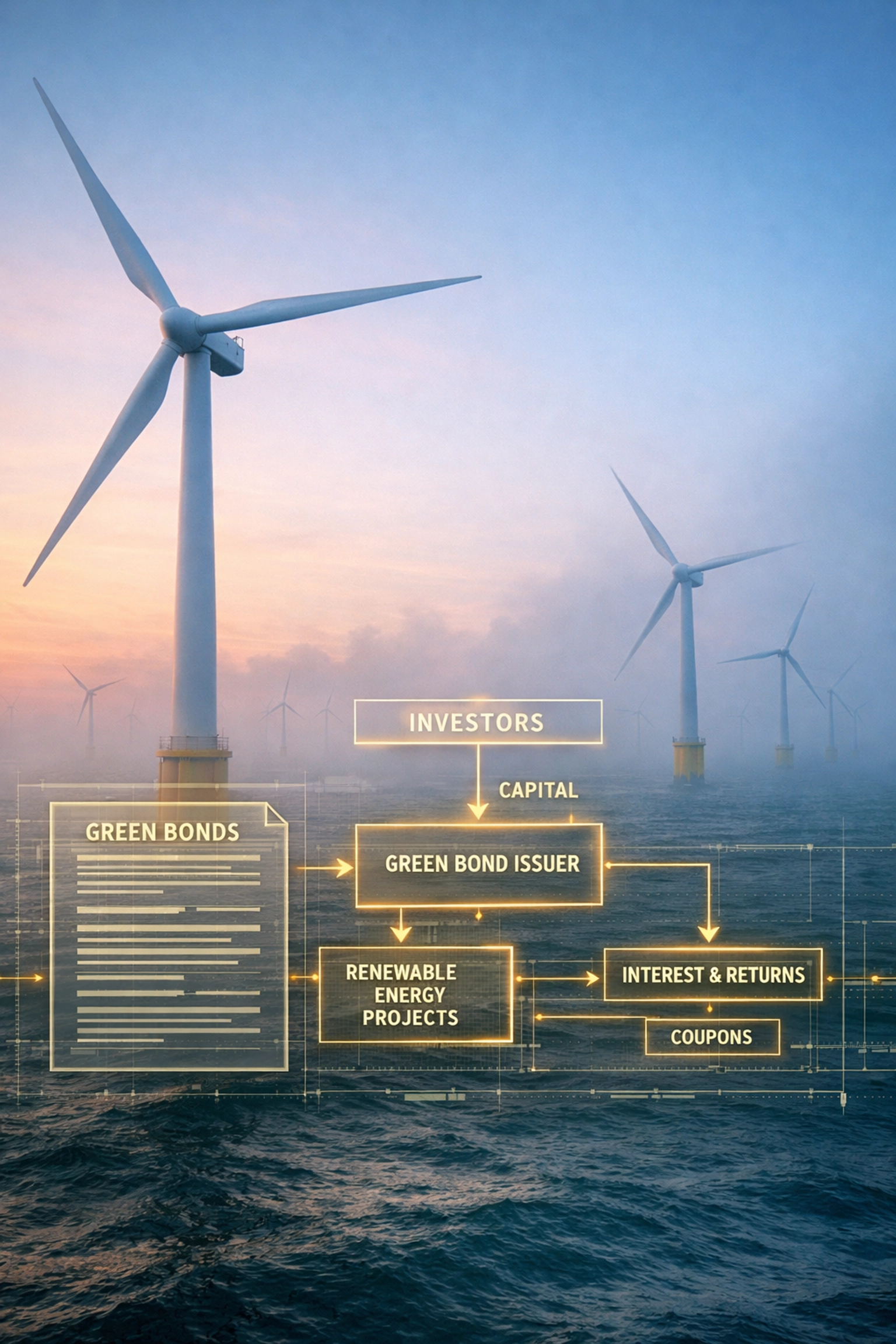
Beyond the equity markets, the fixed-income world is being transformed. Green Bonds, Social Bonds, and Sustainability-Linked Bonds (SLBs) have become a $600 billion+ market.
What makes SLBs particularly interesting in 2026 is the "step-up" coupon mechanism. If a company fails to meet its carbon reduction targets, the interest rate it pays to bondholders increases. This creates a direct financial link between sustainability performance and the company’s bottom line. For the investor, it’s a win-win: either the company becomes more sustainable (reducing risk), or the investor gets a higher yield.
ESG Investing 2026: What’s Next?
Looking toward the end of 2026 and into 2027, several trends are clear:
- Mandatory Disclosures: The SEC and European regulators have finalized the integration of climate risk into standard financial filings. ESG data is no longer "alternative data"; it is "financial data."
- Biodiversity is the New Carbon: We are seeing the rise of "Nature-Positive" investing. Funds are beginning to track their impact on local ecosystems and water scarcity as a material risk.
- The Retail Surge: With the rise of "fractional green bonds" and user-friendly ESG apps, retail investors are finally catching up to the institutions, providing a new wave of liquidity to ethical funds.
Conclusion
The data for 2026 is clear: ESG investing is no longer a niche strategy for the morally conscious. It is a sophisticated framework for identifying high-quality companies in a world defined by climate volatility and social upheaval. While specific sub-sectors may face temporary outflows as the market matures and consolidates, the overarching trend toward sustainable finance remains the most significant shift in the history of modern capital markets.
Whether you call it ESG, sustainable investing, or simply "smart risk management," the integration of ethical and environmental factors is proving to be a potent tool for building resilient, high-performing portfolios.
Professional Author Bio: Malibongwe Gcwabaza
Malibongwe Gcwabaza is the CEO of blog and youtube, a leading digital platform dedicated to demystifying complex financial and technological trends. With over a decade of experience in corporate leadership and a deep passion for sustainable development, Malibongwe focuses on the intersection of capital markets and environmental impact. Under his leadership, the company has become a primary resource for investors seeking to navigate the rapidly evolving landscape of ESG and green energy. He believes that the future of wealth creation lies in the balance between profit and planetary health.
About the Author


