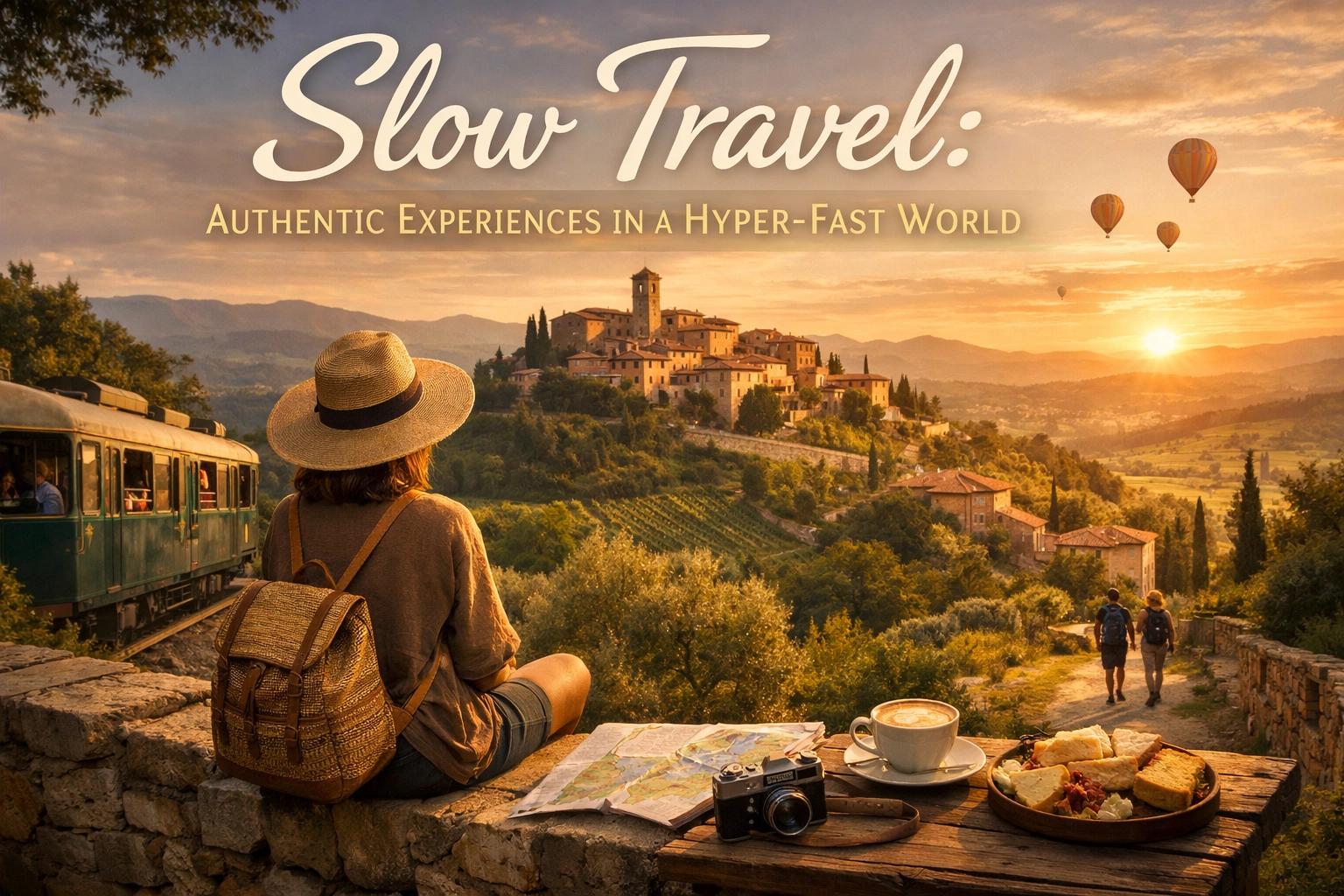
By March 2026, the global travel industry has reached a breaking point. After years of post-pandemic "revenge travel" and the relentless optimization of tourism via AI-driven itineraries, a massive shift has occurred. Travelers are no longer satisfied with the 48-hour city break or the curated Instagram backdrop. Instead, we are seeing the rise of "Time Wealth": a movement where the luxury isn't the destination itself, but the time spent truly inhabiting it.
Slow travel is the antithesis of the modern, hyper-optimized vacation. It’s a deliberate rejection of the "checklist culture" that treats world wonders like items in a grocery store. In a world that moves at the speed of a fiber-optic connection, slowing down to the pace of a local train or a walking tour is a radical act of self-care and cultural respect.
The Problem with High-Velocity Tourism
Traditional tourism is often extractive. In 2025, data showed that "over-tourism" in hubs like Venice, Kyoto, and Barcelona led to a 15-20% decrease in local resident satisfaction and a spike in infrastructure strain. When we rush through a city in two days, we contribute to a high-turnover economy that prioritizes souvenir shops over community staples.
From a technical perspective, fast travel is inefficient. The carbon cost of short-haul flights and the logistical friction of constant packing, checking in, and commuting between airports often eat up 30% of a traveler’s actual downtime. By 2026, carbon taxation on short-haul flights in Europe and parts of Asia has made frequent hopping significantly more expensive, pushing the logical choice toward longer, more meaningful stays.
Defining Slow Travel in 2026
Slow travel is not just about moving slowly; it’s about the depth of engagement. It’s the difference between seeing a monument and understanding why it was built.
The movement is built on three core pillars:
- Sustainability: Prioritizing low-impact transport (rail, sea, or foot).
- Locality: Sourcing food, housing, and entertainment from independent local businesses rather than international chains.
- Presence: Trading the "Fear of Missing Out" (FOMO) for the "Joy of Missing Out" (JOMO).
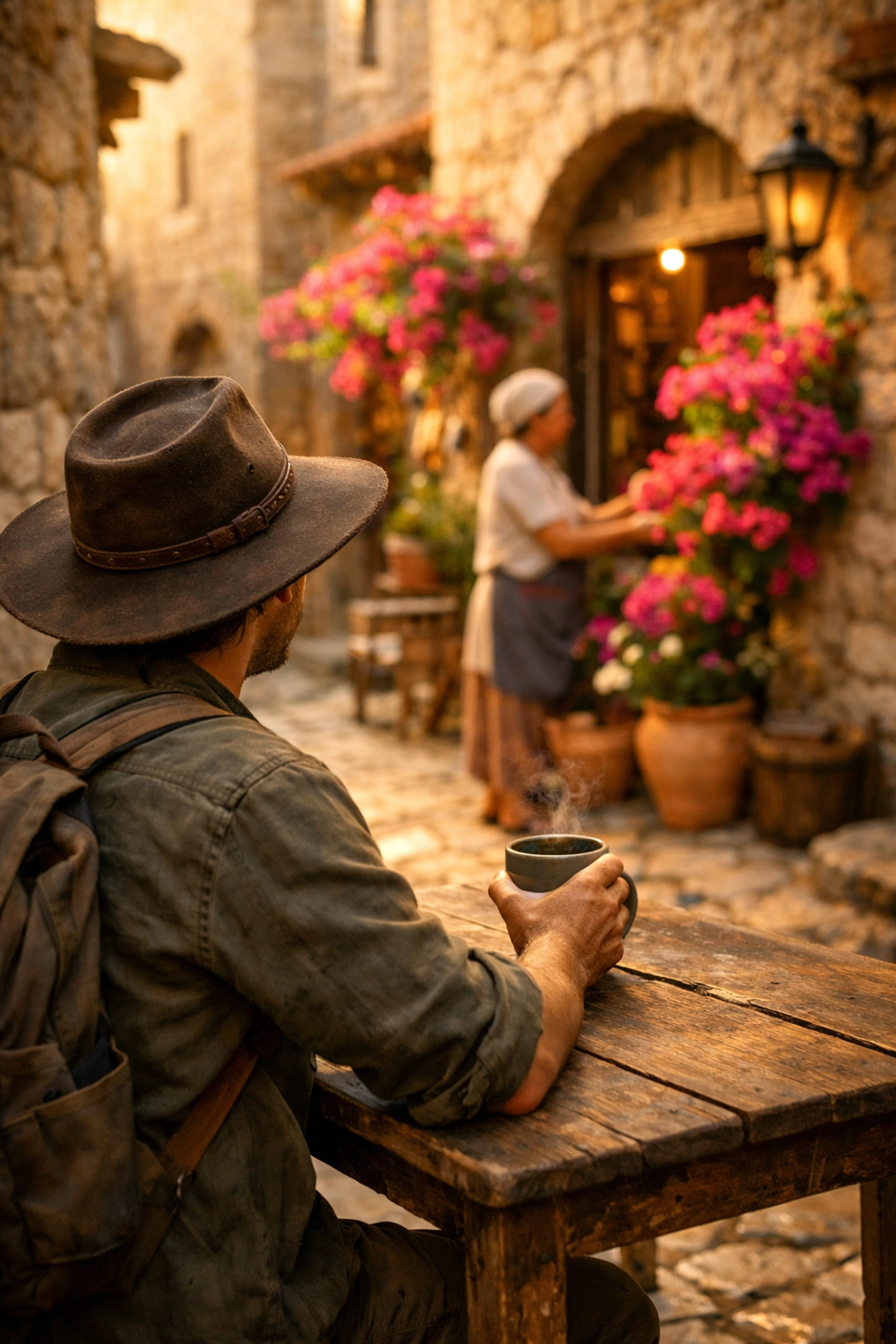
The Carbon Math: Data-Driven Sustainability
One of the strongest arguments for slow travel is its environmental footprint. As we look at the 2026 climate targets, the travel industry accounts for roughly 8% of global greenhouse gas emissions.
Consider the data comparison for a trip from London to Marseille:
- Commercial Flight: Approximately 110kg of CO2 per passenger. Including airport transit and wait times, the door-to-door journey takes about 6 hours.
- High-Speed Rail (Eurostar/TGV): Approximately 4kg of CO2 per passenger. The journey takes 7 hours, but the "transit time" is usable: you can work, eat, or watch the landscape change.
By choosing the train and staying for two weeks instead of three days, you reduce your per-day carbon footprint by nearly 85%. This is the "Slow Travel Dividend." For the environmentally conscious traveler, the choice isn't just about ethics; it's about the technical efficiency of your personal carbon budget.
The Economic Impact: Combatting Tourism Leakage
"Tourism Leakage" is a phenomenon where the money spent by tourists doesn't actually stay in the local economy. In many all-inclusive resort models, up to 80% of the revenue leaks back to multi-national corporations, airlines, and foreign-owned hotel chains.
Slow travel reverses this. When you rent a local apartment, shop at the municipal market, and frequent the neighborhood "hole-in-the-wall" bistro, nearly 90% of your spend stays within the community. In 2026, many regions in Southeast Asia and Southern Europe have launched "Slow-Stay" incentives, offering tax breaks or long-term visa options (like the revamped Nomad Visas) for those who commit to staying at least 30 days in one province.
Logistics: The Technical Toolkit for the Slow Traveler
Executing a slow travel strategy requires a different set of tools than a standard vacation. You aren't just booking a flight; you’re relocating your life for a period.
1. The Shift to "Slow-mading"
The rise of the "Slow-mad" (a hybrid of the digital nomad and the slow traveler) has led to the development of specialized platforms. By 2026, sites like NomadList and Flatio have integrated deep-integration data on local community events, volunteer opportunities, and local-only infrastructure.
2. Connectivity Strategy
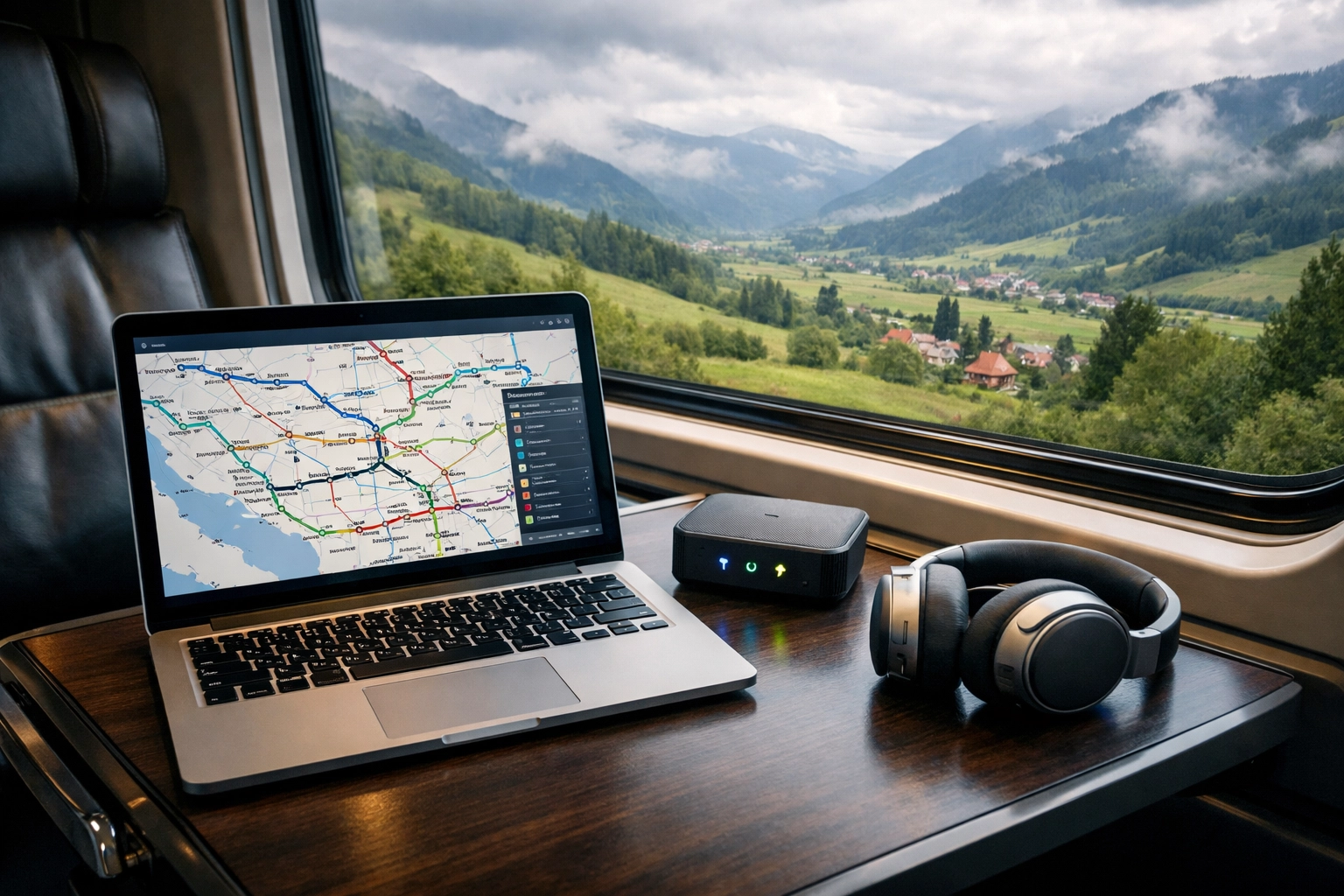
Forget international roaming or expensive airport eSIMs. The slow traveler utilizes local physical SIMs or specialized regional data providers. In 2026, the 6G rollout in major hubs allows for seamless remote work, but the slow traveler uses this as a tool for freedom, not a leash. Technical depth in your setup: using a dedicated travel router and a hardware VPN: ensures you can stay connected in rural retreats without compromising security.
3. Transport Hacking
Instead of the standard aggregators, slow travelers use tools like Man in Seat 61 for rail logistics or Rome2Rio for multimodal transport. The goal is to find the "scenic route" that connects smaller towns, bypassing the crowded airport hubs entirely.
The Psychology of the Slow Experience
There is a neurological benefit to slowing down. "Travel Burnout" is a real medical phenomenon characterized by decision fatigue and sensory overload. When you are in a new city every three days, your brain stays in a state of high-alert (the "first-night effect"), which prevents deep REM sleep and increases cortisol levels.
Slow travel allows your nervous system to regulate. By day four in a new location, your brain begins to recognize patterns: the sound of the morning bakery opening, the route to the local park. This familiarity triggers a dopamine release associated with "belonging" rather than the adrenaline spikes associated with "navigating."
Authentic Experiences vs. Curated Tours
Authenticity is the most overused word in travel, but in 2026, it has a specific technical meaning: an experience that exists independent of the tourist's presence.
- Fast Travel Experience: A guided "traditional" dance performance scheduled at 7:00 PM for a tour group.
- Slow Travel Experience: Seeing the same dancers practicing in a community hall on a Tuesday afternoon because you happened to be walking by.
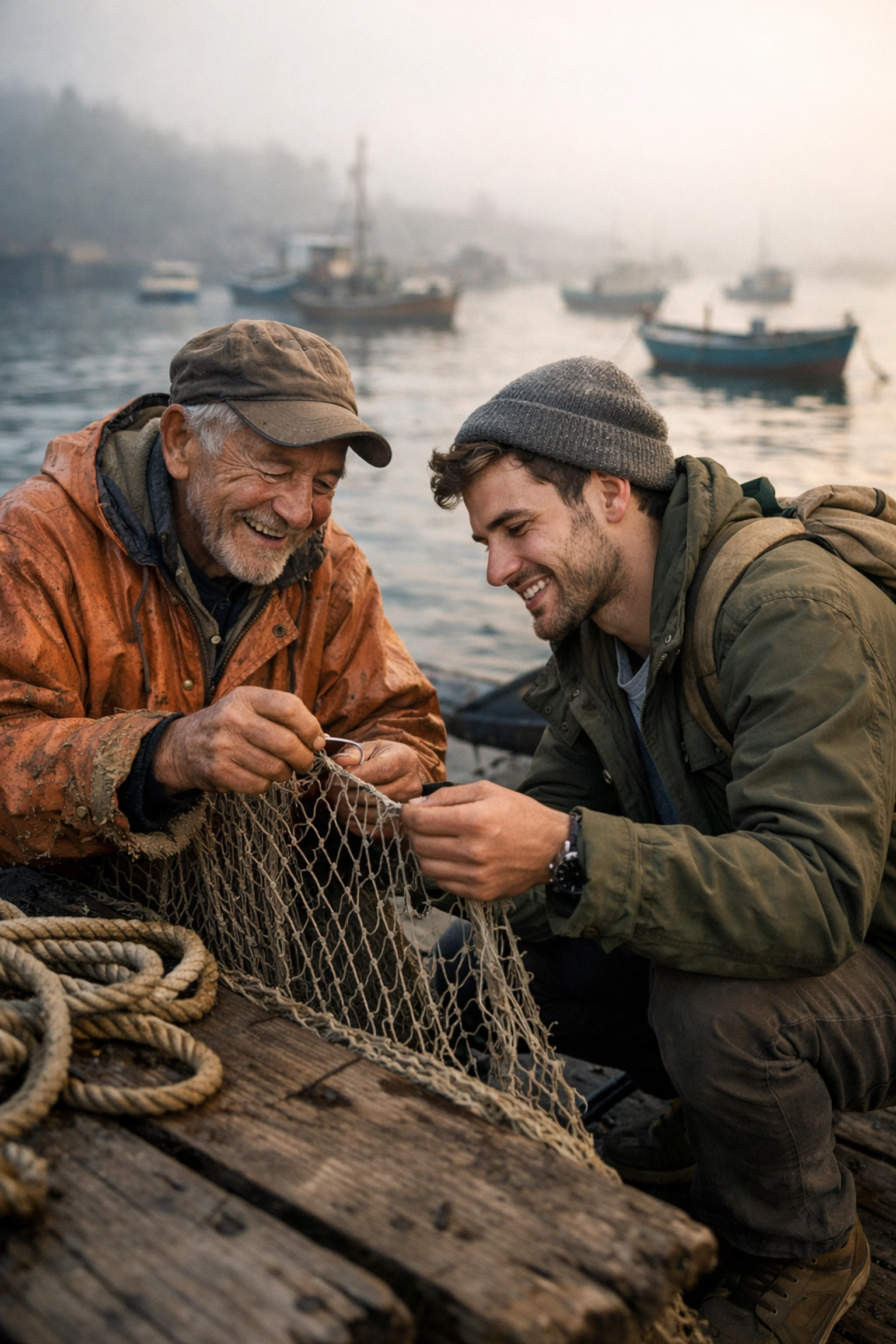
Slow travel allows for serendipity. You cannot schedule a meaningful conversation with a local fisherman; you have to be sitting on the pier long enough for it to happen naturally.
Case Study: The 2026 Balkan Rail Corridor
In 2026, the completion of several high-speed and refurbished rail links through the Balkans has opened up a new slow travel frontier. Instead of flying from Vienna to Athens, travelers are opting for a 10-day crawl through Ljubljana, Sarajevo, and Sofia.
- The Technical Benefit: Each stop offers a drastically different cultural and economic landscape.
- The Cost: While the total transit cost is roughly the same as a flight ($250-$300), the value gained in "discovery" is exponential.
- The Insider Tip: Use the Balkan Flexipass. It’s a specialized rail pass that, while technically complex to book, offers the ultimate flexibility for the unplanned detour.
Transitioning to a Slow Travel Lifestyle
If you’re used to the high-speed life, slowing down can be uncomfortable. It requires unlearning the habit of "doing" and embracing the habit of "being."
Start small. Instead of visiting three countries in your next two-week break, pick one city and stay in one neighborhood. Don’t book every meal. Don’t use a GPS for every walk. Let yourself get a little bit lost.
Checklist for your first Slow Travel trip:
- Accommodations: Book a place with a kitchen. Cooking with local ingredients is the fastest way to understand a culture.
- Research: Look for "Local Life" blogs rather than "Top 10" lists.
- Gear: Invest in high-quality walking shoes and a durable, lightweight backpack. You’ll be doing a lot of moving on your own two feet.
- Mindset: Remind yourself that "missing" a museum is okay if it means you spent the afternoon reading in a local café.

The Future of Travel is Human-Centric
As AI takes over the planning and execution of standard tourism, the human element becomes the premium. In 2026, anyone can use a bot to find the cheapest flight or the most-rated hotel. But no bot can replicate the feeling of being recognized by the local grocer on your tenth day in a new town.
Slow travel is a return to the roots of exploration. It’s about curiosity, empathy, and the understanding that the world is not a theme park designed for our entertainment, but a complex, beautiful tapestry that requires time and patience to appreciate.
In the hyper-fast world of 2026, the ultimate flex isn't how many countries you’ve visited: it’s how many places you’ve truly lived.
About the Author: Malibongwe Gcwabaza
Malibongwe Gcwabaza is the CEO of blog and youtube, a leading digital media house specializing in the intersection of technology, travel, and sustainable living. With over 15 years of experience in the tech sector and a passion for slow-form storytelling, Malibongwe has become a prominent voice in the "Time Wealth" movement.
Having lived as a digital nomad across four continents before settling into a more deliberate, slow-travel lifestyle, he brings a unique blend of technical expertise and philosophical insight to the travel industry. When he isn't steering the company's vision for 2026 and beyond, you can find him exploring the hidden rail networks of the Global South or documenting the impact of localized economies on global tourism. Malibongwe holds a firm belief that technology should be used to simplify our lives, giving us more time to experience the world at a human pace.
About the Author


