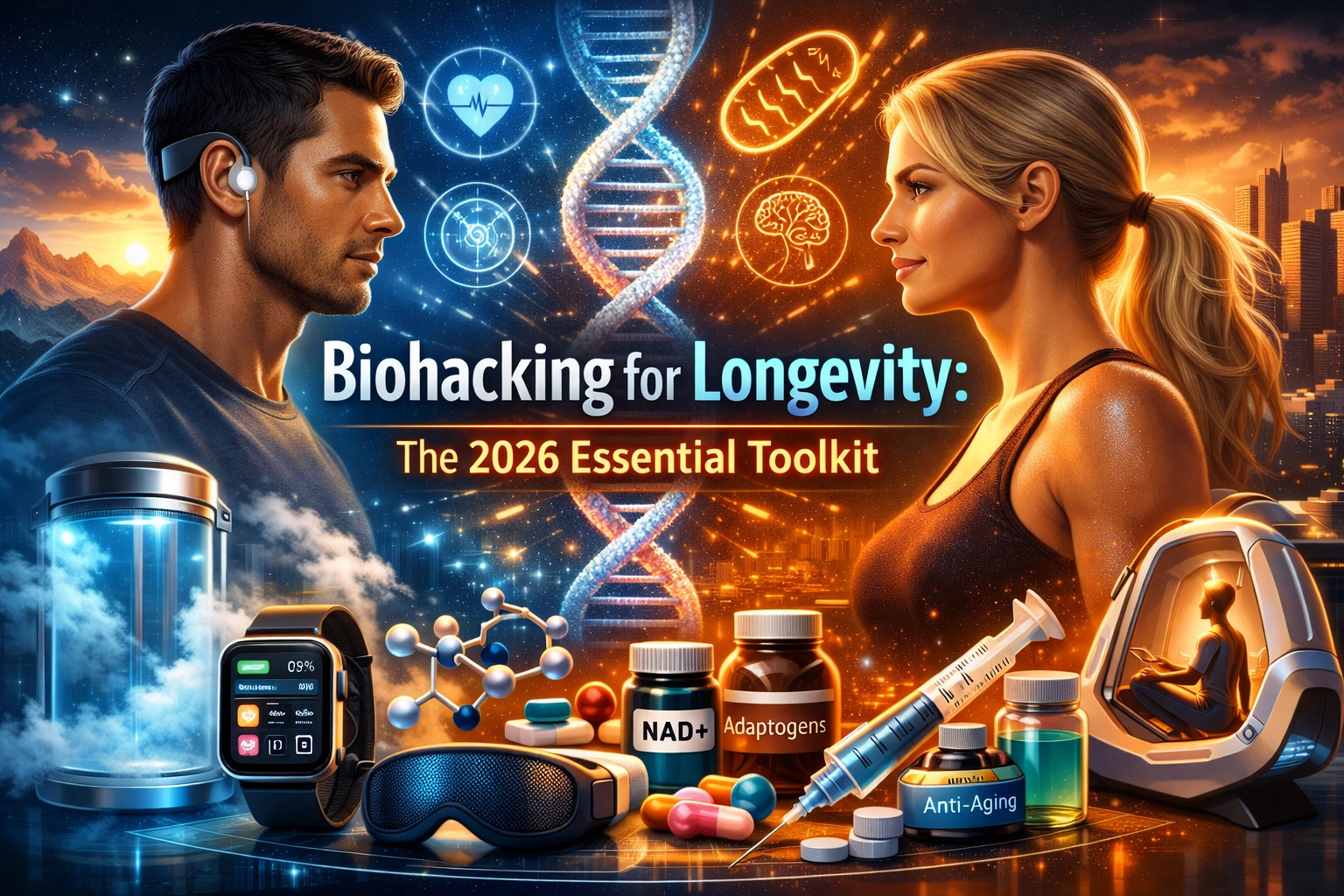
By 2026, the term "biohacking" has shed its fringe, DIY-basement reputation and matured into a data-driven clinical discipline. We’ve moved past the era of simply putting butter in our coffee and hoping for the best. Today, longevity isn't a vague goal; it’s a measurable metric. If you aren't tracking your biological age with the same intensity that a day trader tracks the NASDAQ, you’re essentially flying blind.
The shift we’re seeing this year is fundamental. We are moving away from "one-size-fits-all" health advice toward precision medicine: using your specific genetic, epigenetic, and microbiome data to build a toolkit tailored to your unique biology. This guide breaks down the essential technologies, compounds, and protocols that define the biohacking landscape in 2026.
1. The Death of Chronological Age: Measuring What Matters
In 2026, your birthday is the least interesting thing about your health. The medical community has finally pivoted to Biological Age as the primary KPI (Key Performance Indicator) for human health.
Epigenetic Clocks and DunedinPACE
Traditional markers like BMI and total cholesterol are being relegated to secondary status. The gold standard now is the epigenetic clock. Specifically, the DunedinPACE algorithm has become the go-to metric. Unlike older clocks that simply estimated how "old" your cells were, DunedinPACE measures the velocity of your aging.
Think of it like a speedometer for your life. If your score is 0.8, it means for every one calendar year that passes, your body is only aging 0.8 years. In 2026, the goal of every serious biohacker is to get their pace of aging below 1.0 through targeted interventions.
Multi-Omic Testing
We’ve also seen the rise of "multi-omic" testing. This isn't just a standard blood draw. It’s a comprehensive analysis that integrates:
- Genomics: What you’re predisposed to.
- Transcriptomics: Which genes are actually being expressed.
- Proteomics: The proteins your body is currently producing.
- Metabolomics: The chemical fingerprints of your cellular processes.
By layering these data points, AI-driven platforms can now identify "organ-specific" aging. You might find that while your heart is aging like a 30-year-old, your kidneys are performing like a 50-year-old. This allow for "surgical" lifestyle interventions rather than broad-spectrum changes.
2. The Peptide Revolution 2.0: Sublingual and Targeted
Peptides have been the "secret sauce" of pro athletes and celebrities for years, but 2026 has brought them to the mainstream with one major change: the delivery system. The era of daily subcutaneous injections is fading, replaced by high-bioavailability sublingual strips.
Recovery and Regeneration
- BPC-157 & TB-500: These remain the "holy grail" for tissue repair. BPC-157 (Body Protection Compound) is now frequently used in sublingual form to treat "leaky gut" and systemic inflammation, while TB-500 focuses on rapid muscle and tendon repair.
- GHK-Cu: This copper peptide is the 2026 standard for skin longevity and hair density. By modulating gene expression to a more youthful state, it stimulates collagen and elastin production far more effectively than any topical cream.
Cognitive and Growth Hormones
- CJC-1295 & Ipamorelin: This combination is used to naturally stimulate the pituitary gland to release more growth hormone. Unlike synthetic HGH, which can shut down your natural production, these secretagogues keep your body’s own feedback loops intact, leading to better fat metabolism, improved sleep quality, and faster recovery.
The 2026 toolkit treats peptides not as a "cycle" but as a modulated protocol, often guided by real-time blood glucose and IGF-1 monitoring.
3. Regenerative Medicine: Exosomes vs. Stem Cells
For a long time, stem cell therapy was the pinnacle of biohacking. But it was expensive, invasive, and sometimes hit-or-miss. In 2026, Exosomes have largely taken the lead for most preventative applications.
Exosomes are essentially the "messaging system" of cells. They are extracellular vesicles that carry proteins, lipids, and RNA from one cell to another. When you receive an exosome infusion, you aren't getting new cells; you’re getting the instructions for your existing cells to repair themselves.
Why Exosomes are Winning in 2026:
- Blood-Brain Barrier: Unlike many stem cell treatments, exosomes can cross the blood-brain barrier, making them a powerful tool for neuro-regeneration and fighting cognitive decline.
- Lower Cost: They are roughly one-third the price of traditional stem cell treatments, making them accessible for regular "maintenance" rather than just "emergency repair."
- Safety Profile: Since they don't contain DNA and cannot replicate, the risk of unwanted cellular growth is significantly lower.
4. Mitochondrial Optimization: The Urolithin A Era
If the mitochondria are the powerhouses of the cell, then Mitophagy is the janitorial crew. As we age, our mitochondria become damaged and "leaky," producing oxidative stress instead of energy.
In 2026, the supplement Urolithin A has become an essential part of the toolkit. It’s a metabolite produced by your gut bacteria when you eat pomegranates or walnuts, but most people lack the specific microbiome profile to produce it in therapeutic amounts.
Direct supplementation of Urolithin A triggers mitophagy: the process by which your body clears out dysfunctional mitochondria and replaces them with healthy ones. Data-driven trials in 2025 showed that consistent Urolithin A usage increased muscle endurance by up to 12% without any change in exercise routine. For the 2026 biohacker, it’s the ultimate "passive" performance enhancer.
5. High-Tech Recovery: HBOT and Infrared Integration
The "work hard, play hard" mentality has been replaced by "work hard, recover harder." The 2026 toolkit includes heavy-duty hardware that was previously only found in hospitals.
Hyperbaric Oxygen Therapy (HBOT)
HBOT involves breathing pure oxygen in a pressurized chamber. The pressure forces oxygen into your plasma, reaching tissues that are normally oxygen-deprived. In 2026, we’ve moved beyond using HBOT just for wound healing. It’s now used to:
- Lengthen Telomeres: Some studies have shown a 20% increase in telomere length after a 60-session protocol.
- Reduce Senescent Cells: It helps clear out "zombie cells" that cause systemic inflammation.
- Boost Cognitive Function: By increasing cerebral blood flow and reducing neuro-inflammation.
Infrared Textiles
We’ve moved past just sitting in an infrared sauna. In 2026, infrared technology is embedded in our daily lives through "bio-textiles." Recovery pajamas and bed linens now utilize minerals that capture your body’s heat and reflect it back as Far Infrared (FIR) energy. This promotes vasodilation and lymphatic drainage while you sleep, turning 8 hours of rest into a passive recovery session.
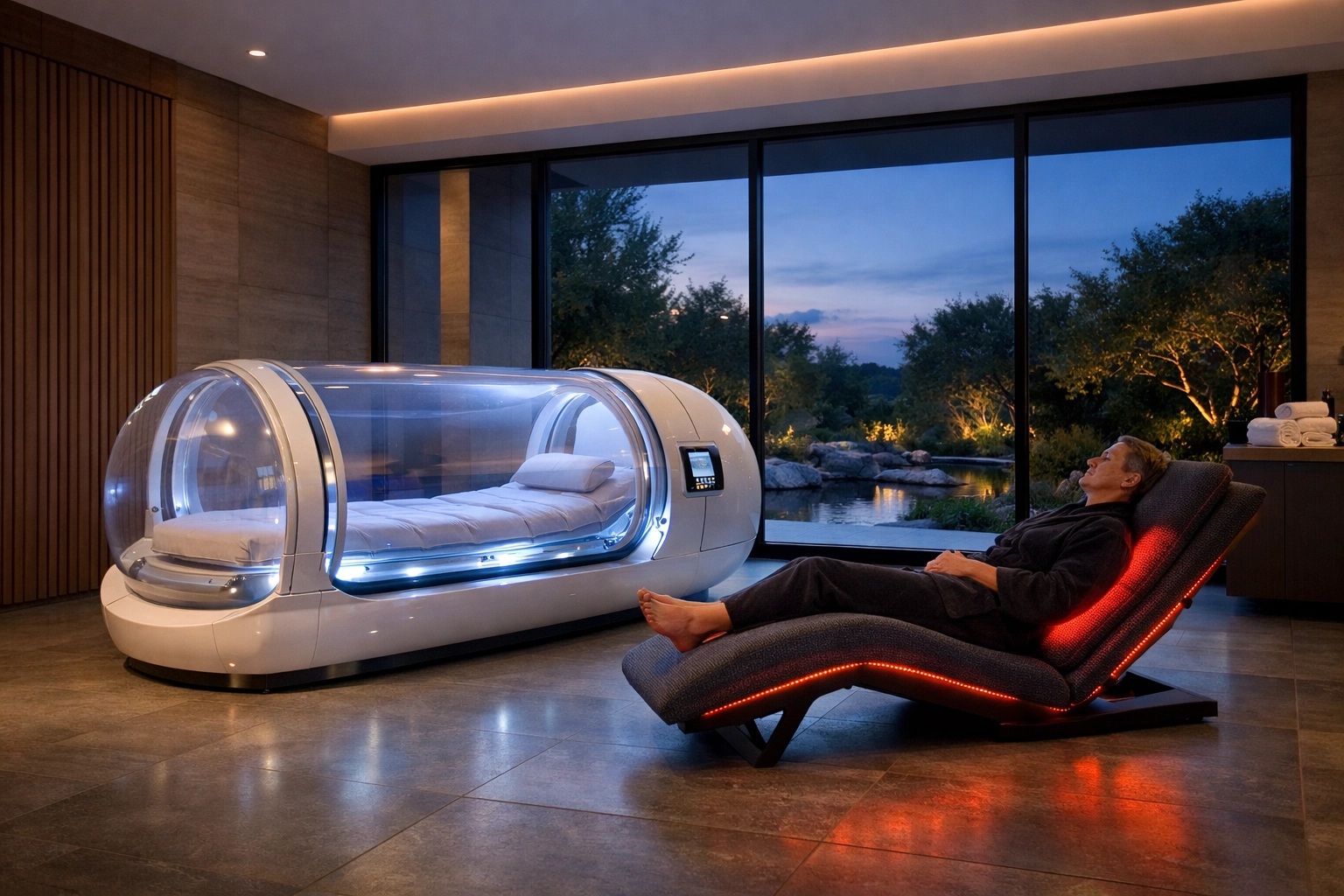
6. The AI Health Agent: Your 24/7 Longevity Coach
The biggest bottleneck in biohacking used to be the "Analysis Paralysis": having too much data and not knowing what to do with it. In 2026, we have AI Health Agents.
These aren't just chatbots. They are sophisticated LLMs connected to your wearable devices (Oura, Whoop, Apple Watch), your continuous glucose monitor (CGM), and your latest lab results.
Your AI Agent might ping you at 2:00 PM and say: "Your glucose variability is high today, and your HRV (Heart Rate Variability) is trending down. Skip the HIIT workout tonight; do a 20-minute Zone 2 walk and increase your magnesium intake by 200mg before bed."
This real-time course correction is the difference between generic wellness and true biohacking.
7. The Social Hack: Community-Driven Longevity
One of the most surprising insights of 2026 is that the most powerful "biohack" isn't a pill or a machine: it’s Community.
Data from the last few years has confirmed what the Blue Zones researchers always suspected: isolation is as toxic as smoking 15 cigarettes a day. Consequently, we’ve seen a massive rise in "Recovery Clubs." These are social spaces that replace bars with sauna/cold plunge circuits, IV drip lounges, and communal meditation spaces.
Biohacking is no longer a solitary pursuit of the "lone wolf" optimizer. It’s a team sport. Whether it’s an accountability group for a 72-hour fast or a community-led longevity retreat, the "Social Hack" is now a core pillar of the toolkit.

Building Your 2026 Toolkit: Where to Start?
If you’re looking to upgrade your protocol this year, don't try to do everything at once. Longevity is a marathon, not a sprint. Here is a prioritized "Getting Started" list for 2026:
- Baseline Testing: Get a DunedinPACE epigenetic test. You need to know your speed before you try to change it.
- Continuous Monitoring: Wear a CGM for at least two weeks to understand how your specific body reacts to different carbohydrates.
- Mitochondrial Support: Start with a high-quality Urolithin A supplement to optimize your cellular energy production.
- Community: Find a local "Recovery Club" or an online longevity community. The psychological boost is just as important as the physiological one.
- Peptide Consultation: Speak with a regenerative medicine specialist about sublingual BPC-157 if you have nagging injuries or gut issues.
The goal of the 2026 biohacker is simple: to live as long as possible, with the highest quality of life possible. With these tools, we aren't just slowing down the clock: we’re starting to push it back.
About the Author: Malibongwe Gcwabaza
Malibongwe Gcwabaza is the CEO of blog and youtube, a leading digital media company dedicated to making complex health and technology trends accessible to the global public. With over a decade of experience in executive leadership and a deep passion for regenerative medicine, Malibongwe has spent the last five years documenting the intersection of AI and human longevity. He frequently consults with biotech startups and longevity clinics to bridge the gap between clinical research and consumer application. His mission is to empower individuals to take control of their biological destiny through data-driven insights and simplified wellness protocols.
About the Author


