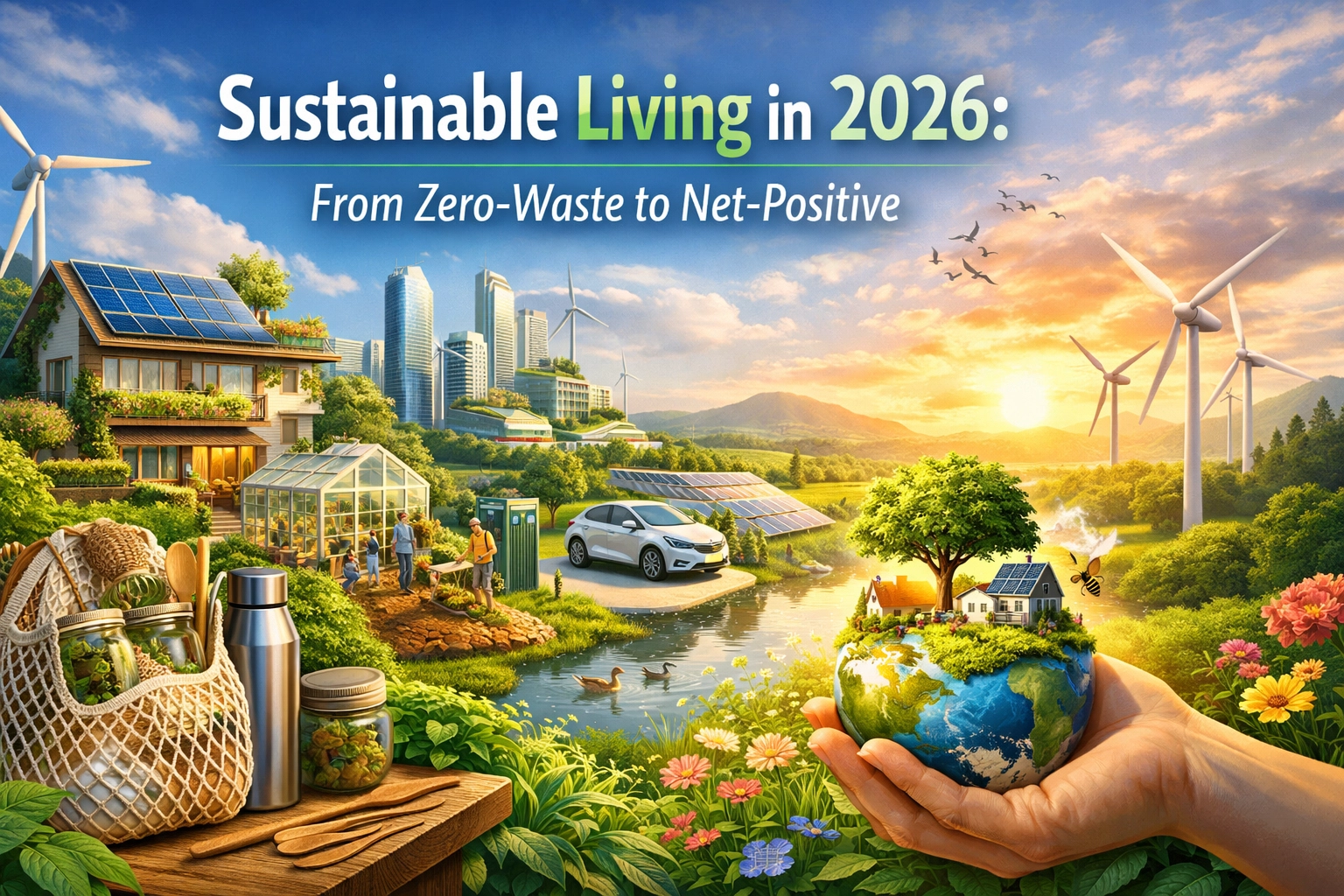
By 2026, the conversation around sustainability has fundamentally shifted. We’ve moved past the era of "doing less harm" and entered the age of "doing more good." For years, the gold standard was "Zero-Waste": a noble, if difficult, pursuit of neutrality. But as we navigate the mid-2020s, the goalpost has moved. We are now looking at Net-Positive living: a framework where our homes, our consumption habits, and our businesses actually contribute more to the environment than they take.
Sustainability is no longer a niche lifestyle choice or a marketing buzzword; it has become the "operating system" of the modern world. From the way we power our homes with 24/7 carbon-free energy to the "Product-as-a-Service" models that are replacing traditional ownership, 2026 is the year sustainability became high-performance, high-tech, and high-status.
The Rebranding of Zero-Waste: From DIY to High-End Refinement
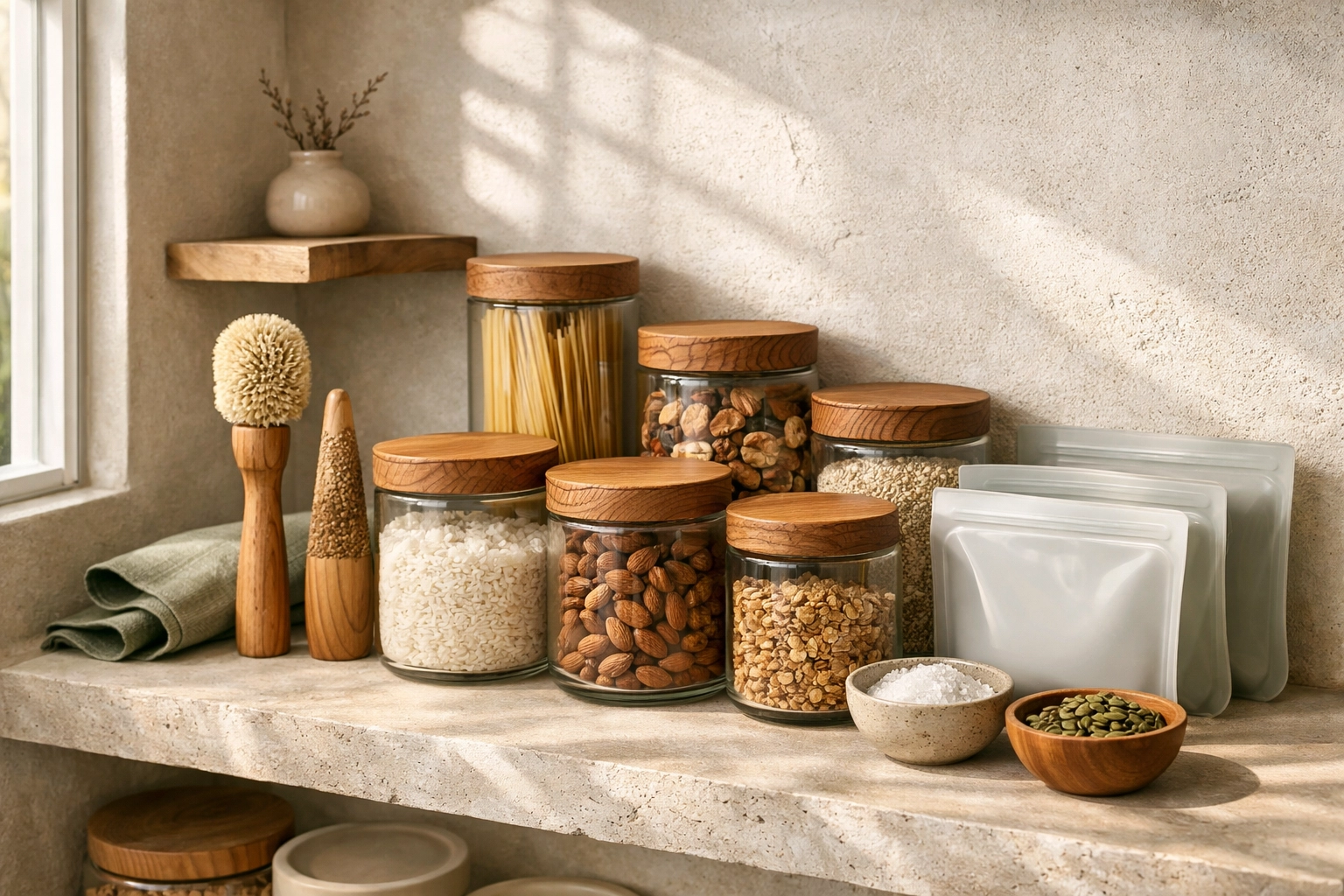
In the early 2020s, zero-waste often felt like a chore: making your own toothpaste, carrying heavy glass jars to bulk stores, and constant DIY maintenance. In 2026, zero-waste has undergone a luxury rebrand. It is now viewed as a hallmark of intentionality and refinement.
The most discerning consumers no longer equate luxury with "more." Instead, luxury is defined by the quality and longevity of materials. We are seeing a massive surge in the use of:
- Agave Fiber and Organic Textiles: Moving beyond simple cotton to more resilient, carbon-sequestering fibers.
- Platinum Silicone and Borosilicate Glass: Replacing all forms of plastic in the kitchen with materials that last a lifetime.
- Vegan Wax Wraps and Compostable Polymers: Sophisticated alternatives to single-use plastics that vanish into the soil without a trace.
The focus has also shifted from external waste to internal health. The "Zero-Waste" home of 2026 is a non-toxic sanctuary. Eliminating BPA, phthalates, and PVC is now standard practice, driven by a growing body of data linking these chemicals to endocrine disruption. When you buy a product today, you aren't just looking at the packaging; you’re looking at the molecular safety of the item itself.
Circular Living and the "Product-as-a-Service" (PaaS) Model
The biggest shift in 2026 consumption isn't what we buy, but how we access it. The traditional "take-make-waste" linear economy is being dismantled by the Product-as-a-Service (PaaS) model. In this framework, you don't own the product; you pay for the service it provides.
Why own a high-end washing machine that will eventually break and end up in a landfill? Instead, consumers are entering into performance agreements with manufacturers. You pay a monthly fee for "clean clothes." The manufacturer retains ownership of the machine, meaning they are financially incentivized to build it to last forever and to make it easy to repair.
This model is expanding into:
- Consumer Electronics: Leasing phones and laptops that are modular and easily upgraded.
- Furniture: High-quality modular sets that grow with your family and are swapped out when your needs change.
- Tools and Equipment: Instead of every house on the block owning a lawnmower, neighborhoods share high-efficiency, automated maintenance systems through local PaaS hubs.
This shift has massive technical implications. It requires products to be designed with Digital Product Passports (DPPs): blockchain-backed records that track a product’s material composition, repair history, and recycling instructions.
Energy 2.0: The Rise of 24/7 Carbon-Free Energy (CFE)
For years, companies and individuals used "carbon offsets" to claim sustainability. You’d use fossil fuel energy and then pay for trees to be planted somewhere else. In 2026, the market has realized that offsets are often a shell game. The new standard is 24/7 Carbon-Free Energy (CFE).
Unlike traditional renewable energy credits, which match annual consumption with renewable generation, 24/7 CFE requires matching consumption with clean energy on an hourly basis. If you turn on your lights at 8 PM, that energy must come from a clean source (like wind or stored solar) generated at that exact moment.
This requires a sophisticated tech stack involving:
- Smart Grids: Utilizing AI to predict load demands and shift energy consumption to peak production times.
- Long-Duration Energy Storage (LDES): Moving beyond lithium-ion to iron-air or thermal batteries that can provide power for days, not just hours.
- Granular Tracking: Using IoT meters to verify the carbon intensity of the grid in real-time.
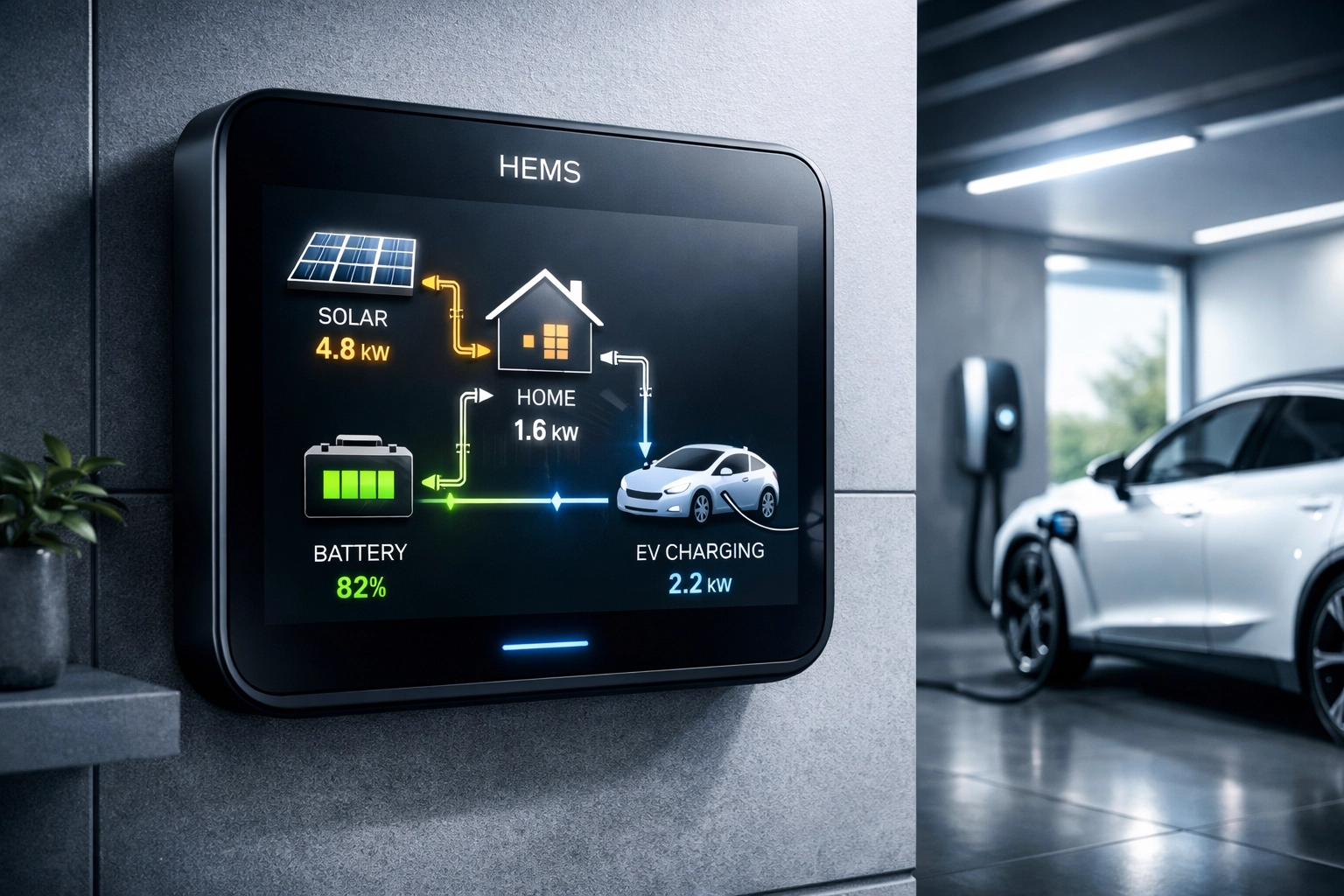
For the individual, this means home energy management systems (HEMS) are now standard. Your dishwasher waits to run until the grid is at its greenest, and your EV acts as a backup battery for your home (Vehicle-to-Home or V2H technology), creating a bi-directional energy ecosystem.
The Net-Positive Home: Architecture as Ecosystem
We are moving past "Net-Zero" buildings (which produce as much energy as they use) to Net-Positive buildings. These structures actually generate more energy than they consume and help restore the local environment.
Technical innovations driving this include:
- Bio-Materials: Using mycelium (mushroom-based) insulation and hempcrete, which continue to sequester carbon throughout the building's life.
- Atmospheric Water Generators (AWG): Homes that extract moisture from the air to provide drinking water, reducing reliance on municipal infrastructure.
- Living Walls and Rooftops: Not just for aesthetics, but integrated into the building’s HVAC system to naturally cool the air and filter pollutants.
In 2026, your home is essentially a mini-utility. It captures water, generates power, and processes waste into compost, feeding back into the local grid and ecosystem. This isn't just about saving the planet; it’s about resilience. As climate volatility increases, a Net-Positive home provides a level of security that traditional homes simply can't match.
Net-Positive Business: The $7 Trillion Opportunity
If you’re a business owner in 2026, sustainability isn't a line item in your CSR report: it's your primary competitive advantage. The green economy topped $5 trillion in value in 2025 and is on track to hit $7 trillion by 2030.
Currently, 41% of the world's 2,000 largest companies have committed to net-zero targets across their entire supply chains (Scope 1, 2, and 3 emissions). This has created a "trickle-down" effect of sustainability. If you want to be a supplier for a major corporation, you must prove your carbon credentials.
Data-Driven Sustainability:
In 2026, we don't guess; we measure. Companies are using Life Cycle Assessment (LCA) software to calculate the environmental impact of a product from raw material extraction to end-of-life. This data is being fed into investor models. Capital is flowing toward companies that demonstrate "Climate Adaptation": the ability to thrive in a changing climate: and away from those tied to "stranded assets" like fossil fuel infrastructure.
Climate Adaptation and Nature-Based Solutions (NBS)
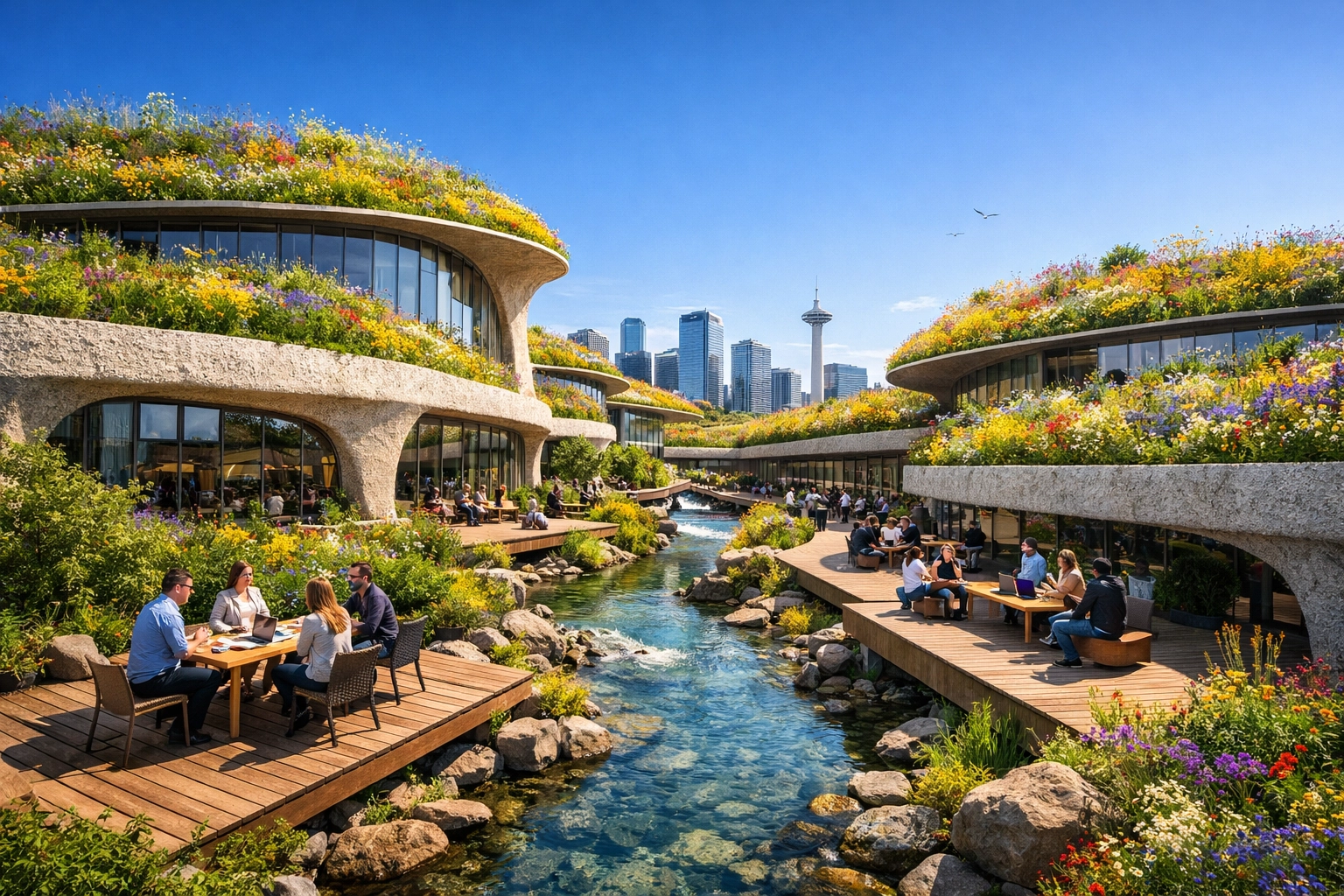
We have reached a point where mitigation (stopping climate change) is no longer enough. We must also focus on adaptation. This involves a massive investment in Nature-Based Solutions (NBS).
Instead of building massive concrete sea walls, we are restoring mangrove forests and wetlands to act as natural buffers against storm surges. In cities, we are replacing asphalt with permeable surfaces to prevent flash flooding and reduce the "urban heat island" effect.
The financial world is taking notice. There is a growing call to triple climate adaptation finance by 2035, requiring an estimated $310 billion annually. This is giving rise to Blue Bonds (focused on ocean health) and Green Infrastructure Funds, which offer steady returns by investing in the resilient systems of the future.
Conclusion: The Integrated Life
Sustainable living in 2026 is no longer about sacrifice. It’s about optimization. It’s about choosing a lifestyle that is healthier, more efficient, and more resilient.
We’ve moved from the "crunchy" DIY efforts of the past to a high-tech, circular, and net-positive future. Whether it's through the PaaS model that declutters our homes, the 24/7 CFE that powers our gadgets, or the non-toxic materials that protect our health, the shift is undeniable. Sustainability is the new status symbol, the new economic driver, and the only path forward.
Living "Net-Positive" means acknowledging that we are part of a larger system. When the system thrives, we thrive. In 2026, the goal isn't just to survive: it's to regenerate.
About the Author: Malibongwe Gcwabaza
Malibongwe Gcwabaza is the CEO of blog and youtube, a leading digital platform dedicated to the intersection of technology, lifestyle, and the green economy. With over a decade of experience in strategic leadership and a passion for circular economics, Malibongwe has been at the forefront of documenting the shift toward regenerative business models.
He specializes in translating complex technical data into actionable insights for both consumers and C-suite executives. Under his leadership, blog and youtube has become a primary resource for those looking to navigate the rapidly evolving landscape of 2026 and beyond. When he isn't analyzing market trends, Malibongwe is an advocate for tech-enabled sustainability and minimalist living.

About the Author


