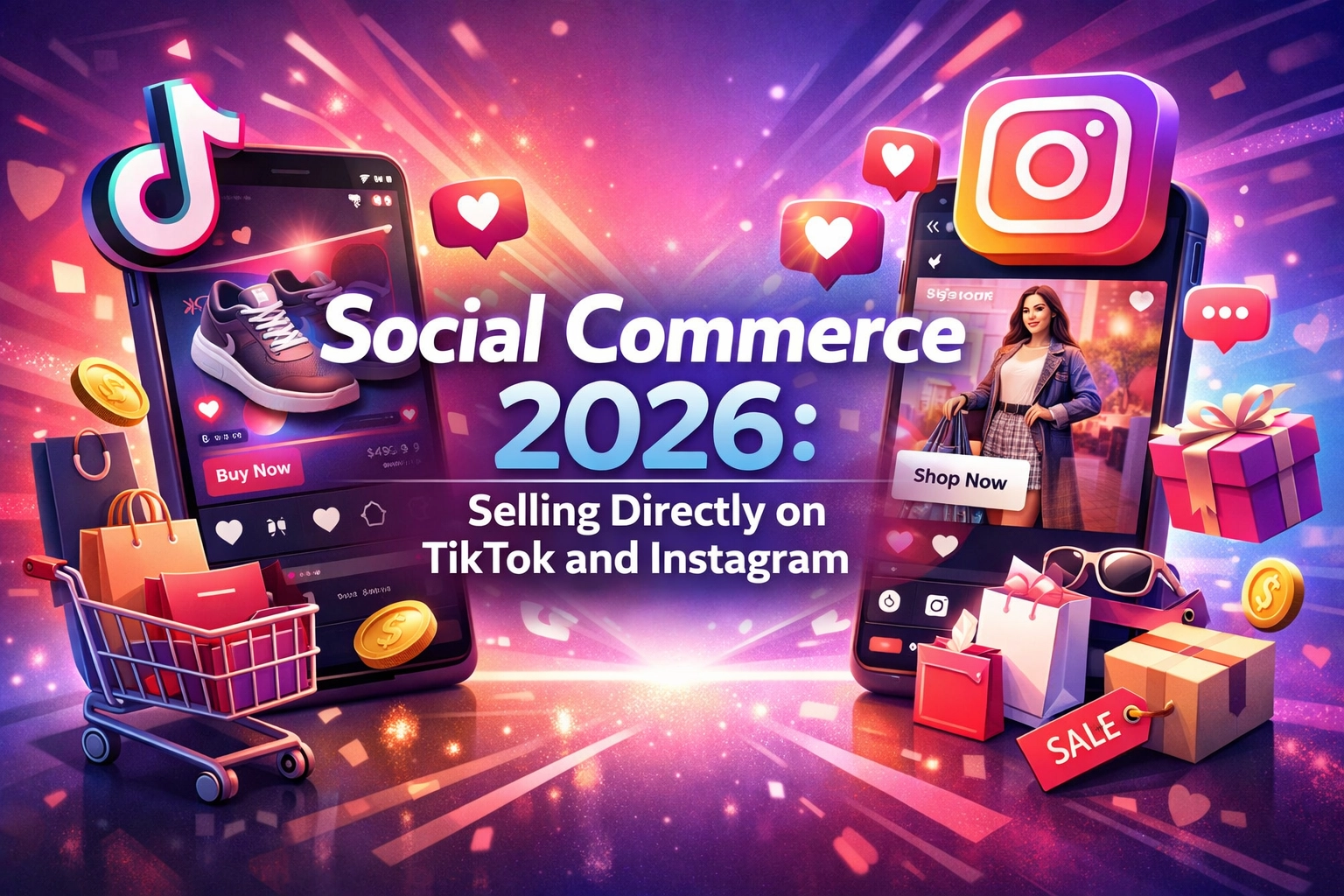
By March 2026, the traditional e-commerce funnel: the one where you run an ad, hope someone clicks a link, wait for your site to load, and pray they don't bounce before hitting "Place Order": is officially on life support.
We’ve reached a tipping point where seven out of ten global shoppers are completing their entire customer journey without ever leaving their favorite social apps. If you aren't selling directly inside TikTok and Instagram, you aren't just missing out on traffic; you’re missing out on the $6.2 trillion social commerce revolution.
In this guide, we’re going deep into the technical infrastructure, the live shopping mechanics, and the integrated checkout strategies that define the "Social-First" retail landscape of 2026.
The Death of the "Click-Through"
For a decade, the "Click-Through Rate" (CTR) was the gold standard. In 2026, the metric that matters is "In-App Conversion Rate" (IACR).
The reason is simple: friction. Every time a user is redirected from an app to a mobile browser, you lose roughly 20-30% of your potential customers due to page load speeds, cookie consent banners, and the psychological hurdle of entering credit card details into a "new" site.
TikTok and Instagram have solved this by becoming the bank, the storefront, and the mall all at once. By utilizing integrated checkouts, the user’s payment data is already stored. A purchase that used to take three minutes now takes three taps.
TikTok Shop: The Demand-Creation Engine
In 2026, TikTok isn't just a video platform; it’s an AI-driven logistics and discovery powerhouse. The platform has evolved beyond simple "Link in Bio" tactics to a fully integrated ecosystem.
AI-Powered "Find Similar" Technology
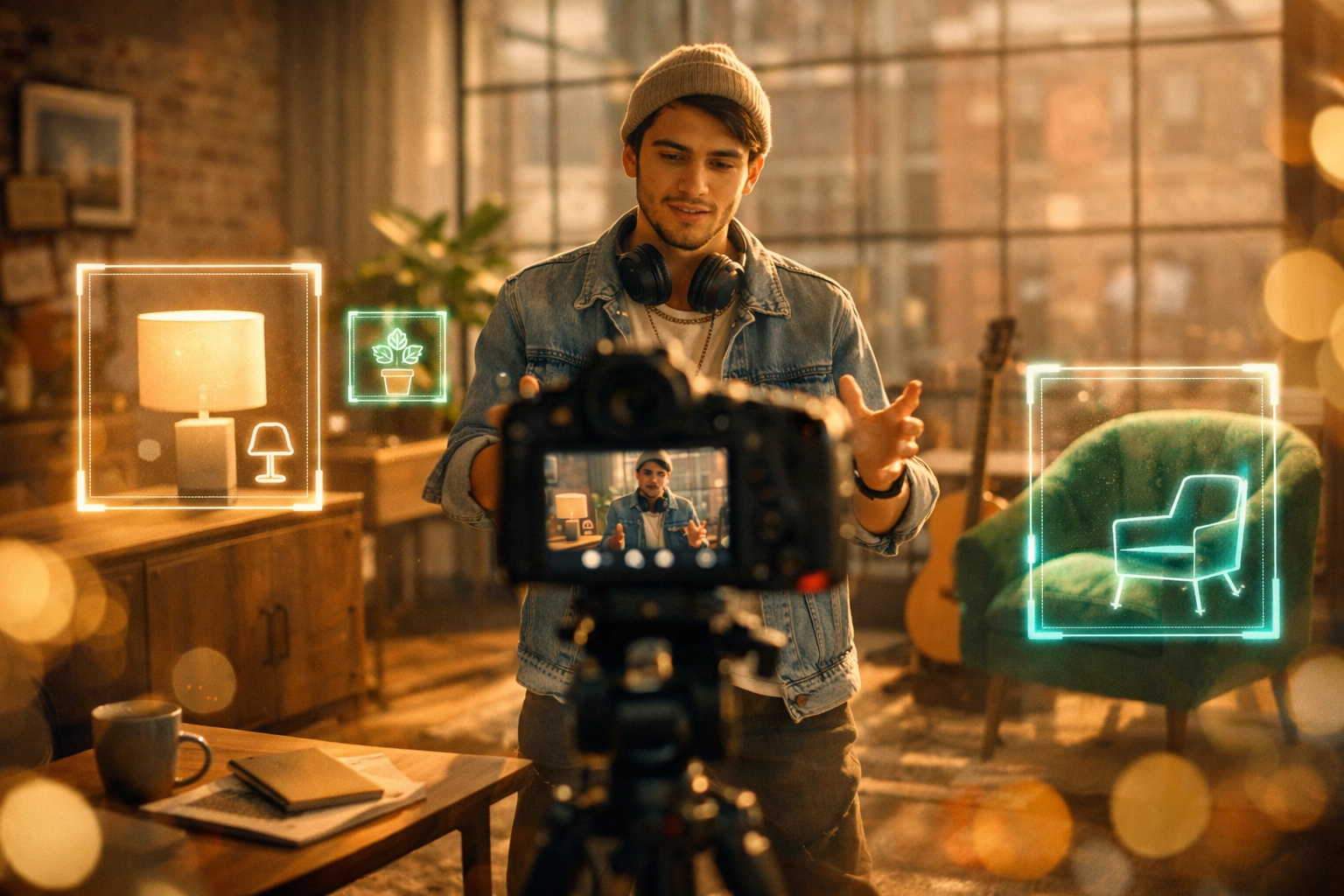
One of the most significant technical shifts this year is TikTok’s "Find Similar" feature. Using advanced computer vision and LLM-based product tagging, TikTok’s algorithm can identify products within any video: even if the creator didn't tag them.
If a user sees a specific style of minimalist lamp in a "Get Ready With Me" (GRWM) video, they can tap a small AI-discovery icon. The app instantly pulls up identical or similar items available in TikTok Shop. For sellers, this means your inventory is now discoverable through organic content you didn't even produce.
The Technical Backend: TikTok Fulfillment (FBT)
To compete with Amazon, TikTok launched "Fulfillment by TikTok" (FBT). In 2026, this is a requirement for brands wanting "Preferred Seller" status. Technically, this works through a series of API integrations where your warehouse management system (WMS) syncs in real-time with TikTok’s logistics nodes. When a customer buys in-app, the order is routed to the nearest FBT hub, often resulting in same-day or next-day delivery: a crucial factor in the "impulse buy" psychology of 15-second videos.
Instagram: The Validation and Conversion Hub
While TikTok creates the "spark" of desire, Instagram has solidified its position as the platform for high-intent validation and seamless checkout.
Native Checkout and Visual Trust
Instagram Checkout is no longer an optional feature for serious brands: it's the primary way users interact with products. The technical advantage here is the "Unified Identity" system. Since Meta has integrated payment data across WhatsApp, Quest (VR), and Instagram, the checkout process is virtually invisible.
The "Shop" tab has been replaced by more subtle, integrated touchpoints:
- Product Stickers in Reels: These are no longer just static tags. In 2026, they are dynamic overlays that show real-time stock levels and "limited time" pricing based on the user's loyalty tier.
- Visual Search Integration: Instagram’s "Explore" page now uses your camera's history and saved posts to suggest products that fit your aesthetic profile, allowing for a "curated boutique" experience for every individual user.
The Rise of Live Shopping: Real-Time Tech at Scale
Live shopping is the "Super Bowl" of social commerce in 2026. It’s no longer just a person talking to a camera; it’s an interactive, high-tech broadcast.
Low-Latency Interaction
The technical hurdle for live shopping used to be the 5-10 second delay between the creator speaking and the audience seeing it. In 2026, ultra-low-latency streaming (sub-500ms) is standard. This allows for:
- Real-time Flash Sales: "The next 50 people to comment #BUY get 40% off."
- Interactive Polls: The audience votes on which color the creator should try on next, and the product link automatically updates based on the winner.
- Instant Inventory Sync: If a creator is selling a limited-run sneaker, the "Remaining Stock" counter on the screen updates via Webhooks every time a checkout is completed, creating a genuine sense of urgency.
Collaborative Live Streams
We are seeing a rise in "Multi-Host Shopping." A brand’s technical representative can be in one location (the warehouse) while a popular influencer is in another (the studio). They co-host a single stream where the influencer handles the "hype" and the brand rep handles the "technical specs" or "live unboxing." The backend handles the attribution, splitting the commission automatically via the platform’s affiliate API.
Integrating Your Tech Stack: How to Stay Legal and Efficient
Selling directly on social platforms doesn't mean you should abandon your central hub (like Shopify, BigCommerce, or a custom Headless build). Instead, you need a "Single Source of Truth."
Headless Commerce and Social APIs
In 2026, the most successful brands use a Headless Commerce architecture. Your inventory, pricing, and customer data live in a central database, and you use "Connectors" to push that data to TikTok Shop, Instagram, and your own site simultaneously.
Key Technical Checklist for 2026:
- Real-Time Inventory Sync: Use Webhooks to ensure that if you sell your last unit on Instagram, it’s immediately marked as "Out of Stock" on TikTok to avoid platform penalties.
- Data Privacy Compliance: Selling in-app means the platform owns a lot of the customer data. You must ensure your integration allows for "Zero-Party Data" collection (e.g., inviting users to a newsletter via an in-app discount) to maintain your own CRM.
- Cross-Platform Attribution: Use "Clean Room" data solutions to understand if a customer saw your TikTok live stream but eventually bought through an Instagram Reel three days later.

Future-Proofing for 2027: Augmented Reality (AR) Shopping
We are already seeing the massive shift toward AR "Try-On" features. By the end of 2026, this won't just be for sunglasses and lipstick.
The "Phygital" experience: where digital overlays interact with physical spaces: is becoming the norm. Instagram’s integration with AR glasses (like the Ray-Ban Meta v3) allows users to look at a product in a physical store and see "Social Proof" overlays, like video reviews from people they follow, or a "Buy Now" button that triggers an in-app purchase for home delivery if the store is out of their size.
The Strategy for Small Brands vs. Enterprise
The beauty of social commerce in 2026 is that the barrier to entry is technical, not financial.
For Micro-Brands
Focus on Authentic Content Utility. You don't need a $10k production budget. You need a smartphone and a deep understanding of the TikTok Shop Affiliate program. By sending samples to hundreds of micro-influencers and setting a competitive commission rate (usually 15-25% in 2026), you can generate a "Viral Velocity" that triggers the algorithm to promote your product to millions.
For Enterprise Brands
Focus on Community and Loyalty Tech. Large brands are using social commerce to host "Exclusive Drops" for their most engaged followers. By gating certain products so they are only visible to users who have interacted with the brand for more than 6 months, they create a "VIP" ecosystem that drives massive engagement and high-ticket sales.

Conclusion: The Platform is the Storefront
In 2026, your website is your business card, but your social profiles are your registers. The brands that win are those that embrace the technical complexity of integrated checkouts and live shopping while keeping the user experience "simple."
Stop trying to pull people out of their social feeds. Start bringing the store to them.
About the Author: Malibongwe Gcwabaza
Malibongwe Gcwabaza is the CEO of "blog and youtube," a leading digital strategy firm specializing in the intersection of AI, social commerce, and modern retail. With over a decade of experience in scaling e-commerce brands, Malibongwe focuses on future-proofing businesses against the rapidly changing landscape of digital discovery and AI-driven consumer behavior. When not analyzing conversion data, he's exploring the latest in "phygital" retail tech.
About the Author


