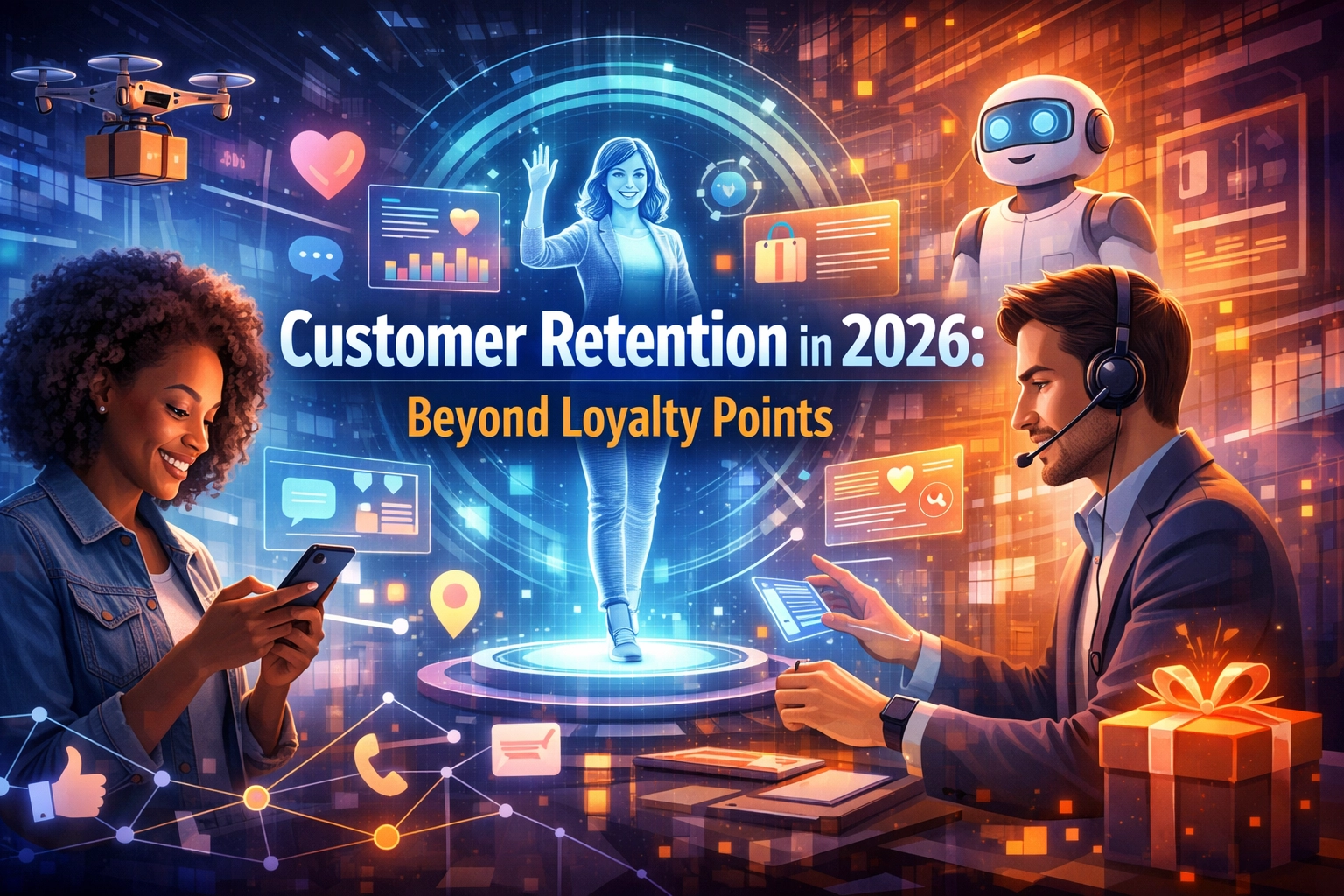
By 2026, the traditional "Buy 10, Get 1 Free" punch card hasn't just aged: it has become a liability. In an era where AI-driven price comparison bots find the lowest price in milliseconds and consumer skepticism toward "big data" is at an all-time high, transactional loyalty is dead. If your retention strategy relies solely on points, you aren't building a relationship; you’re just subsidizing a commodity.
To survive the 2026 landscape, brands must pivot from "collecting points" to "cultivating presence." We are seeing a massive shift toward emotional resonance, technical hyper-personalization, and the "community as a product" model. Customer Acquisition Cost (CAC) has skyrocketed because the digital space is saturated with AI-generated ad noise. Retention is no longer a metric for the marketing team; it is the core survival mechanism of the business.
The Death of Transactional Loyalty
The problem with points-based systems is that they lack a "moat." If a competitor offers a 12% discount and you offer a 10% points-back reward, the customer: empowered by autonomous shopping agents: will jump ship instantly. Transactional loyalty creates "mercenary customers" who are only as loyal as your latest promotion.
In 2026, retention is about LTV (Lifetime Value) optimization through three specific pillars:
- Predictive Personalization: Using data to solve problems before the customer knows they have them.
- Gamified Mastery: Turning the product experience into a rewarding skill-building journey.
- Brand Ecosystems: Creating a "third place" where customers find social value, not just utility.
1. Predictive Personalization: The End of the "Segment"
For years, marketers talked about "segments": Millennials, high-spenders, outdoor enthusiasts. In 2026, the segment is exactly one person. With the maturation of Large Language Models (LLMs) and Vector Databases, brands can now process unstructured customer data (chat logs, browsing behavior, sensor data from wearables) to create a "Living Customer Profile."
From Reactive to Anticipatory
The technical hallmark of 2026 retention is Anticipatory Service. Instead of waiting for a "cancel" click, companies use predictive churn modeling. If a user's engagement frequency drops by 15% and their "sentiment score" in support tickets shifts from "neutral" to "frustrated," an AI agent triggers a personalized intervention.
This isn't just a generic discount. It’s a "Success Intervention." For example, a SaaS company might notice a user struggling with a specific feature and automatically send a personalized 30-second video tutorial: generated by AI: addressing that exact pain point.

Zero-Party Data: The New Gold Standard
With the final death of third-party cookies and the tightening of global privacy laws, the most successful brands are those that convince users to voluntarily share data. This is "Zero-Party Data." In 2026, you don't track users; you interview them. Interactive quizzes, preference centers, and "personalization engines" allow users to tell the brand exactly what they want. The "reward" for this data isn't points: it’s a better product experience.
2. Gamification 2.0: Mastery over Badges
Early gamification was about "badges" and "leaderboards." By 2026, users have "badge fatigue." Effective gamification now focuses on Mastery and Progression.
Modern retention strategies borrow from RPG (Role-Playing Game) mechanics. Instead of rewarding a purchase, you reward the effective use of the product.
- Skill Trees: A fitness app doesn't just track runs; it provides a "skill tree" where users unlock new workout modalities (Zone 2 training, HIIT, mobility) as they demonstrate consistency.
- Variable Reward Schedules: Borrowing from neurobiology, brands are moving away from fixed rewards to variable ones. A surprise "thank you" gift or an unlocked "hidden feature" creates a dopamine response far more powerful than a predictable 5% discount.
Technical Implementation: The Progress API
To do this right, your backend needs to track "Product Milestones." This requires a tight integration between your product's telemetry and your CRM. When a user hits a "Power User" threshold, the system shouldn't just send an email; it should change the UI. The dashboard becomes more advanced, or "Pro" tools are unlocked. This creates a psychological "Sunk Cost" that isn't about money, but about the time invested in mastering the tool.
3. Brand Community as a Moat
In 2026, the "product" is often just the entry fee to the "community." We see this with brands like Notion, Figma, and even specialized coffee roasters. People don't stay for the features; they stay for the people.
The "Third Place" Strategy
With the rise of remote work and digital isolation, brands that provide a sense of belonging have a 40% higher retention rate. This isn't just a Discord server or a Slack channel; it’s a Co-Creation Ecosystem.
- User-Generated Governance: Letting top-tier customers vote on the product roadmap.
- Ambassador Tiers: Moving beyond "influencers" to "contributors." In 2026, your best customers are your best technical support agents and content creators.
- Local Hubs: Bridging the gap between URL and IRL. High-retention brands are hosting local meetups or "pop-up" workspaces where their community can connect physically.

4. The Technical Infrastructure of 2026 Retention
You cannot build a modern retention engine on a legacy tech stack. To move "beyond points," your infrastructure needs to handle real-time data orchestration.
The Customer Data Platform (CDP)
The CDP is the heart of 2026 retention. It ingests data from your website, mobile app, physical stores, and support desk to create a "Single Source of Truth" (SSOT). Without an SSOT, your personalization will feel disjointed. There is nothing worse for retention than sending a "Buy Now!" email to a customer who just filed a high-priority complaint with your support team ten minutes ago.
Edge Computing and Real-Time Logic
Latency kills retention. If a customer walks into a physical store, your app should recognize their presence and update their personalized offers in milliseconds: not minutes. This requires Edge Logic, where data is processed closer to the user to provide "Instant Relevance."
5. Proactive Support: The "Invisible" UI
The best support experience is the one that never happens. In 2026, "Customer Success" has replaced "Customer Support."
Automated Problem Synthesis
Using LLMs, companies now perform "Automated Problem Synthesis." Instead of waiting for a user to write a long ticket, an AI monitors the user's session. If it detects a "rage click" (clicking a button repeatedly that isn't working), a small chat bubble appears: "It looks like that button isn't responding because of a temporary sync error. I've already notified the engineers and refreshed your session. You're good to go."
This level of technical empathy creates "Sticker-Shock Loyalty": the customer is so impressed by the proactiveness that they can't imagine switching to a competitor who would make them wait 24 hours for a "standard response."

6. The Ethics of Retention: The "Easy Exit"
Counter-intuitively, one of the best ways to keep customers in 2026 is to make it incredibly easy for them to leave. "Dark patterns": like making a "Cancel" button hard to find or requiring a phone call to end a subscription: are a death sentence for brand reputation in 2026.
Transparent Retention is the new trend. This includes:
- Pause Buttons: Instead of cancelling, let users "hibernate" their account while keeping their data and progress.
- Subscription Audits: Proactively emailing customers who haven't used the product in 60 days and asking if they want to cancel or downgrade.
Why does this work? It builds Radical Trust. When a customer knows they aren't being "trapped," they are more willing to re-subscribe later. In 2026, "Churn and Return" is a valid lifecycle stage.
Summary Checklist for 2026 Retention
If you want to move beyond loyalty points, here is your technical and strategic roadmap:
- Audit Your Data Silos: Ensure your support desk, sales team, and product devs are looking at the same Customer Data Platform.
- Define Your Mastery Curve: Map out how a "Novice" user becomes a "Master." What tools or social status do they unlock at each stage?
- Invest in Sentiment Analysis: Move beyond NPS (Net Promoter Score) and implement real-time AI sentiment tracking across all touchpoints.
- Build a "Co-Creation" Channel: Give your top 1% of customers a direct line to your product team.
- Kill the Dark Patterns: Make cancellation a one-click process. The trust you gain will outweigh the short-term churn.
Retention in 2026 is about proving to the customer that you know them, you value their time, and you are invested in their success: not just their wallet. Loyalty isn't something you buy with points; it’s something you earn through consistent, personalized, and proactive value.
Author Bio: Malibongwe Gcwabaza
Malibongwe Gcwabaza is the CEO of blog and youtube, a leading digital media company focusing on the intersection of AI, technical SEO, and modern business strategy. With over a decade of experience in the tech space, Malibongwe helps brands navigate the complex transition from traditional marketing to AI-driven customer ecosystems. When he isn't deep-diving into data platforms or building solo media brands, he focuses on scaling sustainable business models for the 2026 economy.
About the Author


