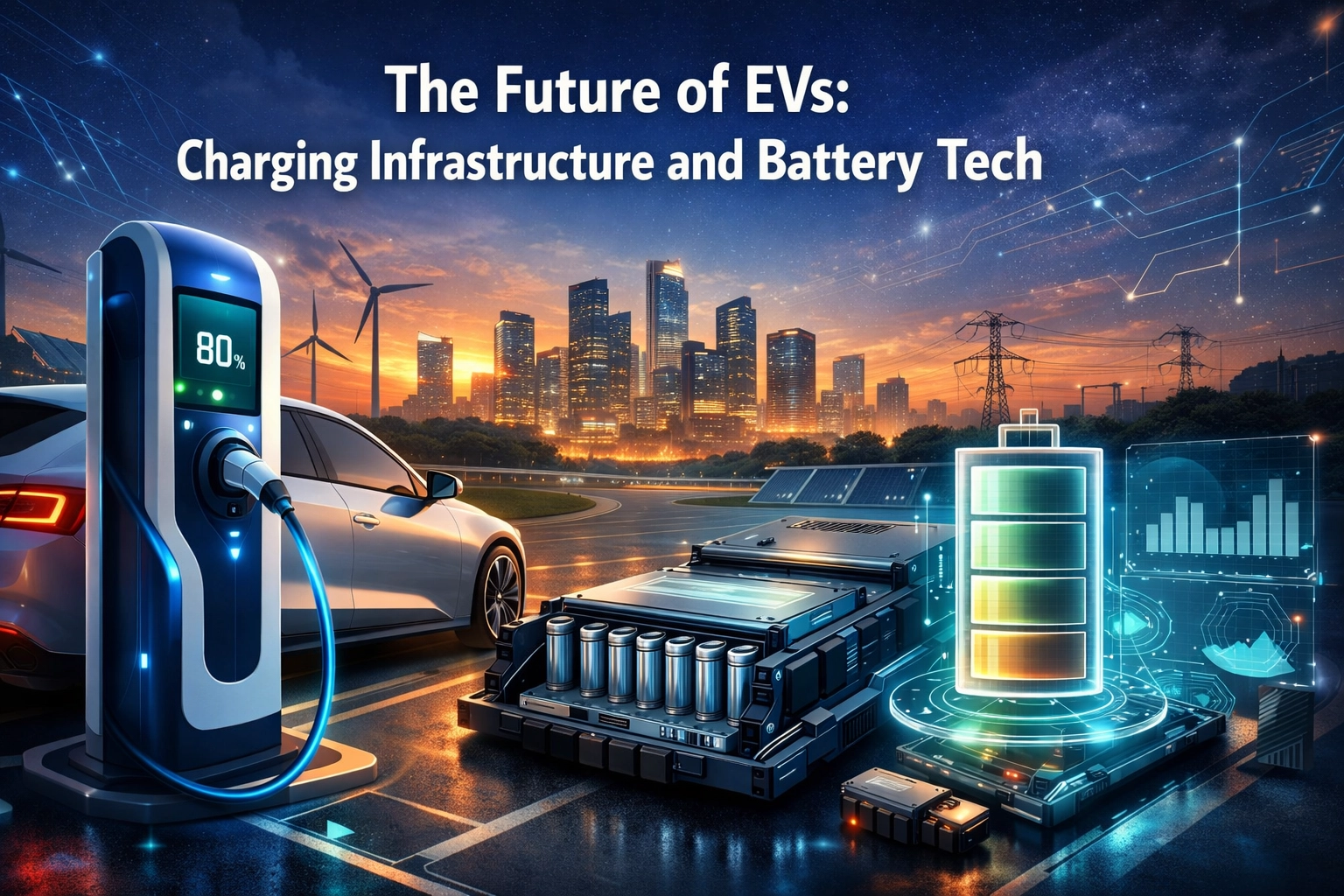
By March 2026, the conversation around Electric Vehicles (EVs) has shifted. We’re no longer asking "Will they work?" but rather "How fast can we push the physics?" The industry has moved past the early-adopter phase and is now tackling the hard engineering problems: energy density, grid stabilization, and the total elimination of range anxiety through sheer charging speed.
If you bought an EV in 2022, your tech already feels like a vintage smartphone. We are seeing a massive convergence of 1,000-volt architectures, solid-state breakthroughs, and a grid that talks back to your car. Let’s dive into the technical reality of the EV landscape in 2026.
The 1,000-Volt Architecture: Why Voltage is King
For years, the 400-volt system was the industry standard. Then came the 800V systems in Porsches and Hyundais. But in 2026, the gold standard for high-end and performance EVs is the 1,000-volt architecture.
The physics here is simple but transformative: P (Power) = V (Voltage) x I (Current). To get more power into a battery without melting the cables, you either increase the current (which requires massive, heavy, liquid-cooled copper wires) or you increase the voltage. By pushing to 1,000V, manufacturers like BYD and Zeekr are achieving charging speeds that were unthinkable three years ago.
BYD’s Super e-Platform, which became the talk of the industry in late 2025, utilizes this 1,000V domain to deliver approximately 400 km of range in just 5 minutes. That is roughly two kilometers of range added per second. When you can fill up your car in the time it takes to buy a cup of coffee, the "home charging vs. gas station" debate effectively ends. The gas station model wins on convenience, provided the infrastructure is there to support it.
Solid-State Batteries: The Holy Grail Hits the Tarmac
We’ve been hearing about solid-state batteries (SSBs) for a decade, but 2026 is the year they moved from the lab to specialized production lines. Traditional lithium-ion batteries use a liquid electrolyte to move ions between the anode and cathode. This liquid is flammable and limits how densely you can pack the cells.
Solid-state batteries replace that liquid with a solid ceramic or polymer electrolyte. The technical advantages are staggering:
- Energy Density: We are seeing figures north of 500 Wh/kg, nearly double that of high-end liquid-electrolyte cells.
- Safety: No liquid means no thermal runaway in the traditional sense. These batteries don't catch fire when punctured.
- Charge Rates: SSBs can handle extreme current without the "lithium plating" that destroys traditional batteries during fast charging.
While your average budget hatchback might still run on Lithium Iron Phosphate (LFP) or Sodium-ion cells (which are great for cost and longevity), the premium segment in 2026 is all about solid-state. This tech is what’s enabling the first true 1,000-mile (1,600 km) range vehicles, making EVs viable for even the most remote Australian outback or North American cross-country hauls.
Bidirectional Charging (V2G): Your Car is a Power Plant
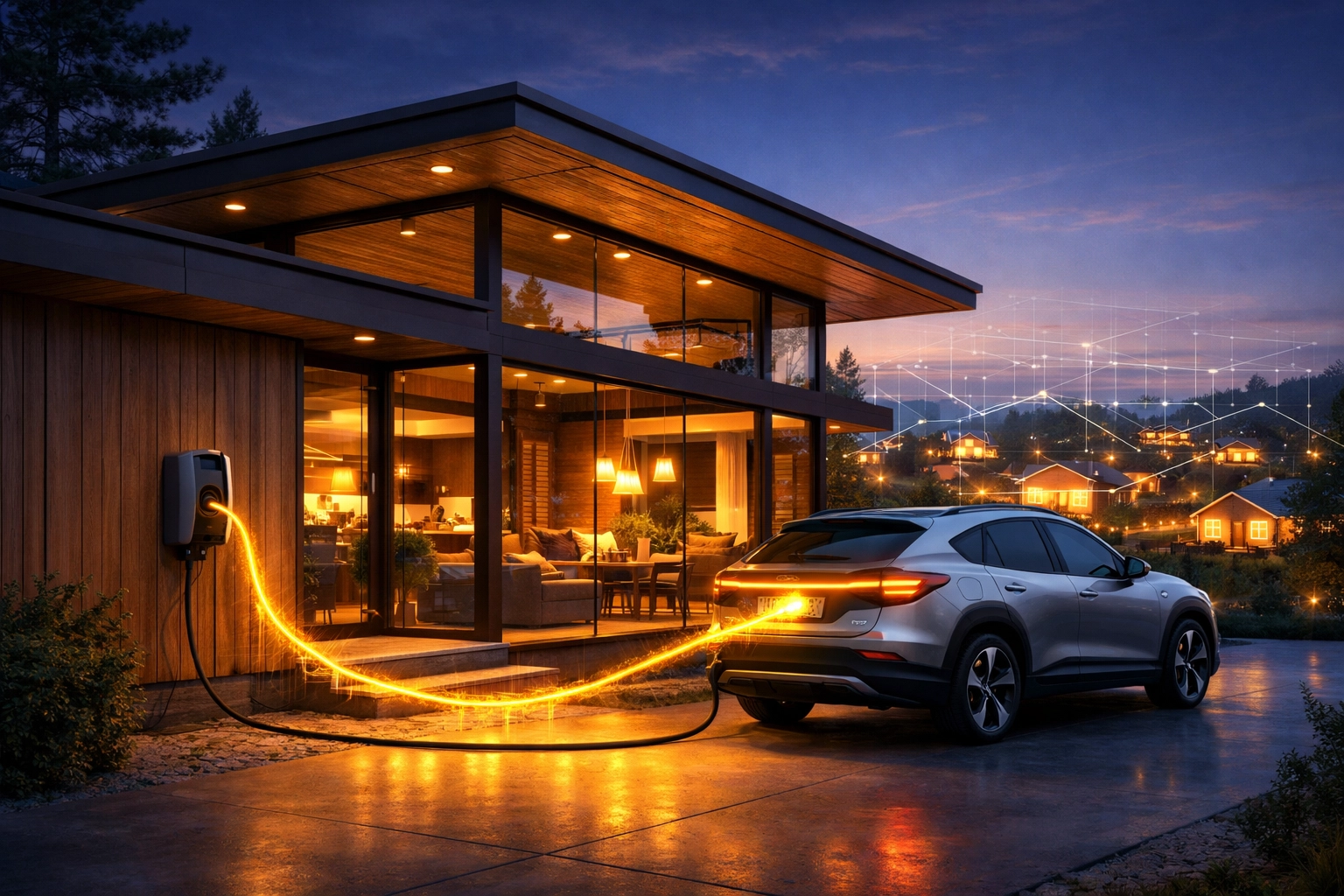
One of the most significant shifts in 2026 isn't how we put power into the car, but how we take it out. Vehicle-to-Grid (V2G) and Vehicle-to-Home (V2H) technology has moved from experimental pilots to a standard feature for brands like Tesla, GM, and BMW.
With the ISO 15118-20 standard now widely implemented, EVs are functioning as massive mobile batteries that stabilize the grid. In the UK, bidirectional charging programs are allowing EV owners to earn over £320 per year simply by letting the grid "borrow" some juice during peak demand hours and recharging when prices are low.
From a technical standpoint, this requires a bidirectional inverter. Most modern home chargers are now "smart" enough to manage this dance automatically. During a blackout, your Ford F-150 Lightning or Tesla Cybertruck doesn't just sit in the garage; it powers your fridge, lights, and HVAC for days. In 2026, the EV is the ultimate insurance policy against a failing or overtaxed power grid.
Megawatt Charging (MCS) and the Trucking Revolution
While 350 kW was considered "Ultra-Fast" in 2023, the heavy-duty sector in 2026 has moved into the Megawatt Charging System (MCS). Huawei has deployed 1.5 MW (1,500 kW) charging systems for electric semi-trucks, capable of transferring 20 kWh of energy per minute.
To put that in perspective, a 1.5 MW charger pulls as much power as a small neighborhood. To keep the hardware from melting, these stations use advanced liquid-cooled cables where the coolant is pumped directly around the copper conductors. This infrastructure is the backbone of the "Green Corridors": major shipping routes where electric freight is now cheaper per mile than diesel, thanks to high-speed energy transfer and lower maintenance costs.
Wireless Charging: The "Park and Forget" Reality
Cables are messy, they break, and they’re a hassle in the rain. Tesla’s acquisition of wireless charging startups a few years ago has finally borne fruit. Inductive charging pads, installed in garage floors or premium parking spots, allow for "plug-less" charging with efficiencies now reaching 93–95%, nearly on par with a physical cable.
The tech relies on resonant magnetic induction. When the coil in the car aligns with the coil in the ground, energy is transferred through the air. In 2026, we’re seeing this deployed at scale in city bus stops. A bus stops for 60 seconds to pick up passengers and gets a quick "top-up" from a pad embedded in the asphalt, allowing it to run all day with a much smaller, lighter battery.

The Infrastructure Gap: Data and Challenges
Despite the breakneck speed of tech, 2026 still faces a "geographic inequality" problem. While London, Shanghai, and Los Angeles are saturated with chargers, rural areas are lagging.
The technical challenge of ultra-fast charging is the grid impact. A single 5-minute fast-charger (756 kW) requires the same power draw as roughly 350 homes. You can't just plug that into a standard local transformer. The solution we’re seeing in 2026 is Buffer Storage. Modern charging stations now include their own stationary battery packs (often made from repurposed, "second-life" EV batteries). These packs trickle-charge from the grid 24/7 and then "dump" that massive energy into a vehicle during a 5-minute session, preventing local grid collapse.
Digital Twins and AI Management
To manage this complexity, operators are using Digital Twin technology. Before a single spade hits the dirt, engineers create a virtual replica of the charging site to simulate grid load, traffic flow, and even weather patterns. AI-powered load balancing then ensures that if ten cars plug in at once, the power is distributed intelligently based on each car’s state of charge and the owner's departure time, optimizing the local transformer’s capacity without blowing a fuse.
The Shift to "Phygital" Retail and Charging
Charging stations in 2026 are no longer just lonely pedestals in the back of a parking lot. They are "Phygital" (Physical + Digital) hubs. While your car pulls 1,000V, you’re in a lounge with high-speed Wi-Fi, integrated into the brand’s ecosystem. Companies like Shell and BP are pivoting their entire business models to these high-end service hubs, recognizing that while the "refuel" is faster than it used to be, it’s still a 10-minute dwell time that can be monetized.

The Bottom Line
The EV landscape of 2026 is defined by the death of compromise. Solid-state batteries have broken the range barrier, 1,000V architectures have broken the speed barrier, and V2G has turned the vehicle from a liability into a grid asset.
The remaining hurdles aren't about whether the technology works: it clearly does: but about how quickly we can upgrade the literal copper and transformers in the ground to keep up with the demand. For the consumer, the message is clear: the "gasoline era" is increasingly looking like a relic of the past, replaced by a faster, smarter, and more integrated electric future.
About the Author: Malibongwe Gcwabaza
Malibongwe Gcwabaza is the CEO of blog and youtube, a leading digital media brand focused on the intersection of emerging technology, sustainable energy, and the future of transport. With a background in technical SEO and a passion for dismantling complex engineering concepts, Malibongwe has spent the last decade tracking the transition from internal combustion to electric mobility. When he's not analyzing grid capacity or the latest battery chemistries, he's exploring how AI-driven content is reshaping the way we learn about the world.
About the Author


