
The fashion industry has spent the last decade trying to "greenwash" its way out of a crisis. We’ve seen the "Conscious Collections" and the recycled polyester blends that are, quite frankly, just a band-aid on a bullet wound. As we move through 2026, the conversation has shifted from "less bad" to "inherently good." This is the era of circular fashion.
In a linear economy, we take resources, make a shirt, and dump it in a landfill when the hem starts to fray. In a circular economy, waste is designed out of the system. Your wardrobe isn't just a collection of clothes; it’s a rotating inventory of biological and technical nutrients.
Building a 100% sustainable wardrobe in 2026 isn't about buying fewer organic cotton t-shirts. It’s about understanding the technical lifecycle of fibers, embracing the "Product-as-a-Service" model, and utilizing the Digital Product Passports (DPP) that are now mandatory for most garments sold in the EU and emerging as the global standard.
The Materials Science of 2026: Beyond Organic Cotton
To build a circular wardrobe, you have to start at the molecular level. For years, we were told "natural is better." While organic cotton is better than conventional, it still requires massive amounts of water and land. The 2026 gold standard for circularity relies on two distinct categories: Biological Nutrients and Technical Nutrients.
Biological Nutrients: Designed to Disappear
These are materials that can safely return to the earth at the end of their life.
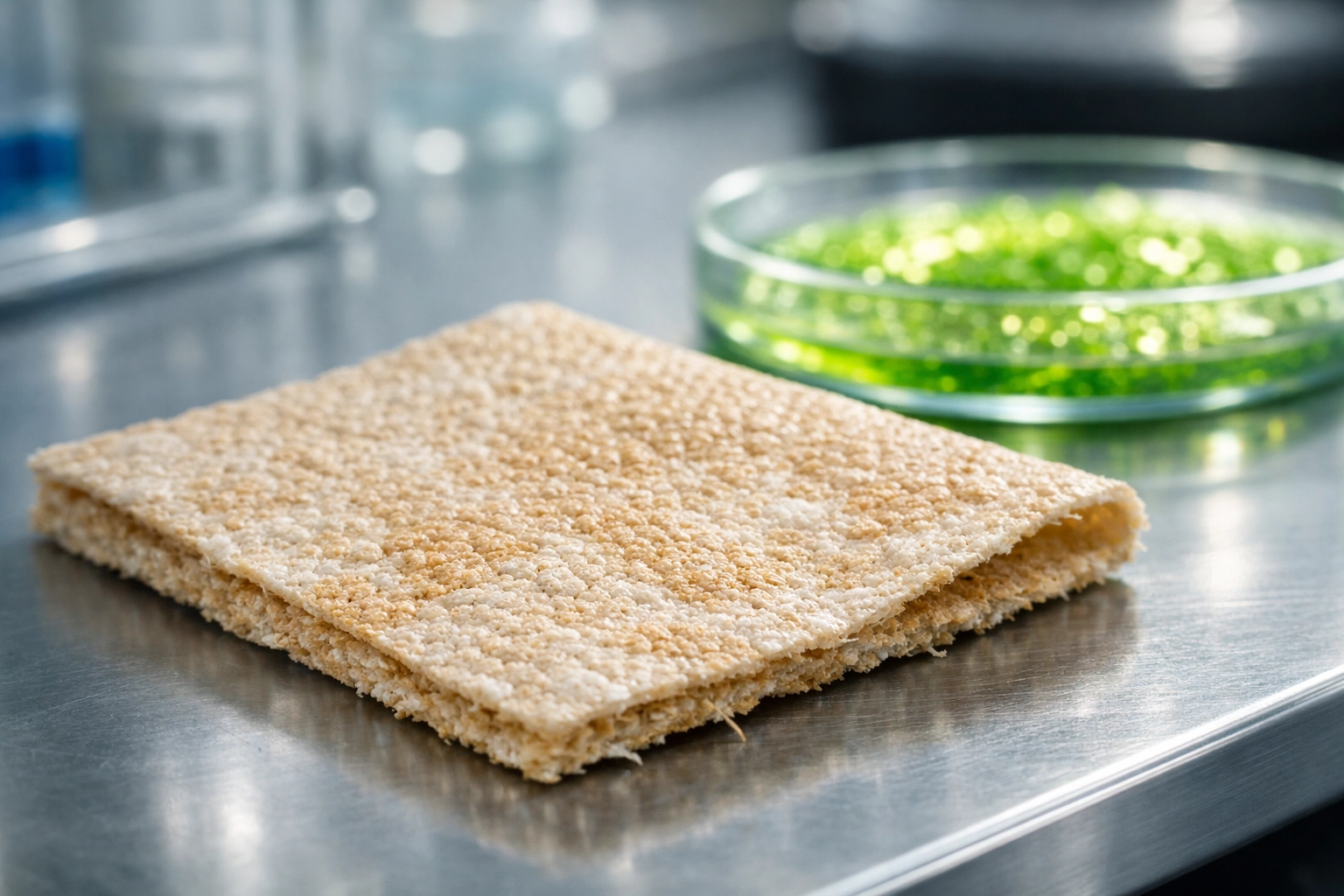
- Mycelium Leather: Brands like Bolt Threads and MycoWorks have finally scaled. Unlike animal leather or plastic "vegan" leather, mycelium (the root structure of mushrooms) is grown in labs with minimal footprints and is 100% biodegradable.
- Algae-based Pigments: Traditional textile dyeing is one of the most polluting processes on Earth. In 2026, we’re seeing a surge in bio-pigments derived from algae that actually sequester carbon during the production phase.
- Next-Gen Cellulosics: Look for Ioncell or Tencel Luxe. These are fibers made from wood pulp or recycled textile waste using a closed-loop solvent process where 99% of the chemicals are recovered and reused.
Technical Nutrients: The Infinite Loop
These are synthetic materials designed to be recycled indefinitely without losing quality.
- Chemically Recycled Polyester: Mechanical recycling (shredding plastic bottles) weakens fibers. Chemical recycling breaks polyester down to its monomer building blocks, allowing it to be rebuilt into "virgin-quality" yarn over and over.
- Monomateriality: This is the most important technical concept for your wardrobe. A jacket made of 100% nylon (including the zippers, threads, and buttons) is infinitely easier to recycle than a poly-cotton blend with metal hardware.
Digital Product Passports (DPP): Your Wardrobe’s Resume
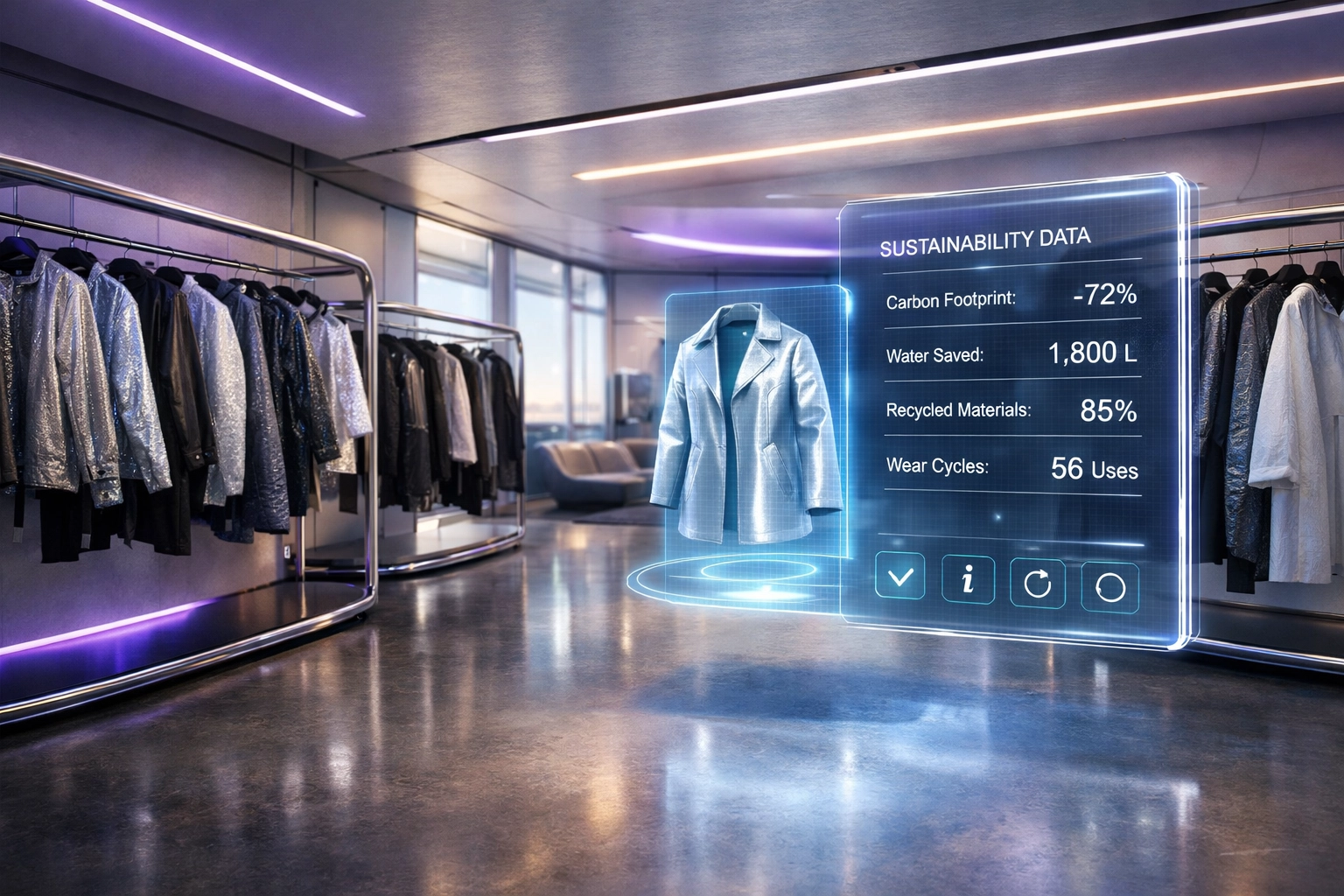
If you’re buying a high-end garment in 2026, it likely comes with an NFC tag or a QR code stitched into the seam. This is the Digital Product Passport. For the conscious consumer, this is the ultimate tool for accountability.
The DPP tells you:
- Origin of Raw Materials: Exactly which farm the wool came from.
- Chemical Profile: A guarantee that no PFAS or restricted substances were used.
- Repair Instructions: Specific guides on how to fix that specific garment.
- Resale Value: A verified link to the brand’s official resale platform, proving the item’s authenticity and history.
When building your wardrobe, prioritize brands that offer full transparency via DPP. It ensures that when you're done with a piece, the next person (or the recycler) knows exactly what they’re dealing with.
The "Access Over Ownership" Model
The most sustainable garment is the one that already exists. But in 2026, we’ve moved beyond just "buying used." The rise of Wardrobe-as-a-Service (WaaS) has changed how we view high-utility and occasion wear.
The Rental Core
For items you only wear 5-10 times a year, heavy winter coats, formal wear, or high-performance hiking gear, ownership is a liability. Rental platforms have evolved from "Rent the Runway" clones into hyper-local, peer-to-peer networks integrated with brand-led subscriptions.
Instead of owning a $1,000 technical parka that sits in a closet for nine months, circular consumers are opting for seasonal subscriptions. This ensures the garment stays in constant use, maximizing its "utility-per-gram" of carbon.
Resale 3.0: Brand-Backed Secondary Markets
Gone are the days of wading through "fast fashion" trash on generic resale apps. In 2026, the best brands (Patagonia, Arc'teryx, Levi’s) have brought resale in-house. They buy back your old gear, refurbish it with expert technicians, and resell it with a renewed warranty. This "Re-commerce" model ensures that the brand remains responsible for the garment’s entire lifespan.
The Repair Culture: Maintenance as a Radical Act
You cannot have a circular wardrobe if you don't know how to maintain it. In the 2020s, we treated clothes like disposables. In 2026, visible mending and technical restoration are status symbols.
Technical Maintenance
- Ultrasonic Cleaning: We’ve realized that traditional washing machines are the enemy of longevity. They shed microplastics and break down fibers. High-end circular wardrobes now utilize ultrasonic or CO2 cleaning services that remove dirt at a molecular level without water or heat.
- DWR Re-proofing: For your technical shells, learning to reapplying Durable Water Repellent (DWR) coatings (the PFAS-free versions of 2026) can extend a jacket's life by a decade.
The Rise of the "Repair Cafe"
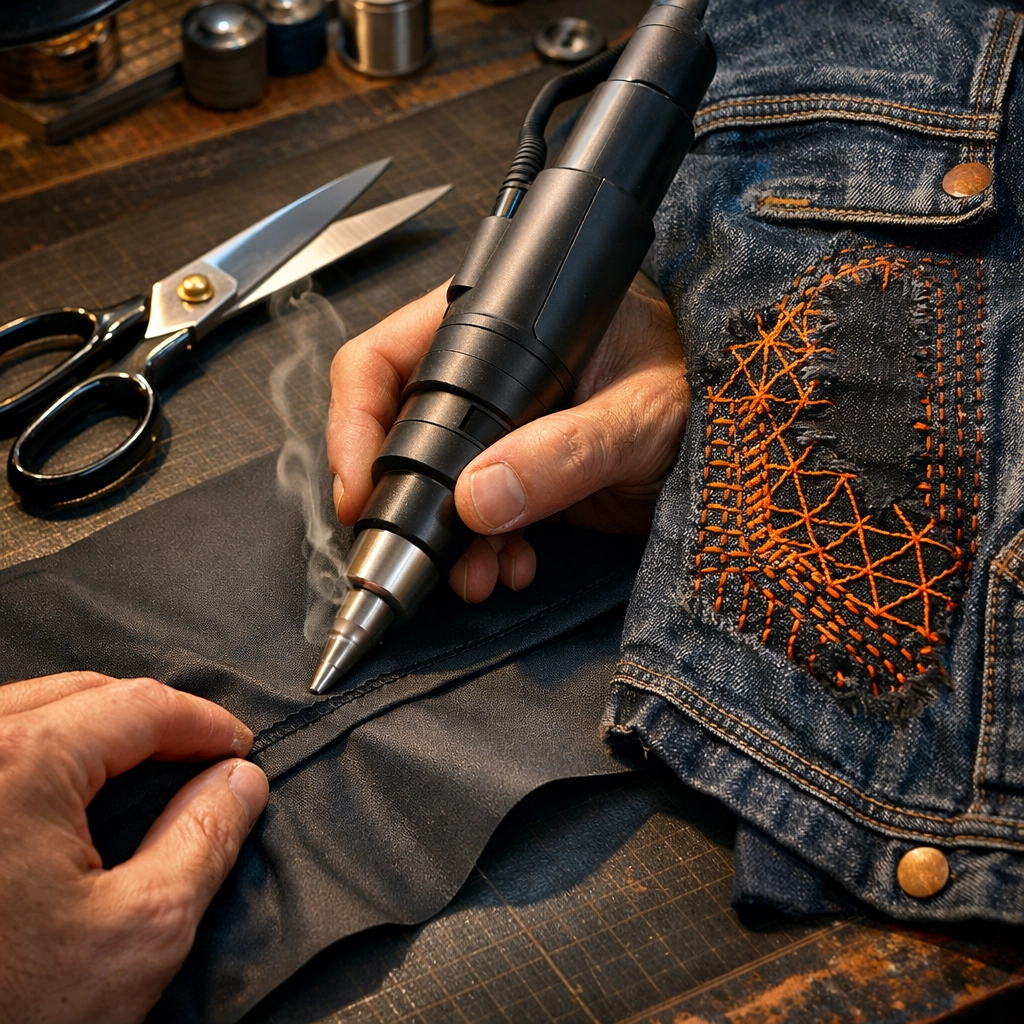
Most major cities now host specialized repair hubs. Instead of a standard tailor, these spaces use laser-stitching and 3D-knitting to repair holes in knitwear perfectly, or they embrace "Visible Mending", using contrast colors to highlight a repair, turning a flaw into a unique design feature.
How to Audit Your Wardrobe for 100% Circularity
Transitioning to a 100% sustainable wardrobe doesn't happen in a single shopping trip. It’s a multi-year audit and replacement strategy. Use this framework:
Phase 1: The Inventory Decarbonization
Stop buying. Look at what you own. Identify the "Linear Offenders", garments made of low-quality blends (e.g., 60% cotton, 40% polyester) that cannot be recycled and will likely fall apart within a year. Wear these until they are functionally dead, then research a "Downcycling" program that turns them into industrial insulation.
Phase 2: The Monomaterial Pivot
When you must replace an item, look for "Circular Design" certifications. This means:
- No mixed fibers: 100% organic linen, 100% recycled nylon, etc.
- Removable hardware: Buttons that screw off rather than being riveted on.
- Natural dyes: Plant-based or bio-fabricated colors.
Phase 3: The Modular Wardrobe
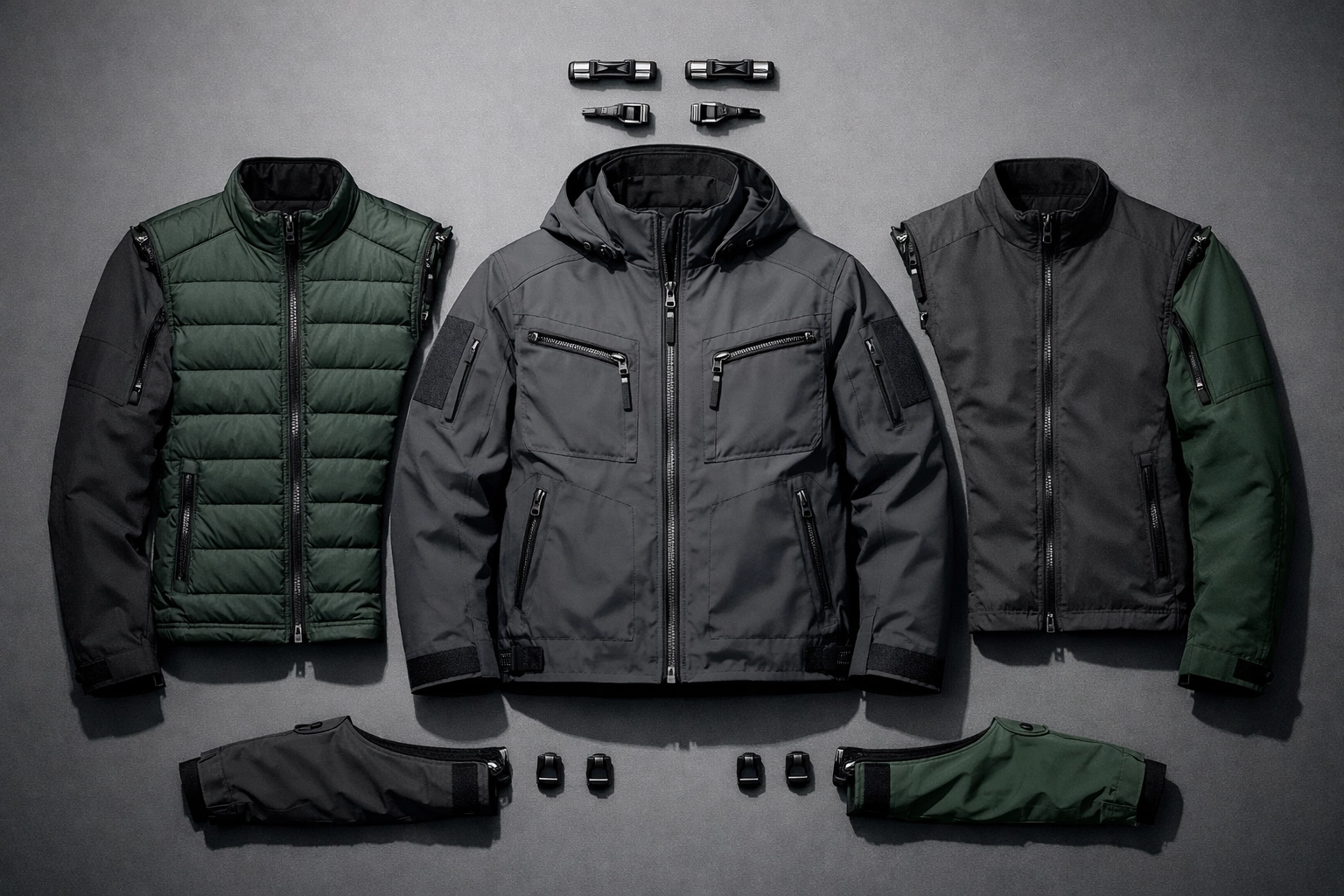
In 2026, the "Capsule Wardrobe" has evolved into the Modular Wardrobe. This involves choosing pieces with interchangeable components. Think jackets with zip-out linings that can be replaced if they wear out, or modular footwear where the sole (the part that wears out) can be unbolted from the upper (the part that lasts).
The Economics of Circularity: Cost Per Wear (CPW) 2.0
The biggest barrier to circular fashion used to be the "sticker shock." Yes, a 100% circular, ethically produced coat might cost $600, while a fast-fashion version costs $60. But the math of 2026 favors the circular investment.
The CPW Formula:
(Original Price – Resale Value + Maintenance Cost) / Number of Wears
A fast-fashion coat has a resale value of $0 and lasts 20 wears. Your CPW is $3.00.
A circular coat has a resale value of $300 (guaranteed by the brand's buy-back program) and lasts 200 wears. Even with a $50 professional cleaning, your CPW is $1.75.
Circularity isn't just an environmental choice; it's a financial optimization.
The End of the Loop: Responsible Disposal
Eventually, every garment reaches the end of its life. In a 100% circular system, this is where "End-of-Life" (EoL) protocols kick in.
By 2026, "Take-Back" schemes are the law in many jurisdictions. You should never, under any circumstances, put a textile in a general waste bin. If a garment is a biological nutrient, it goes to an industrial composting facility. If it’s a technical nutrient, it goes back to the manufacturer or a specialized molecular recycler who will break it down into raw pellets for the next production cycle.
Conclusion: The Future is Regenerative
Building a 100% sustainable wardrobe in 2026 requires a shift in identity. You are no longer a "consumer" of fashion; you are a "steward" of materials. By prioritizing monomateriality, utilizing Digital Product Passports, embracing rental models, and mastering repair, you aren't just reducing your footprint: you're participating in a regenerative system that proves style doesn't have to come at the cost of the planet.
The technology is here. The platforms are ready. The only thing left is to change the way you hang your clothes.
About the Author: Malibongwe Gcwabaza
Malibongwe Gcwabaza is the CEO of blog and youtube, a leading digital media house focused on the intersection of technology, sustainability, and future-proof living. With over a decade of experience in systems thinking and digital strategy, Malibongwe advocates for a "simple but deep" approach to modern challenges. When he's not analyzing the latest in circular economy trends, he’s exploring the future of decentralized media and AI-driven content creation.
About the Author


