
The dream of going off-grid used to mean trading your high-speed fiber for a spotty connection and your hot shower for a bucket. In 2026, that trade-off is officially dead. Between the maturation of LFP battery tech, the ubiquity of low-earth orbit (LEO) satellite internet, and smart waste management, "off-grid" now looks a lot like a high-end suburban lifestyle: just without the monthly utility bills and the vulnerability of a centralized grid.
If you’re planning a move to a remote homestead or simply want to insulate your current home from rising energy costs and grid instability, the tech stack has changed significantly over the last 24 months. This is the blueprint for a high-performance, autonomous home in 2026.
Energy: The Tesla Powerwall 3 and the LFP Revolution
In 2026, the backbone of any serious off-grid power system is no longer a DIY rack of lead-acid batteries. We have moved firmly into the era of Lithium Iron Phosphate (LFP). Unlike the older Nickel Manganese Cobalt (NMC) batteries, LFP chemistry can be charged to 100% daily without significant degradation, offers a lifespan of 10+ years, and: crucially for remote locations: is significantly less prone to thermal runaway (fire).
The Tesla Powerwall 3 has become the gold standard for this transition. Unlike its predecessor, the Powerwall 3 features an integrated solar inverter that can handle up to six solar inputs. This simplifies the "balance of system" (BOS) dramatically.
Why the Powerwall 3 Matters for Off-Grid:
- Continuous Power Output: It delivers up to 11.5 kW of continuous power. In plain English, that’s enough to start a high-draw well pump and run an energy-efficient HVAC system simultaneously.
- Efficiency: Because the inverter is built-in, there’s less energy lost in the DC-to-AC conversion process.
- VPP Readiness: Even off-grid, many users are now opting into "Virtual Power Plants" via Starlink, allowing them to trade excess energy with neighbors in micro-grids, turning a cost center into a literal revenue stream.
When sizing your solar array, don't just look at your average consumption. In 2026, we design for the "worst-case week" in December. To stay fully autonomous, you should aim for a solar capacity that is 2.5x your average daily kilowatt-hour (kWh) usage.

Connectivity: Starlink is No Longer Optional
The biggest barrier to off-grid living has historically been the "Zoom test." If you can’t hold a 4K video call, you can’t work most modern solo media or tech jobs. As of 2026, Starlink’s Gen 3 hardware and the expanded satellite constellation have reduced latency to sub-20ms in most of the Northern Hemisphere and much of the Global South.
For the off-gridder, the Starlink Mini and the Flat High Performance dishes are the two paths. The Mini is revolutionary for those split between a cabin and a van, drawing only about 25-40W of power. However, for a permanent home, the Flat High Performance dish is essential. It has a wider field of view and better performance in extreme weather (snow melt features are standard now).
Technical Tip: Powering Starlink is a constant drain on your battery bank. A 50W draw sounds small, but over 24 hours, that’s 1.2kWh: roughly 10% of a single Powerwall 3’s capacity. Many 2026 setups now use a DC-to-DC conversion kit to power the Starlink dish directly from the battery bank, bypassing the inefficient AC inverter entirely and saving about 15% in energy loss.
Water: Rain Harvesting and Advanced Filtration
In 2026, water security is more than just digging a well. With shifting climate patterns, "stacked" water systems are the only way to ensure 100% uptime. This means combining a deep-well solar pump with a high-capacity rainwater harvesting system.
The Anatomy of a 2026 Rainwater System
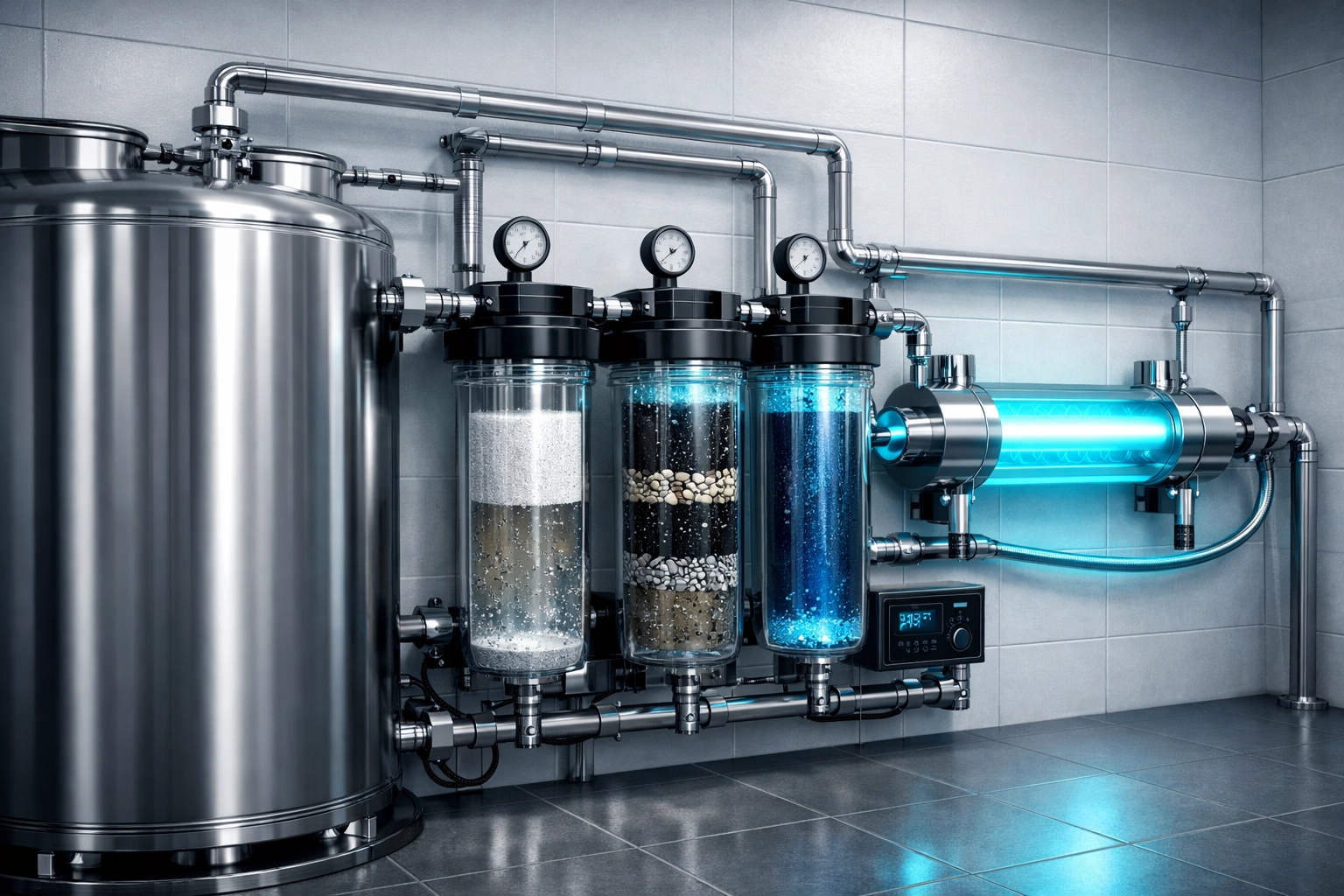
A modern setup doesn't just catch water; it treats it to a standard higher than most municipal tap water.
- The First Flush Diverter: This is a simple physical pipe that captures the first few gallons of rain (which contain roof dust and bird droppings) and redirects them away from your tanks.
- Triple-Stage Filtration: Before the water hits your tap, it should pass through a 20-micron sediment filter, a 5-micron carbon block (for chemicals and taste), and finally, a UV Sterilization chamber.
- UV Sterilization: This is the "kill switch" for bacteria and viruses. In 2026, LED-based UV systems are the standard: they last longer and use a fraction of the power of old mercury-vapor bulbs.
Waste: Closing the Loop with Greywater and Composting
The "septic tank" is becoming a relic for the modern off-gridder. Instead, we are seeing a shift toward Circular Waste Management. This involves separating blackwater (toilet waste) from greywater (shower, sink, and laundry water).
Composting Toilets 2.0
Forget the "bucket of sawdust." Modern composting toilets like the Separett Tiny or the Laveo Dry Flush use urine-diverting technology. By keeping liquids and solids separate, you eliminate the smell (which is caused by anaerobic bacteria in wet solids). The solids are composted into nitrogen-rich soil, and the liquids can be diluted and used as fertilizer for non-edible landscaping.
Greywater Irrigation
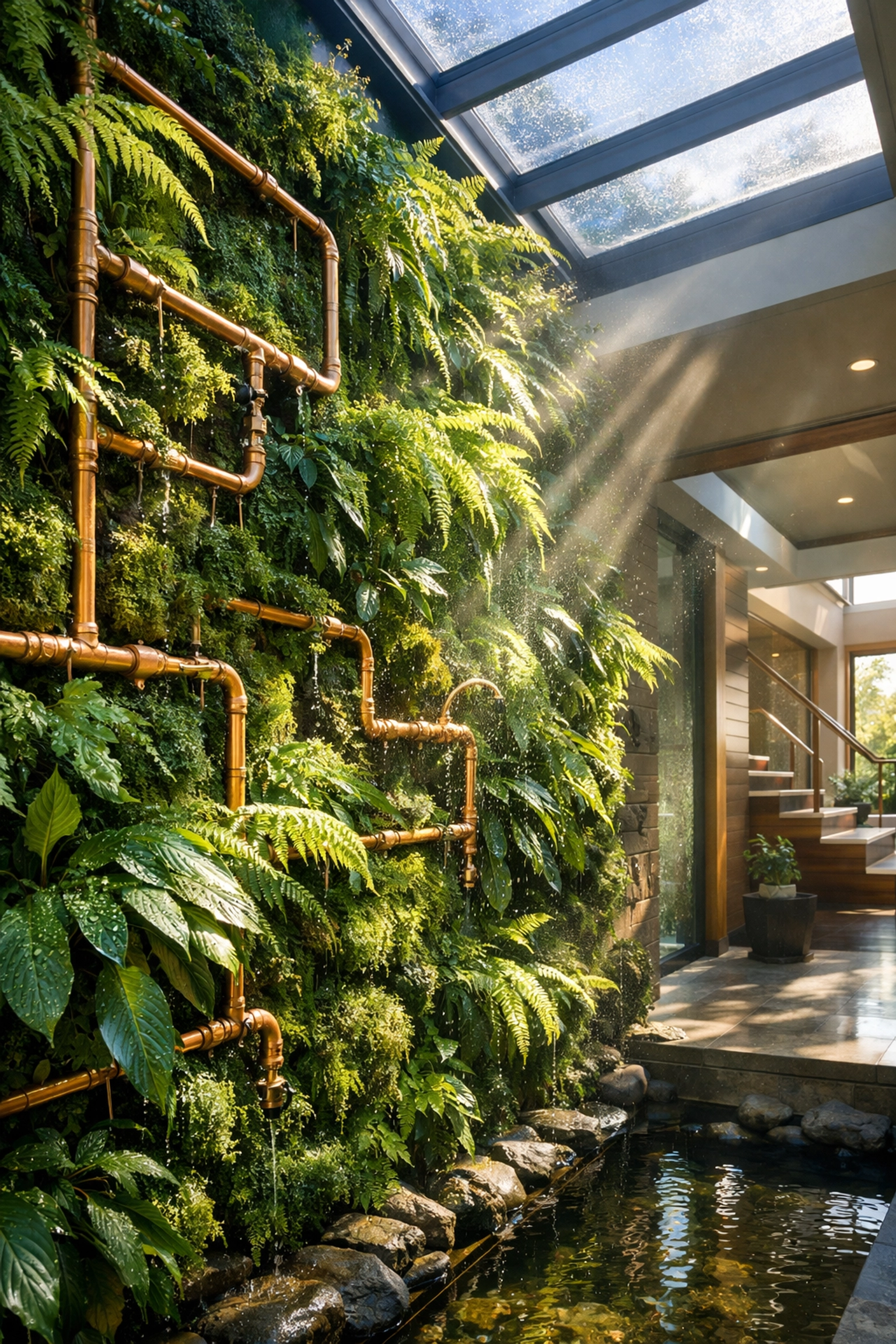
In a truly optimized 2026 home, every drop of water is used twice. Greywater is piped through a "branched drain" system into a series of mulch basins. These basins filter the water naturally through soil microbes, feeding fruit trees or ornamental gardens. This reduces the energy needed for pumping and ensures your landscape stays green even during droughts.
Future-Proofing: The "Smart" Off-Grid Home
The final piece of the 2026 puzzle is automation. An off-grid home is a living organism, and you need to monitor its vitals. Using protocols like Matter and Thread, your home can now make autonomous decisions to save its own life:
- If the battery drops below 20% at night, the home automatically kills power to non-essential loads (like the dishwasher or EV charger).
- If the weather forecast (synced via Starlink) predicts three days of heavy clouds, the heat pump pre-heats the house during the final hours of sun, "storing" thermal energy in the floors.
- Smart leak detectors automatically shut off the main water valve if they detect a pressure drop, preserving your precious stored water.
The Cost of Autonomy
Let's talk numbers. A high-end, fully autonomous system in 2026: including a 10kW solar array, two Powerwall 3s, Starlink hardware, and a 5,000-gallon water harvest system: will run between $35,000 and $55,000.
While that sounds steep, consider the ROI. With no utility bills, no water rates, and the ability to work from anywhere, the "payback period" is usually 7 to 9 years. But the real value isn't on the balance sheet; it's the peace of mind that comes from knowing that when the municipal grid fails, your lights stay on, your water keeps flowing, and your internet stays connected.
Living off-grid is no longer about "dropping out." It's about leveling up.
About the Author
Malibongwe Gcwabaza is the CEO of blog and youtube and a leading voice in the decentralized living movement. With over a decade of experience in technical SEO and digital infrastructure, Malibongwe focuses on how emerging technologies like LFP energy storage and LEO satellite networks are reshaping the global workforce. When not optimizing content strategies, he is usually found tinkering with his own solar array or exploring the intersection of AI and sustainable living.
About the Author


