
By 2026, the conversation around sleep has shifted from passive monitoring to active intervention. We are no longer satisfied with a smartphone app telling us we slept poorly; we want hardware that forced the body into a state of recovery. The "quantified self" movement has matured into the "optimized self," and nowhere is this more evident than in the bedroom.
The current landscape of sleep technology is defined by three pillars: thermal regulation, non-invasive brain stimulation (NIBS), and nearable AI sensing. If you are still relying on a basic foam mattress and a silent alarm, you are missing out on the most significant cognitive performance hack of the decade.
The Foundation: Smart Mattresses and Thermal Regulation
The most significant barrier to deep sleep (Stage 3 NREM) is core body temperature. In 2026, the gold standard for managing this isn't a better air conditioner; it’s the smart mattress cover.
The Eight Sleep Pod 4 and the Evolution of Autopilot
The Eight Sleep Pod series remains the market leader for a reason. By 2026, the Pod 4 and its iterations have perfected "Autopilot." This isn't just a cooling pad. It uses medical-grade sensors to track your heart rate, respiratory rate, and tossing and turning in real-time.
The technical magic happens through a process called thermography. As you fall asleep, the Pod drops the temperature to facilitate the natural dip in your core body temperature required for sleep onset. However, the real breakthrough in the 2026 models is the dynamic response to sleep stages. When the sensors detect you’ve entered REM sleep: a stage where the body's ability to thermoregulate is compromised: the mattress adjusts the temperature to prevent micro-awakenings caused by overheating.

Why Thermal Mass Matters
It isn't just about "cold." It's about thermal consistency. High-end smart mattresses now utilize phase-change materials (PCM) combined with liquid cooling loops. This allows the bed to absorb excess heat and dissipate it without the "cycling" noise associated with older fans. For couples, the dual-zone climate control is no longer a luxury but a necessity for sleep compatibility, allowing one partner to sleep at 65°F while the other stays at 72°F.
Non-Invasive Brain Stimulation (NIBS): The 2026 Frontier
If smart mattresses manage the environment, brain-computer interfaces (BCIs) manage the mind. In 2026, we’ve seen the rise of consumer-grade headbands that use transcranial Direct Current Stimulation (tDCS) or acoustic pacing to enhance sleep quality.
Enhancing Delta Waves
Deep sleep is characterized by slow, high-amplitude Delta waves. Gadgets like the latest Sleep Shepherd or specialized neuro-headbands now use "auditory binaural beats" or "bone conduction acoustic stimulation" to gently nudge the brain into these frequencies.
The tech works by monitoring your EEG (electroencephalogram) in real-time. When the device detects a transition into light sleep, it plays a specific frequency of sound: often sub-perceptual: that encourages the brain to remain in a deep sleep state. Technical studies in late 2025 showed that users of NIBS devices experienced a 15-20% increase in Deep Sleep duration compared to control groups.
Safety and Efficacy
While "zapping your brain" sounds futuristic or even dangerous, the 2026 generation of these devices uses ultra-low currents (often less than 2mA). They are designed for "entrainment," not "alteration." The goal is to reinforce the body’s natural rhythms, particularly for those suffering from shift-work disorder or chronic "social jetlag."

Wearables: The Precision of the Oura Ring 4 and Apple Watch 11
The debate between rings and watches is largely settled in 2026: it’s about the data density you require.
Oura Ring 4 (Ceramic & Titanium Editions)
The Oura Ring 4 has become the "quiet" leader in sleep tech. Its form factor is its greatest strength. Because the sensors sit directly against the palmar arteries of the finger, the signal-to-noise ratio for Heart Rate Variability (HRV) is significantly higher than that of wrist-based trackers.
In 2026, Oura’s software has moved beyond the "Sleep Score." It now provides "Chronotype Alignment" advice. It tells you, based on your physiological data, exactly when your "metabolic window" for sleep is. If your temperature hasn't started its evening drop, the app will advise you to push back your sleep time rather than tossing and turning, effectively curing "sleep effort" anxiety.
Apple Watch Series 11 and the Vitals App
Apple has leveraged its massive data set to improve its sleep stage detection to roughly 80% accuracy when compared to professional polysomnography (PSG). The Series 11 focuses heavily on respiratory health, using improved blood oxygen sensors and microphones to detect not just snoring, but early signs of sleep apnea. By 2026, the integration between Apple Health and clinical providers allows the watch to act as a pre-diagnostic tool for sleep disorders, potentially saving millions from undiagnosed fatigue-related issues.
Nearables: The Rise of Contact-Free Tracking
Many people find wearing a ring or a watch to bed intrusive. This has birthed the "nearable" category: devices that track you from the nightstand or under the mattress.
The SLEEPAL AI Lamp
A standout in 2026 is the SLEEPAL AI Lamp. It uses medical-grade radar (similar to the technology found in high-end automotive safety systems) to monitor the rise and fall of your chest. It can track your heart rate and respiratory rate from three feet away with 90% accuracy.
The lamp also functions as a circadian entrainment tool. It mimics the specific light spectrum of a sunset to trigger natural melatonin production and uses "blue-depleted" light for morning wake-ups. This is far more effective than a traditional alarm because it coordinates the light intensity with your lightest sleep stage, ensuring you don't wake up with "sleep inertia."

Withings Sleep Analyzer
For those who want a "set it and forget it" solution, the Withings Sleep Analyzer remains a powerhouse. It’s a thin mat that slides under your mattress. It uses ballistocardiography: a technique that measures the mechanical impulses of the heart: to provide a detailed analysis of your sleep cycles. In 2026, these mats have become sensitive enough to detect heart rate irregularities and even the onset of illness days before you feel symptoms, simply by tracking changes in your resting heart rate during sleep.
The Role of AI in 2026 Sleep Hygiene
The hardware is only half the story. The AI "Sleep Coaches" of 2026 are the real game-changers. We have moved past generic advice like "don't drink coffee after 2 PM."
Modern sleep AI analyzes your entire day:
- Light Exposure: How much Vitamin D/natural light did you get at 10 AM?
- Strain: How hard did you workout?
- Nutrition: Did that high-carb dinner at 8 PM spike your heart rate during the first half of the night?
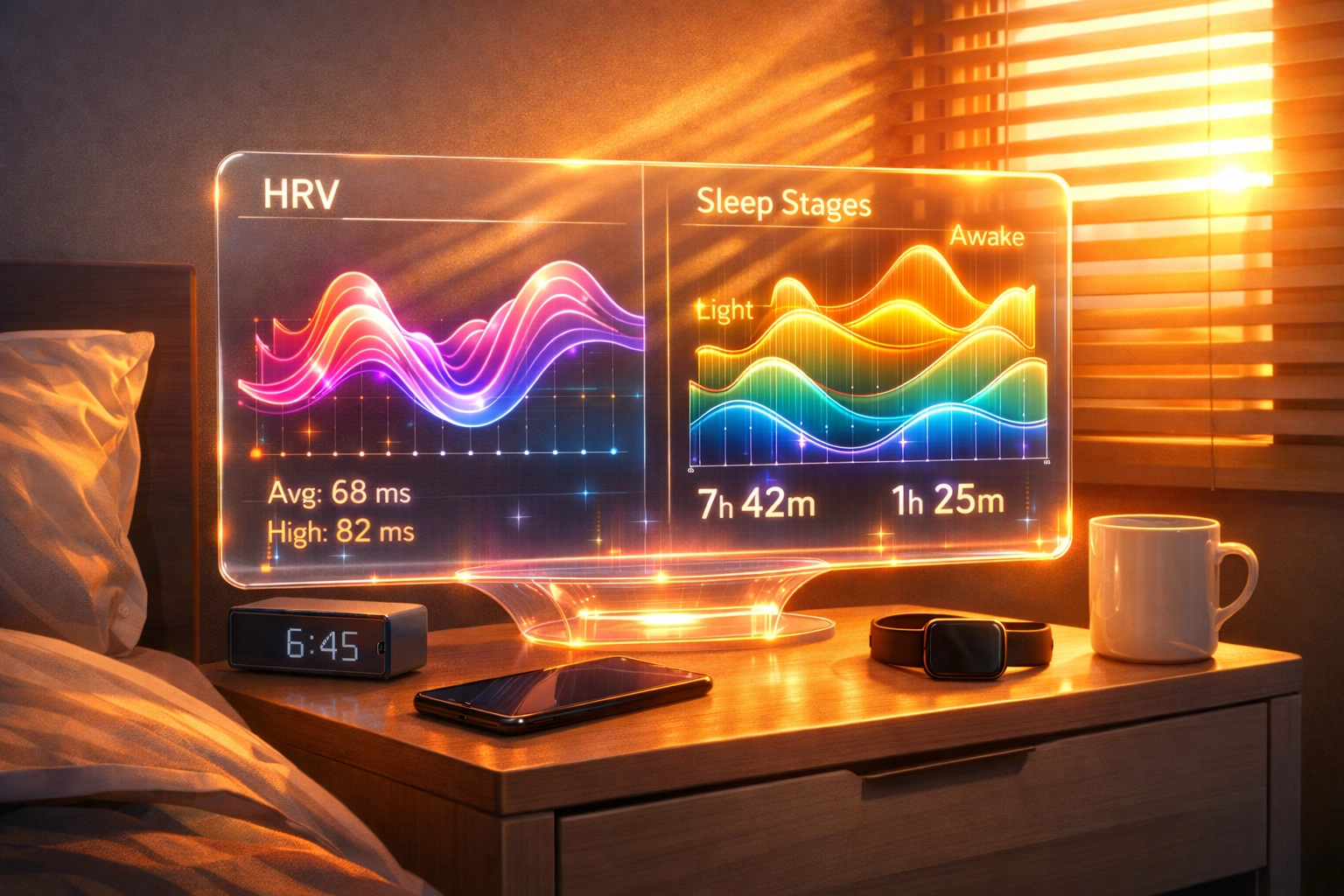
By correlating these variables, your sleep tech can now give you specific, actionable instructions. For example: "Your HRV is 15% lower than your baseline. Your core temperature remained elevated until 2 AM. Avoid the sauna tonight and lower your mattress temperature by 2 degrees to compensate for the inflammation."
Building Your 2026 Sleep Stack
If you’re looking to build the ultimate sleep environment this year, here is the technical blueprint:
- Primary Intervention: Eight Sleep Pod 4. You cannot overstate the importance of thermal regulation. It is the single most effective way to stay in deep sleep longer.
- The Monitor: Oura Ring 4. For 24/7 HRV tracking and readiness scores.
- The Optimizer: Neuro-stimulation Headband. Use this for 20 minutes before bed or during the first three hours of sleep to lock in those Delta waves.
- The Environment: Smart Circadian Lighting. Replace your standard bedroom bulbs with AI-driven lamps that sync with your internal clock.
The Technical Reality: Data Privacy in the Bedroom
As we invite more sensors into our most private spaces, the 2026 market has responded with "On-Device Processing." Most high-end sleep gadgets now process your physiological data locally. Your heart rate and movement patterns are encrypted before being sent to the cloud, or in some cases, never leave the device at all. When choosing your 2026 sleep tech, checking for "Local AI" processing is as important as checking the battery life.
Conclusion: Why This Matters Now
We are living through a productivity crisis, and the root cause is almost always sleep fragmentation. The gadgets of 2026 aren't just toys for the wealthy; they are essential tools for anyone looking to maintain high cognitive output in an increasingly demanding world. By moving from "tracking" to "intervening," we finally have the tools to master the third of our lives that we used to leave to chance.

About the Author: Malibongwe Gcwabaza
CEO, blog and youtube
Malibongwe Gcwabaza is the CEO of "blog and youtube," a leading digital media brand focused on the intersection of emerging technology, personal optimization, and the future of work. With over a decade of experience in the tech space, Malibongwe specializes in translating complex technical advancements into actionable strategies for high-performers. His work focuses on "Human-Centric Tech," ensuring that as AI and hardware evolve, they serve to enhance human well-being rather than detract from it. When he's not deep-diving into the latest SEO algorithms or AI hardware, he is experimenting with biohacking protocols to squeeze every ounce of performance out of his 4-hour deep sleep blocks.
About the Author


