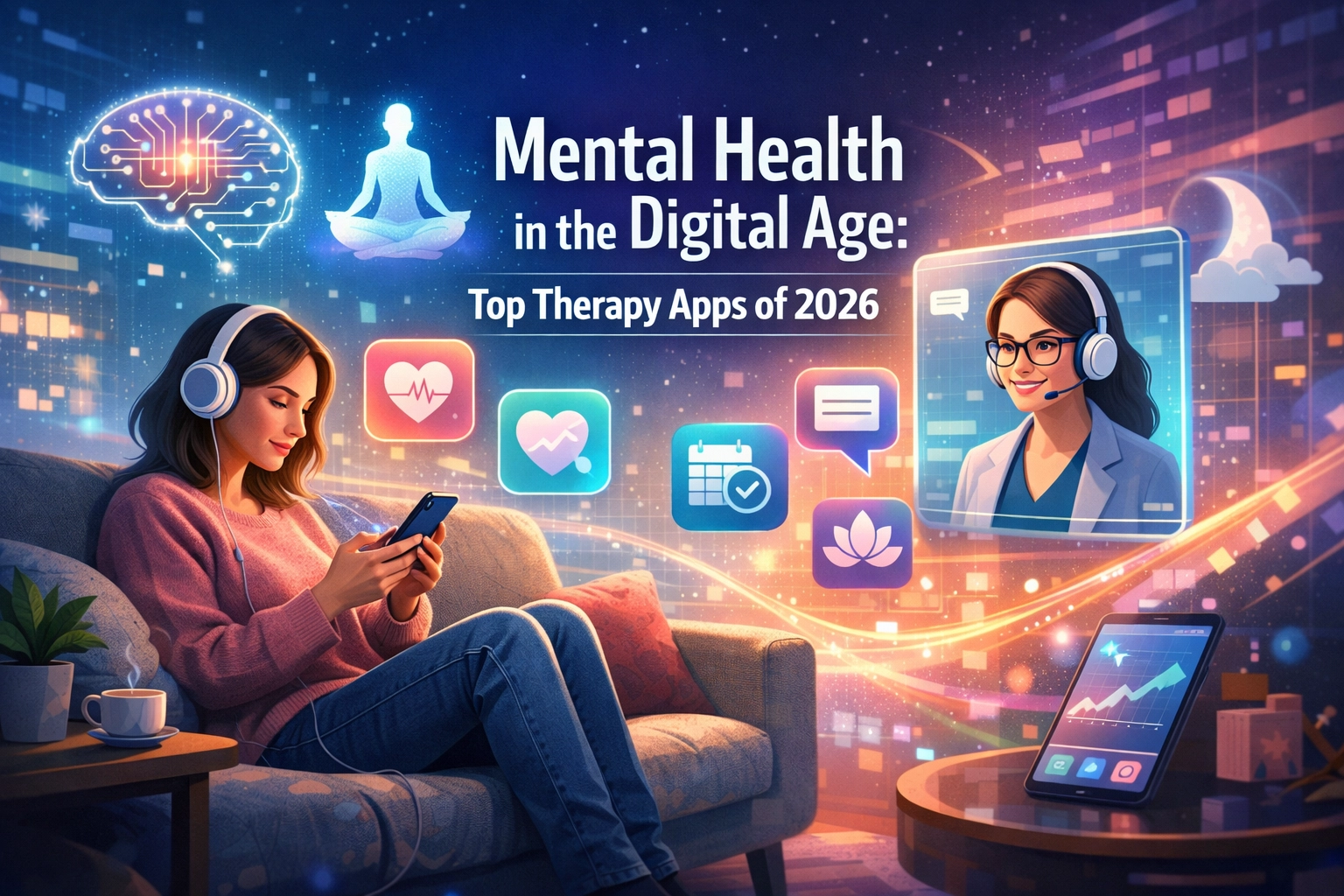
By 2026, the distinction between "wellness apps" and "medical-grade mental health tools" has effectively dissolved. We are no longer just looking at mood trackers that send a notification when you haven't logged your water intake. We are looking at sophisticated, AI-driven ecosystems that integrate biometric data, Large Language Models (LLMs) trained on clinical datasets, and seamless pipelines to licensed human professionals.
The mental health landscape has shifted toward a "hybrid care" model. Whether you are managing a diagnosed condition or seeking to optimize your cognitive performance, the apps available today are more personalized: and more effective: than anything we saw in the early 2020s. This guide breaks down the top platforms of 2026, focusing on their technical capabilities, clinical efficacy, and how they handle your most sensitive data.
The Rise of the AI Clinical Companion
In the past, "AI therapy" often felt like talking to a sophisticated flowchart. In 2026, the integration of generative AI with Cognitive Behavioral Therapy (CBT) and Dialectical Behavior Therapy (DBT) frameworks has created companions that don't just respond: they anticipate.
Flourish: The Positive Psychology Powerhouse
Flourish has emerged as a leader by moving beyond simple crisis intervention. It utilizes a proprietary AI named "Sunnie," which operates on a foundation of positive psychology and behavioral science.
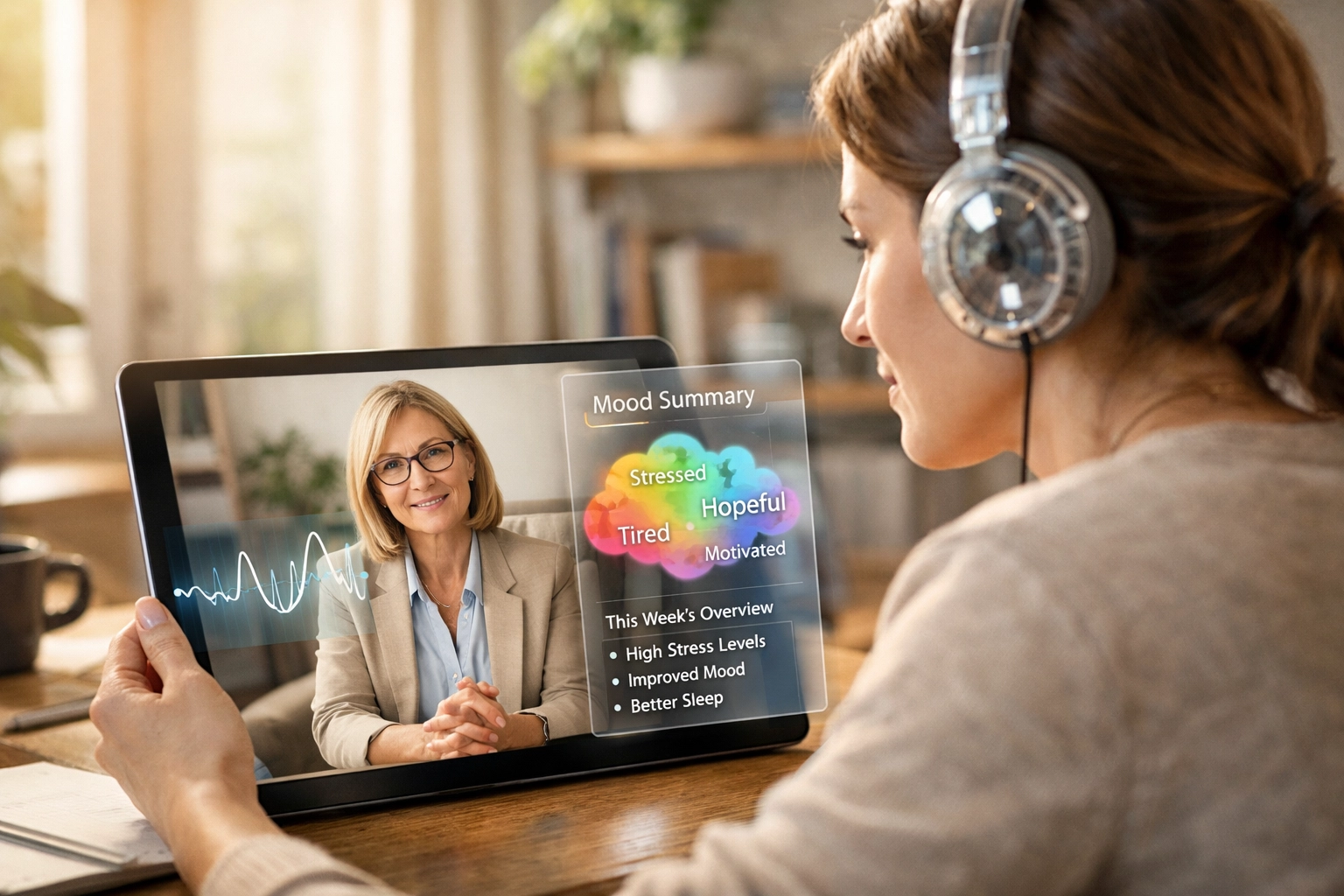
Technically, Flourish stands out because of its multi-modal input. Users don't just type; they use voice notes that Sunnie analyzes for vocal biomarkers: indicators of stress, fatigue, or depressive episodes hidden in speech patterns. The "Memory Jar" feature acts as a decentralized database of personal wins, using semantic search to remind users of their resilience during low moments. For those working with a human therapist, Flourish provides a "Clinical Export" feature that summarizes weekly trends without compromising the specific privacy of the conversations.
Woebot and Wysa: The FDA-Cleared Standard
If you’re looking for clinical rigor, Woebot and Wysa are the benchmarks. As of 2026, both have secured various FDA Breakthrough Device Designations. This isn't just a marketing label; it means these apps are regulated as medical software.
- Woebot remains the king of structured CBT. It uses 3-step skill drills and mood tracking visualizations that help users "reframe" cognitive distortions in real-time. Its efficacy in treating postpartum depression has made it a standard recommendation in maternal health clinics.
- Wysa specializes in the "pre-clinical" space, offering an AI chatbot for journaling and over 150 therapeutic exercises. Wysa’s strength is its ability to act as a triage system, identifying when a user’s symptoms move beyond the scope of AI and facilitating an immediate hand-off to a human coach or crisis line.

Biometric Integration: When Your Watch Knows You’re Anxious
The biggest technical leap in 2026 is the synergy between mental health apps and wearables. We are moving away from self-reporting: which is notoriously biased: and toward objective physiological data.
The Role of HRV and Cortisol Tracking
Apps like Sanvello and Headspace with Ebb now pull data directly from high-end wearables to monitor Heart Rate Variability (HRV). Low HRV is a physiological marker of a stressed nervous system. In 2026, if your Oura Ring or Apple Watch detects a significant drop in HRV accompanied by an elevated resting heart rate, your therapy app won't wait for you to open it. It will send a "micro-intervention": a 60-second box-breathing exercise or a grounding prompt: to nip the stress response in the bud.
Some advanced platforms have started integrating with Continuous Glucose Monitors (CGMs). Since blood sugar spikes and crashes can mimic or exacerbate anxiety symptoms, these apps provide a holistic view of mental health that includes metabolic data. This is "Biohacking for Mental Health" at its most practical level.
Hybrid Platforms: Human-Led, Tech-Augmented
While AI has come a long way, the "therapeutic alliance": the bond between a human patient and a human provider: remains the gold standard for complex trauma and deep-seated psychological work. The top platforms in 2026 use technology to make this human connection more affordable and accessible.
Grow Therapy and Brightside Health
Grow Therapy has revolutionized the administrative side of mental health. By 2026, they’ve optimized the matching algorithm to consider not just specialty and insurance, but "personality fit" based on communication styles. Their platform handles the backend for thousands of independent providers, making it the largest network that feels like a boutique practice.
Brightside Health focuses on high-acuity care. Their model integrates therapy with psychiatry and medication management. Their technical edge lies in their Suicide Prevention Program, which uses the Collaborative Assessment and Management of Suicidality (CAMS) framework. The platform uses predictive analytics to monitor "risk signals" in user check-ins, allowing for proactive intervention before a crisis occurs.
Talkspace and the Evolution of Asynchronous Care
Talkspace remains the leader in text-based therapy, but in 2026, they’ve added "Video AI Summaries." Before a therapist jumps into a live session, they receive an AI-generated brief of the user's asynchronous messages from the week, highlighting key themes and emotional shifts. This ensures that the 45 minutes of live time are spent on deep work rather than "catching up."
Specialized Apps for Modern Problems
Not everyone needs a full-blown therapy suite. Sometimes, you just need a tool to fix a specific "glitch" in your daily routine.
- Finch (Gamified Self-Care): For those struggling with executive dysfunction or "burnout brain," Finch turns self-care into a Tamagotchi-style game. You take care of a digital pet by taking care of yourself. In 2026, its social features allow for "micro-communities" where users can support each other's goals without the toxicity of traditional social media.
- How We Feel: This app focuses on emotional literacy. Many people can't get better because they can't accurately describe how they feel. Created by scientists and designers, it uses a high-resolution "emotion map" to help users move from "I'm stressed" to "I'm feeling overwhelmed by external expectations."
- MindShift CBT: A free, high-quality resource specifically for anxiety. It focuses on "active" strategies: think of it as a gym for your brain rather than a spa.
The 2026 Privacy Crisis: Is Your Brain Data Safe?
As we feed more data into these apps: voice notes, heart rate, sleep cycles, and even DNA data: the question of privacy becomes paramount. In 2026, the "Golden Standard" for mental health tech is Zero-Knowledge Encryption.
When choosing an app, look for those that process data on-device. This means the AI analysis of your voice or mood happens on your phone, not on a central server. Platforms that have moved to decentralized data storage are the ones winning the trust of the "Digital Nomad" and "Privacy First" communities. Be wary of "free" apps that don't have a clear clinical or subscription-based revenue model; in the mental health space, if you aren't paying for the product, your emotional data might be the product.

How to Build Your Mental Health "Tech Stack"
You don't need twenty apps. In fact, "app fatigue" is a real contributor to digital stress. A robust 2026 mental health stack usually consists of three layers:
- Layer 1: The Daily Anchor (AI): An app like Flourish or Woebot for daily check-ins, mood tracking, and immediate CBT tools. This replaces the traditional paper journal.
- Layer 2: The Biological Link (Wearable): A device that feeds physiological data into your anchor app to provide an objective reality check on your stress levels.
- Layer 3: The Human Safety Net (Clinical): A subscription to a platform like Grow Therapy or Talkspace for bi-weekly or monthly sessions to process deeper issues that AI isn't equipped to handle.
The Verdict
The "Digital Age" was once blamed for the decline of mental health. In 2026, we’ve flipped the script. Technology is no longer just the cause of our distractions; it’s the most powerful tool we have for our recovery. Whether it’s an AI chatbot that talks you down from a panic attack at 3:00 AM or a biometric sensor that tells you it's time to take a break before you even realize you're stressed, the top therapy apps of 2026 are making "mental fitness" as measurable and attainable as physical fitness.
The key is to start small. Download one tool, integrate it with your existing hardware, and be honest with the data. Your 2026 self will thank you.
About the Author: Malibongwe Gcwabaza
Malibongwe Gcwabaza is the CEO of blog and youtube, a leading digital media brand focused on the intersection of emerging technology, personal optimization, and the future of work. With over a decade of experience in the tech industry, Malibongwe specializes in analyzing how AI and decentralized systems are reshaping the human experience. He is a frequent speaker on digital wellness and a proponent of "technical mindfulness": using advanced tools to reclaim human focus. Under his leadership, blog and youtube has grown into a go-to resource for millions of readers looking to navigate the complexities of the 2020s with clarity and purpose.
About the Author


