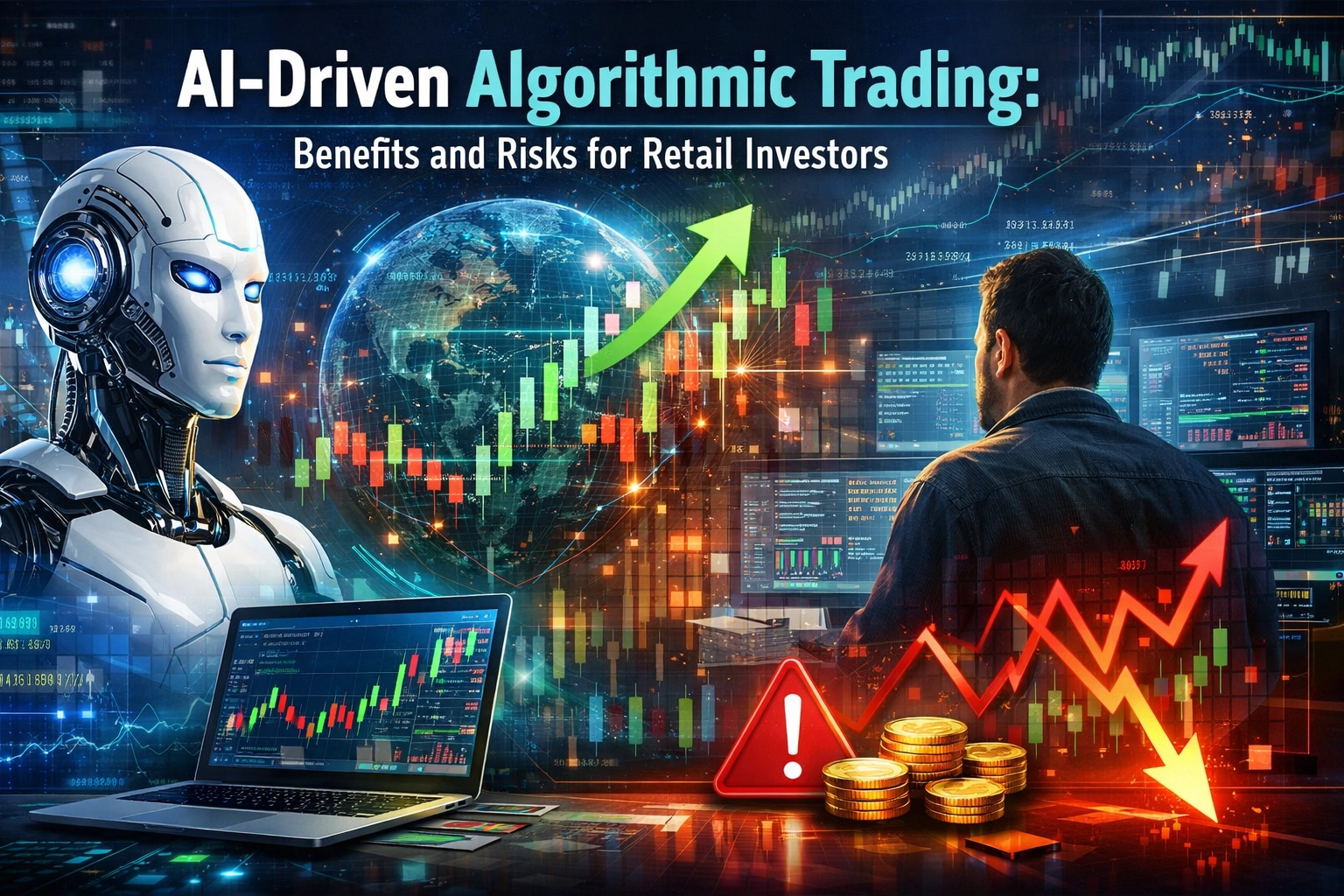
The playing field in global finance isn't just leveling; it’s being completely re-engineered. For decades, high-frequency trading (HFT) and sophisticated algorithmic strategies were the exclusive toys of Wall Street giants like Renaissance Technologies or Goldman Sachs. They had the microwave towers, the fiber-optic cables buried in straight lines, and the PhDs to write the code.
Today, the "moat" has evaporated. Thanks to cloud computing, open-source Python libraries, and robust API access provided by brokers like Interactive Brokers, Alpaca, and Binance, a retail investor in South Africa or Singapore can deploy an AI-driven trading bot from their laptop. But just because you can fly a fighter jet doesn't mean you know how to land it.
AI-driven algorithmic trading offers a tantalizing promise: objective, 24/7 execution that removes the emotional "weak link" of human psychology. Yet, beneath the hood of these "money-making machines" lie significant technical risks, from model overfitting to API security vulnerabilities. If you’re looking to transition from manual charting to automated intelligence, you need to understand the mechanics of the engine, and how it can stall.
What Exactly is AI-Driven Algorithmic Trading?
At its core, algorithmic trading is simply the use of computer programs to execute trades based on a defined set of instructions (an algorithm). However, there is a massive distinction between traditional "rule-based" algorithms and modern "AI-driven" systems.
Rule-Based Systems: These follow "if-then" logic. "If the 50-day Moving Average crosses above the 200-day Moving Average, then BUY." These are rigid and don't learn from new data.
AI-Driven Systems: These utilize Machine Learning (ML) and Deep Learning. Instead of being told the rules, the AI analyzes vast datasets, historical price action, social media sentiment, macroeconomic indicators, to discover patterns. A Reinforcement Learning (RL) model, for example, "plays" the market in a simulated environment, receiving "rewards" for profitable trades and "penalties" for losses, eventually evolving a strategy that a human might never have perceived.
The Core Benefits: Why Retail is Moving to Bots
1. The Death of Emotional Sabotage
Ask any professional trader what their biggest hurdle was starting out, and they won’t say "calculating the RSI." They’ll say "fear and greed." Human beings are evolutionarily hardwired to be terrible traders. We hold onto losers because we hope they’ll bounce back (Loss Aversion) and sell winners too early because we’re afraid the profit will vanish.
AI doesn't have a pulse. It doesn't get "revenge" after a losing trade, and it doesn't get "cocky" after a win. It executes the plan with surgical precision, ensuring that your risk management parameters are respected every single time.
2. Backtesting at Scale
Before AI, testing a strategy meant manually scrolling through charts or running basic Excel simulations. With AI frameworks like Backtrader or QuantConnect, retail investors can run "Monte Carlo simulations" on ten years of tick data in minutes. You can see how your strategy would have performed during the 2008 crash, the 2020 COVID dip, and the 2022 inflation spike. This provides a statistical foundation for your confidence, or a warning that your idea is trash.
3. 24/7 Market Participation
The crypto market never sleeps, and the FX market only closes on weekends. A human cannot monitor the BTC/USDT pair at 3:00 AM on a Tuesday. An AI-driven bot can. It can monitor 50 different currency pairs or 500 different stocks simultaneously, scanning for "alpha" (market-beating returns) while you sleep, work your day job, or spend time with family.
The Technical Reality Check: Deep Dive into Risks
This is where most "get rich quick" YouTube gurus stop talking. To succeed in automated trading, you have to be a risk manager first and a trader second. The technical risks are where retail investors lose their shirts.
1. The Overfitting Trap (P-Hacking)
The most common mistake in AI trading is overfitting. This happens when you train an AI model too closely on historical data. The model "memorizes" the noise and random fluctuations of the past instead of learning the underlying signal.
Imagine an AI that notices every time a specific stock went up on a Tuesday when it was raining in New York. If the model is overfitted, it will place a massive buy order next Tuesday if the forecast says rain. In backtesting, the model looks like a genius with a 99% win rate. In live trading, it fails spectacularly because the "rain" variable was just a coincidence.
The Fix: Use "Out-of-Sample" testing. Train your AI on data from 2015–2020, then test it on 2021–2024 data it has never seen. If the performance holds up, you might have a real strategy.
2. Latency and Slippage
Institutional traders spend millions to be 0.001 seconds faster than the competition. As a retail investor using a home internet connection or a standard VPS (Virtual Private Server), you are inherently slower.
Slippage occurs when the price changes between the moment your AI sends a "Buy" signal and the moment the order is filled. In high-volatility environments, slippage can eat 10% to 20% of your expected profit. If your strategy relies on tiny price movements (scalping), latency will kill your account.

3. API Security and Infrastructure Failure
To trade automatically, you must connect your bot to your broker via an API (Application Programming Interface). This involves "API Keys." If a hacker gains access to your keys, they can’t necessarily withdraw your funds (if you disable withdrawal permissions), but they can execute trades to "pump and dump" illiquid coins, effectively draining your account into theirs.
Furthermore, infrastructure is a risk. What happens if your cloud server goes down while you have an open position with 10x leverage and no hard stop-loss? Or what if the broker's API rate-limits you, preventing your bot from closing a losing trade?
Data-Driven Risk Management: The "Must-Haves"
If you are going to deploy an AI bot, your code must include these three risk-mitigation layers.
1. Hard-Coded Stop Losses (Non-Negotiable)
Never let the AI "decide" when a loss is too big. The AI should operate within a "safety cage." If a trade loses 2% of the total account equity, the code should trigger an immediate market sell, bypassing the AI’s logic. This protects you from "Black Swan" events where the market behaves in a way the AI hasn't been trained for.
2. Position Sizing and the Kelly Criterion
Retail investors often blow up because they "bet the farm" on a single signal. Professional algorithmic traders use mathematical formulas like the Kelly Criterion to determine the optimal size of a series of bets.
- Formula: $K% = W – [(1 – W) / R]$
- W = Win probability, R = Win/Loss ratio.
Even a high-performing AI will have "drawdown" periods (consecutive losses). If your position size is too large, you’ll hit zero before the math turns in your favor.
3. Regime Detection
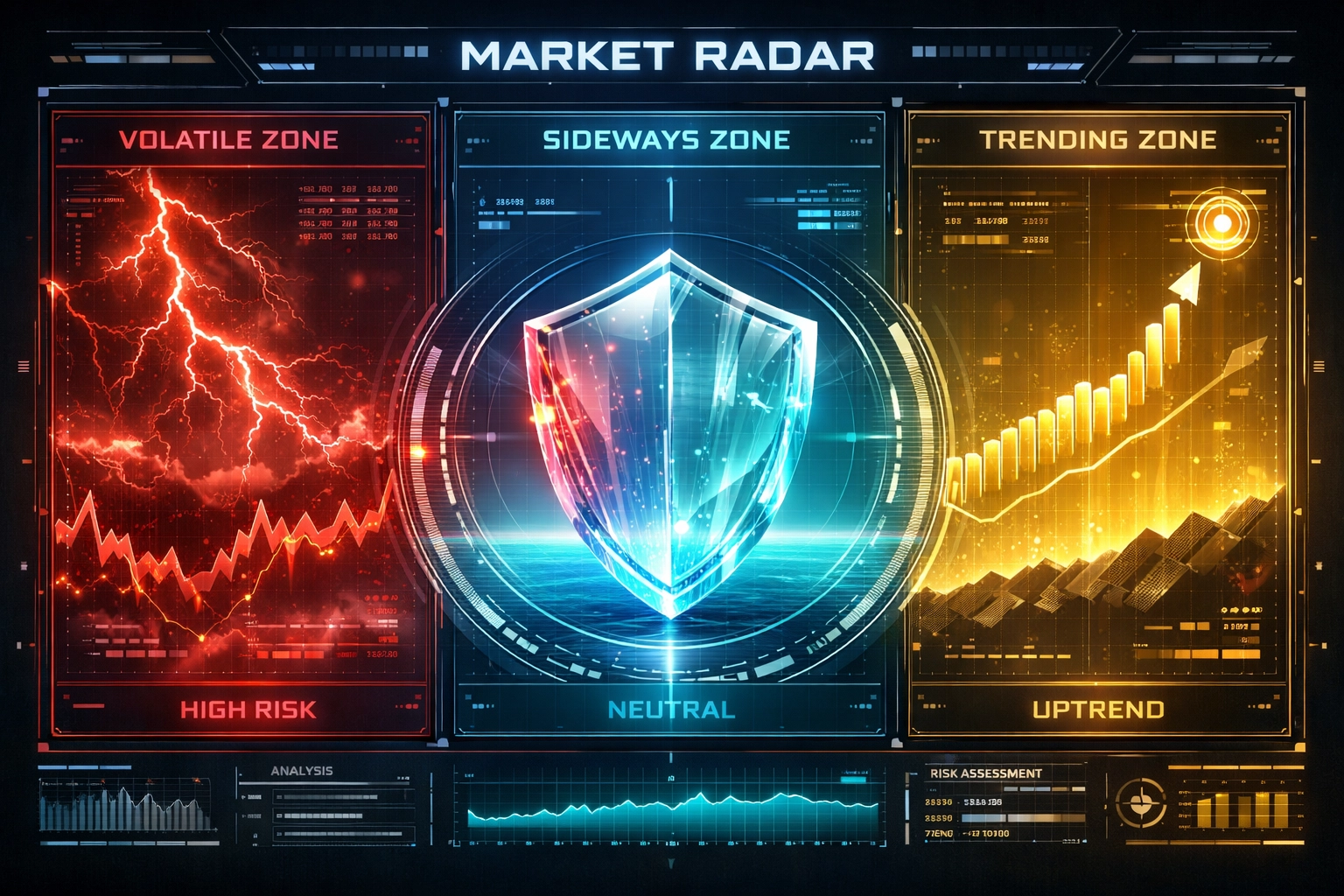
Markets change "regimes." A strategy that works in a "Bullish Trending" market will often get shredded in a "Mean Reverting" (sideways) market. Advanced AI systems use Hidden Markov Models (HMM) or unsupervised learning to detect which regime the market is currently in. If the regime shifts, the bot should automatically decrease its position size or stop trading altogether.
The Role of API Trading in Modern Strategy
API trading is the bridge between your brain (the AI) and the execution (the Exchange). For retail traders, choosing the right API is as important as the strategy itself.
- REST APIs: Good for most strategies, but have "polling" delays.
- WebSockets: Essential for real-time data. This allows the exchange to "push" data to your bot the millisecond a price change occurs.
- Fix Protocol: The gold standard for speed, though usually reserved for high-capital retail or institutional players.
When setting up your API, the Principle of Least Privilege is vital. Your API key should only have "Enable Trading" and "View Balance" permissions. Never enable "Enable Withdrawals" for an API key used by an automated bot.
The Future: LLMs and Sentiment Analysis
We are entering an era where AI doesn't just look at price charts (technical analysis) but also reads the news (fundamental analysis). Large Language Models (LLMs) can now scan thousands of earnings call transcripts, Fed speeches, and Tweets in seconds to assign a "sentiment score."
Imagine a bot that sees a sudden spike in negative sentiment regarding a specific tech stock on Reddit and X (formerly Twitter). It can combine this with a technical breakdown of a support level to enter a short position before the average human trader has even refreshed their news feed. This "multi-modal" approach is the current frontier for retail quantitative traders.
Final Thoughts: The Human-in-the-Loop
AI-driven trading is not a "set it and forget it" solution. The most successful retail "quants" treat their bots like employees. They monitor performance daily, check for "drift" (where the bot's live performance deviates from its backtest), and stay updated on macroeconomic shifts that might require a strategy tweak.
The goal isn't to replace the human mind with a machine, but to augment the human's strategic vision with the machine's tireless execution and analytical depth. Respect the risks, harden your security, and never stop testing.
About the Author: Malibongwe Gcwabaza
Malibongwe Gcwabaza is the CEO of blog and youtube, a media company dedicated to demystifying complex technologies for the digital age. With a background in business leadership and a passion for data-driven strategies, Malibongwe focuses on how emerging tech like AI and blockchain can be harnessed by individuals to build sustainable wealth. When he's not analyzing market trends, he's exploring the intersection of content creation and algorithmic automation.
SEO Target: AI Trading Risks
Keywords: Algorithmic trading for retail investors, Machine learning in finance, API trading security, Overfitting in trading models, Automated risk management, Quantitative trading strategies.
About the Author


