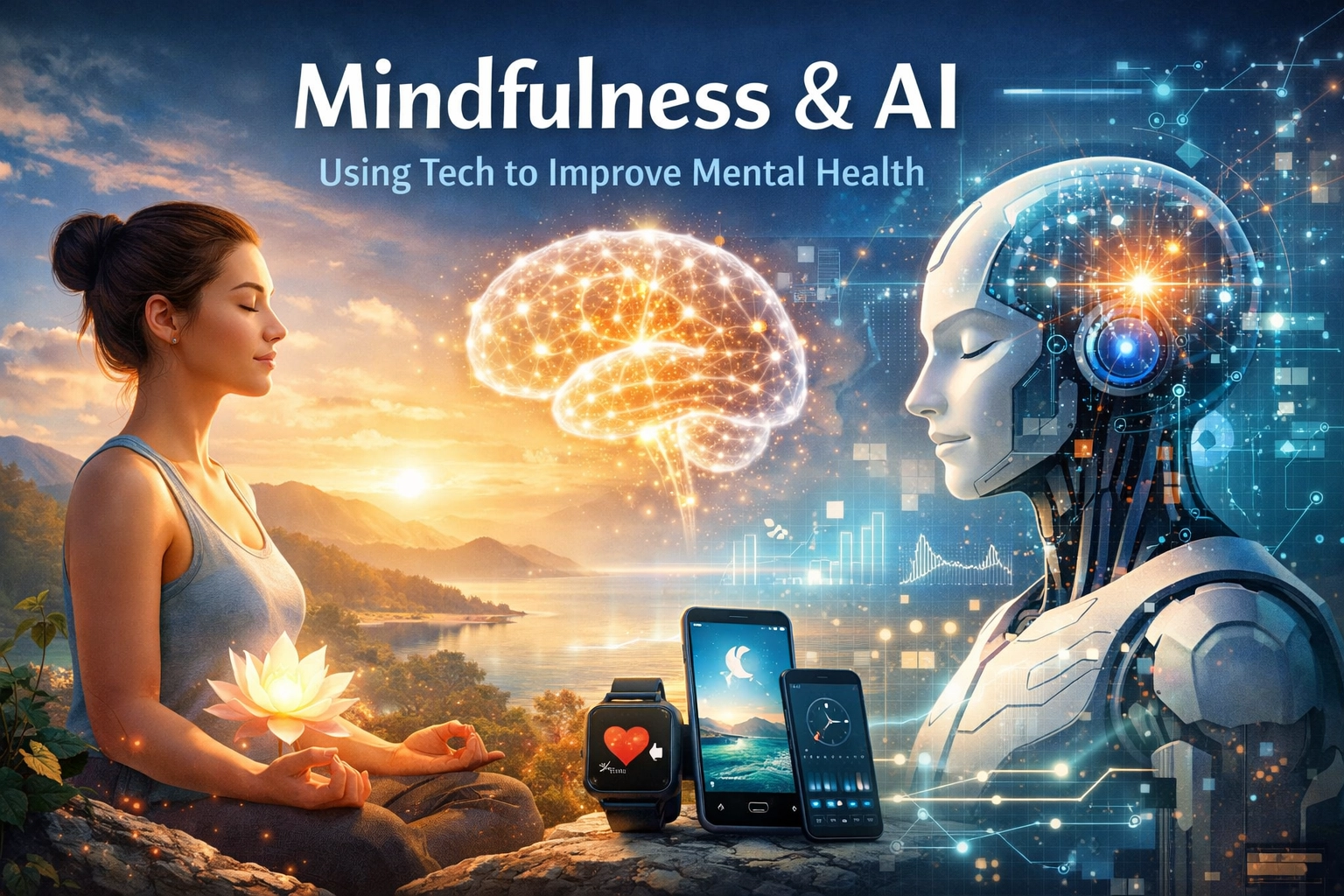
For a long time, the relationship between technology and mental health was framed as a zero-sum game. On one side, you had the "digital detox" advocates claiming that our devices were the primary engines of anxiety, fragmented attention, and social isolation. On the other side, you had the reality of modern life: we are inseparable from our hardware. By 2026, that binary has finally collapsed. We’ve moved past the idea that tech is purely a toxin and begun treating it as a sophisticated delivery system for psychological resilience.
The marriage of Artificial Intelligence and mindfulness isn't just about "there’s an app for that." It’s about a fundamental shift in how we monitor, interpret, and regulate our internal states. We are moving from generic, pre-recorded meditation tracks to generative, real-time biofeedback loops that understand your nervous system better than you do.
The Shift from Static to Generative Mindfulness
The first generation of mindfulness apps: think Headspace or Calm: were essentially libraries. They provided high-quality audio content, but the content was static. Whether you were mildly stressed from a deadline or dealing with a significant grief event, the "10-minute anxiety relief" track remained the same.
In 2026, AI has turned mindfulness into a dynamic experience. Modern systems leverage Large Language Models (LLMs) and specialized audio synthesis to create Generative Guided Meditations. These systems don't just play a file; they construct a session based on your specific biometric profile and self-reported mood. If the AI detects through your wearable that your heart rate variability (HRV) is low: indicating high physiological stress: it might pivot the session from a visualization exercise to a more grounded, parasympathetic-nervous-system-focused breathing pattern.
This is "Precision Wellness." By using Transformer-based architectures to process natural language inputs and physiological data, AI can now provide "just-in-time" interventions.

Biometrics: The Quantified Mind
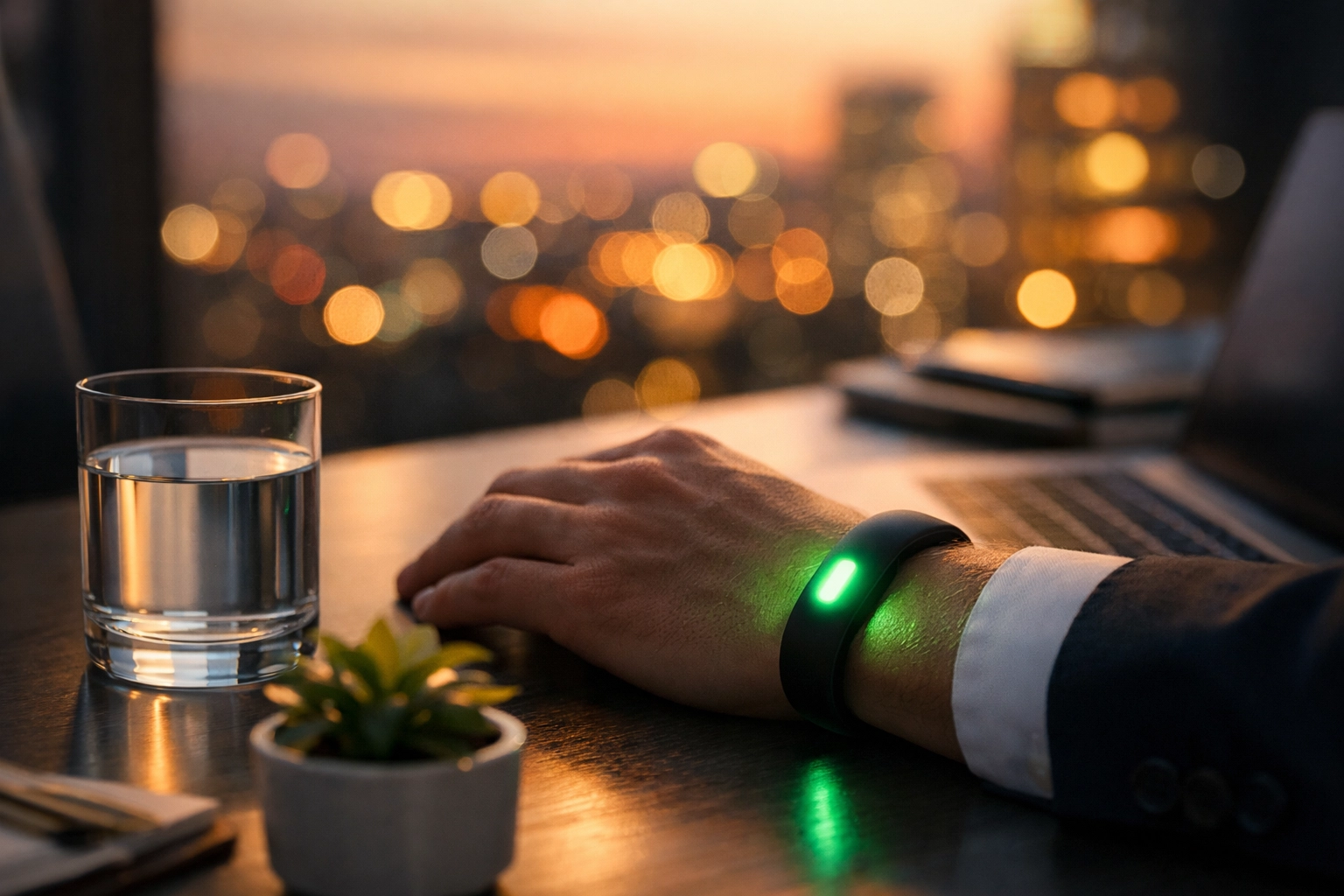
The backbone of AI-driven mindfulness is the integration of high-fidelity biometric data. We’ve moved far beyond basic step counting. Today’s wearables and ambient sensors track:
- Heart Rate Variability (HRV): The gold standard for measuring autonomic nervous system balance.
- Electrodermal Activity (EDA): Measuring skin conductance to detect sympathetic nervous system arousal (the "fight or flight" response).
- Photoplethysmography (PPG) Sensors: For tracking blood oxygen and precise pulse wave patterns.
- Neural Feedback: Consumer-grade EEG headbands that monitor alpha and theta brainwaves in real-time.
When an AI agent has access to this data, the "mindfulness" experience stops being a guessing game. If you are practicing a focused-attention meditation and your mind begins to wander, the AI can detect the shift in your brainwave patterns or the slight increase in your respiratory rate. In response, it can subtly adjust the ambient soundscape: perhaps increasing the volume of a rhythmic "brown noise" or gently chiming a bell: to nudge your focus back to the present moment. This creates a closed-loop system that accelerates the learning curve of meditation, which traditionally takes years of unguided practice to master.
Sentiment Analysis and the "Digital Twin" of Mood
One of the most powerful technical developments in this space is the use of Natural Language Processing (NLP) for sentiment analysis. By analyzing the way you interact with your devices: the syntax of your emails, the speed of your typing, and even the frequency of certain keywords in your digital journals: AI can build a "Digital Twin" of your emotional health.
Research has shown that changes in linguistic patterns often precede a clinical depressive episode or a burnout phase. AI systems can now flag these shifts weeks before the individual is even aware of them. For instance, a decrease in the use of first-person plural pronouns (we, us) and an increase in first-person singular pronouns (I, me) can be an early indicator of social withdrawal.
When the AI identifies these patterns, it doesn't just send a generic notification. It can curate a specific mindfulness curriculum designed to combat the identified trend, such as "Metta" (loving-kindness) meditations to foster a sense of connection or Cognitive Behavioral Therapy (CBT) micro-modules to challenge ruminative thought patterns.
AI Chatbots: The 24/7 Judgment-Free Zone
While AI is not a replacement for a human therapist (a point we will dive into later), it has solved the massive "accessibility gap" in mental healthcare. Traditional therapy is expensive, time-constrained, and often carries a social stigma.
AI-powered mental health assistants, like the evolved versions of Wysa or Woebot, provide a low-friction entry point for support. These aren't simple "if-then" chatbots. They utilize advanced NLP to engage in empathetic, context-aware conversations.
The technical depth here lies in Contextual Memory and Reflective Listening algorithms. The AI remembers your stressors from three weeks ago and can draw connections between your current mood and past events. "You mentioned feeling overwhelmed after your meeting with Sarah last Tuesday; is that same dynamic playing out today?" This level of continuity mimics the therapeutic alliance and provides a 24/7 safety net for people who need immediate grounding exercises during a panic attack or a high-stress moment.
Predicting Burnout Before It Happens
The most exciting frontier of AI and mindfulness is Predictive Analytics. By aggregating data from your calendar (number of back-to-back meetings), your sleep tracker (quality of REM sleep), and your activity levels, AI can calculate a "Burnout Risk Score."
In a corporate environment, this is becoming a tool for sustainable productivity. Instead of waiting for an employee to crash, the AI-integrated workspace can suggest "Micro-Restorations." These are 2-3 minute mindfulness "interstitials" placed strategically throughout the day.
For example, if the AI sees you have a high-stakes presentation at 2:00 PM and your cortisol levels (estimated via skin temp and HRV) are already peaking at 1:00 PM, it might block out 5 minutes on your calendar for a guided "box breathing" session. This is proactive mental health maintenance rather than reactive crisis management.
The Ethics of the "Mindful Machine"
We cannot discuss AI in the context of mental health without addressing the technical and ethical risks. When we hand over our most intimate emotional data to an algorithm, several critical issues arise:
1. Data Privacy and Sovereignty
Mental health data is the most sensitive category of personal information. If an AI predicts a depressive episode, who owns that insight? In a 2026 landscape, we are seeing the rise of Edge AI: where the processing happens locally on your device rather than in the cloud. This ensures that your "Emotional Digital Twin" stays under your control, encrypted and inaccessible to advertisers or insurance companies.
2. The Uncanny Valley of Empathy
There is a risk of "synthetic empathy." If a user begins to prefer the perfectly patient, always-available AI "therapist" over complex human relationships, it could paradoxically lead to more isolation. The goal of AI mindfulness should always be to enhance our capacity for human connection, not to replace it.
3. Algorithmic Bias
If the training data for these AI models is skewed toward certain demographics, the mindfulness advice it gives might be culturally insensitive or clinically inaccurate for marginalized groups. Constant auditing of the "Reward Models" in these AIs is necessary to ensure they are providing inclusive support.
AI as a Complement, Not a Substitute
It is vital to maintain a "Human-in-the-Loop" philosophy. AI is phenomenal at:
- Pattern recognition.
- Immediate grounding techniques.
- Data tracking and visualization.
- Maintaining consistency in practice.
However, AI lacks lived experience. It cannot truly "understand" the weight of human existence, grief, or the complexity of trauma. The most effective 2026 mental health stacks use AI as a "triage" and "maintenance" tool, while reserving human therapists for deep-work, complex trauma, and the irreplaceable nuances of the human-to-human therapeutic bond.

Practical Steps: Integrating AI Into Your Routine
If you’re looking to leverage these technologies today, you don't need a PhD in computer science. Here is how to build a high-tech mindfulness stack:
- Sync Your Data: Use a platform (like Apple Health or Google Fit) to centralize your biometric data. Allow your mindfulness app to read this data to enable personalized sessions.
- Enable Passive Sensing: If your app offers to monitor "digital biomarkers" (like typing speed or social usage), consider opting in, provided the data is processed locally (Edge AI).
- Set "Smart" Reminders: Instead of a generic 8:00 AM alarm, use an AI tool that prompts you to meditate when your physiological stress markers actually begin to rise.
- Use AI for "Cognitive Offloading": Sometimes, the best mindfulness practice is reducing the "mental load." Use AI to summarize long emails or organize your schedule, freeing up the cognitive bandwidth required to actually stay present.
The Future: Neural Interfacing and Beyond
As we look toward the end of the decade, the line between "tech" and "mind" will blur further. We are already seeing the early stages of non-invasive Neurostimulation. Imagine an AI that doesn't just suggest you calm down but uses targeted, low-frequency sound waves or gentle electrical pulses (tACS/tDCS) to physically guide your brain into a meditative state.
While that might sound like science fiction, it is the logical conclusion of our current trajectory. We are moving toward a world where mental health is not a state we struggle to maintain, but a set of parameters we can actively tune with the help of our silicon companions.
Technology created the "attention economy" that fragmented our focus. It is only fitting that the next evolution of that same technology: Artificial Intelligence: is the tool that helps us reclaim it.
About the Author: Malibongwe Gcwabaza
CEO of blog and youtube
Malibongwe Gcwabaza is a visionary leader at the intersection of digital media and emerging technologies. With over a decade of experience in the tech industry, Malibongwe has dedicated his career to exploring how artificial intelligence can be harnessed to improve human potential and well-being. Under his leadership, blog and youtube has become a premier destination for deep-dive technical analysis and accessible tech education. He is a staunch advocate for ethical AI development and believes that the future of technology lies in its ability to foster genuine human flourishing. When he’s not steering the company's strategic vision, Malibongwe is an avid practitioner of tech-augmented meditation and a frequent speaker at international conferences on the future of the digital economy.
About the Author


