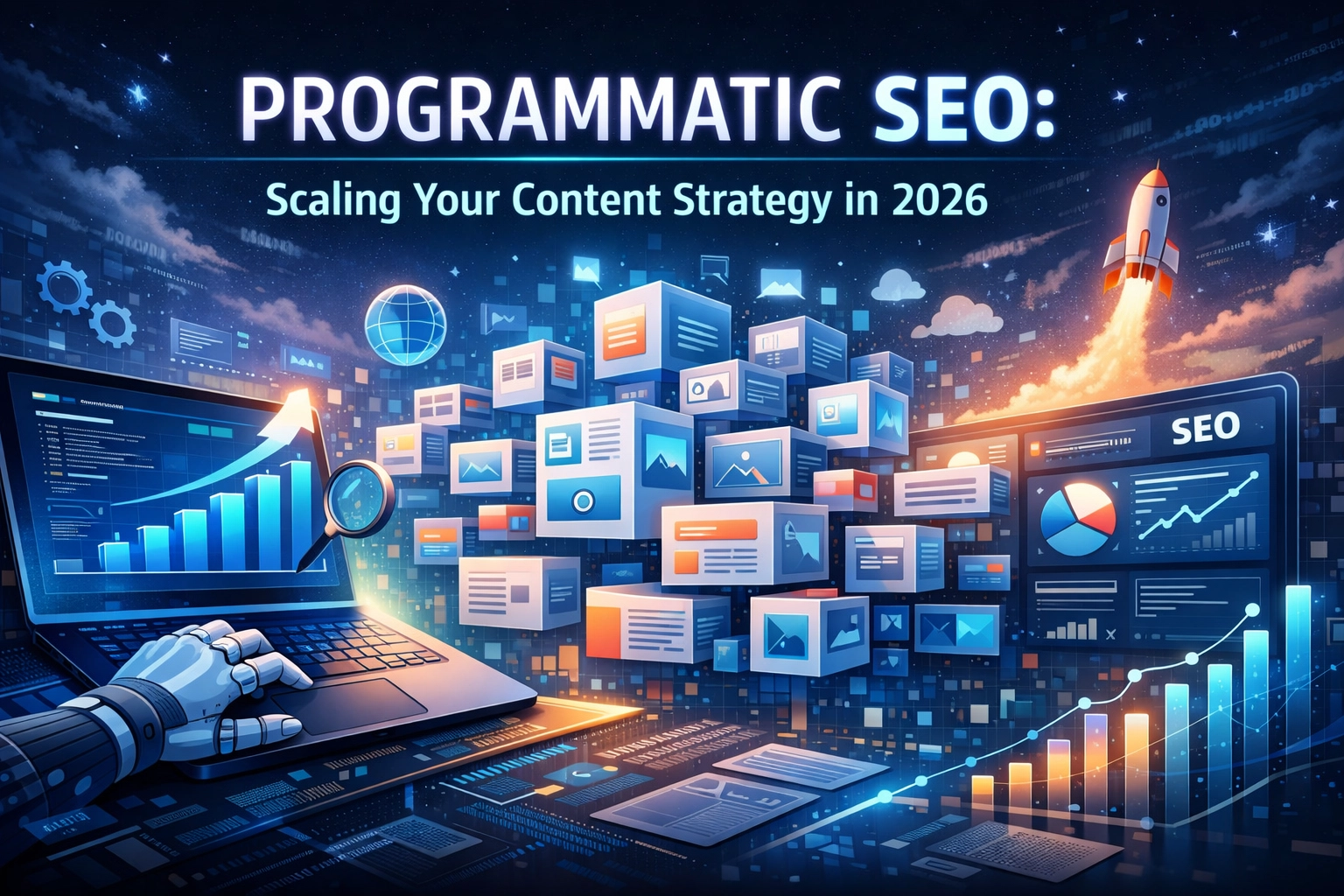
By 2026, the digital landscape has shifted from "content is king" to "useful scale is king." If you are still manually writing every single landing page for every long-tail keyword variation, you aren't just behind, you’re effectively invisible.
The search engine results pages (SERPs) are now dominated by entities that understand the intersection of big data, generative AI, and automated distribution. This is the realm of Programmatic SEO (pSEO). It’s the strategy that allowed companies like Zapier, TripAdvisor, and G2 to capture millions of monthly visitors by building thousands of high-quality pages systematically rather than individually.
In this guide, we’re going to look at how programmatic SEO works in 2026, the technical stack you need to execute it, and how to stay on the right side of Google’s increasingly sophisticated helpful content algorithms.
What is Programmatic SEO (pSEO)?
At its core, Programmatic SEO is the practice of using data and templates to create thousands of indexable web pages. Instead of a writer sitting down to write "Best Coffee Shops in Cape Town," a developer or SEO strategist builds a system that generates:
- Best Coffee Shops in Cape Town
- Best Coffee Shops in Johannesburg
- Best Coffee Shops in Nairobi
- …and 5,000 other variations.
The magic happens when you combine Structured Data, Scalable Keyword Research, and Dynamic Templates. In 2026, this has evolved. We are no longer just "spinning" text. We are using Large Language Models (LLMs) to ensure that while the structure is programmatic, the content is unique, insightful, and human-centric.
The pSEO Equation
Low Competition + High Search Volume (Aggregate) + Structured Data = Programmatic Goldmine.
While any single long-tail keyword (e.g., "Best pet-friendly coworking space in Austin with fast Wi-Fi") might only get 50 searches a month, if you have 1,000 versions of that page for different cities, you’re looking at 50,000 potential monthly visits.

The 2026 Shift: From Templates to AI-Orchestration
Three years ago, programmatic SEO often looked like "Mad Libs." You’d have a sentence like: "If you are looking for [Product] in [Location], we have the best [Product] for you."
Google’s 2025 and 2026 updates have become incredibly efficient at identifying this type of thin content. To win today, your programmatic pages must satisfy the E-E-A-T (Experience, Expertise, Authoritativeness, and Trustworthiness) framework.
1. Generative Enrichment
Instead of static templates, we now use AI agents to "enrich" the data. If you’re building a programmatic site for "Best Hiking Trails," your system shouldn't just pull the trail length and elevation from a database. It should use an API to pull recent weather patterns, recent trail reviews, and even AI-generated summaries of local flora and fauna to make the page truly useful.
2. Multi-Modal Data
Search in 2026 isn't just text. It’s images, video snippets, and interactive elements. Programmatic SEO now involves generating dynamic charts, interactive maps, or even automated video summaries for each page to keep dwell time high and bounce rates low.
The Technical Stack for Programmatic Success
To build a pSEO engine in 2026, you need a robust stack. Gone are the days of just using a basic WordPress plugin (though some still work for smaller projects).
The Data Source (The Brain)
Everything starts with your database. You can source data via:
- Public Datasets: Government data, Kaggle, or Wikipedia.
- Scraping: Using tools like Bright Data or Octoparse to gather proprietary insights (ethically and legally).
- User-Generated Content (UGC): Scaling through reviews or forum posts.
- Proprietary Data: The "secret sauce" your company owns.
The Headless CMS (The Body)
For high-performance pSEO, many are moving toward headless architectures.
- Contentful or Strapi: To manage the data objects.
- Next.js or Nuxt.js: For fast, SEO-friendly front-end rendering. These frameworks allow for Static Site Generation (SSG), which makes your 10,000 pages load instantly.
The Automation Layer (The Nervous System)
- Make.com / Zapier: To connect your database to your AI enrichment tools.
- Python/Node.js scripts: For heavy lifting, data cleaning, and API calls.
- OpenAI/Anthropic API: For generating unique descriptions and insights for every page.

Step-by-Step: How to Launch Your First pSEO Campaign
Step 1: Identify Your "Head Keyword" and Modifiers
You need a pattern.
- Head: "How to connect [App A] with [App B]"
- Head: "Cost of living in [City], [Country]"
- Head: "Compare [Software A] vs [Software B]"
The "Modifier" is the variable that changes. In 2026, the most successful pSEO campaigns use triple modifiers. Instead of just "[City]," they use "[Profession] in [City] for [Budget Level]." The more specific you get, the less competition you face.
Step 2: Build a Clean, Normalized Database
If your data is messy, your pages will be trash. You need to ensure every entry in your database is accurate. In 2026, we use "Data Scrubbing AI" to verify that the "Population of London" in our database matches the latest 2025 census data before the page goes live.
Step 3: Design Your "Power Template"
Your template needs to look like it was hand-crafted. This means:
- Custom Graphics: Use dynamic image generation (like Cloudinary or Bannerbear) to create unique header images for every page.
- Internal Linking: This is critical. Every programmatic page should link to relevant "sibling" pages to distribute PageRank.
- Schema Markup: Implement rigorous JSON-LD schema so Google understands exactly what data points you are presenting (Price, Location, Rating, etc.).
Step 4: AI Enrichment and Quality Assurance
Before hitting "publish" on 5,000 pages, run a sample through an LLM to generate unique introductions.
- Prompt Example: "Using the data points [City_Name], [Average_Rent], and [Top_Industry], write a 200-word helpful introduction for someone moving there."
Avoiding the "Spam" Label: The 2026 Quality Bar
Google doesn't hate automation; it hates low-value automation. To ensure your programmatic strategy doesn't get your site penalized:
- Add Proprietary Insights: Don't just regurgitate public data. Add a "Calculated Score" or a "Value Index" that is unique to your brand.
- Human-in-the-loop (HITL): Have an editor review a random 5% sample of generated pages to ensure the AI hasn't hallucinated or the formatting hasn't broken.
- Iterative Rollout: Don't publish 50,000 pages on day one. Publish 500. See how they index. Watch the Search Console. Once Google trusts the first batch, scale to 5,000.

Case Study: The "NomadList" Model
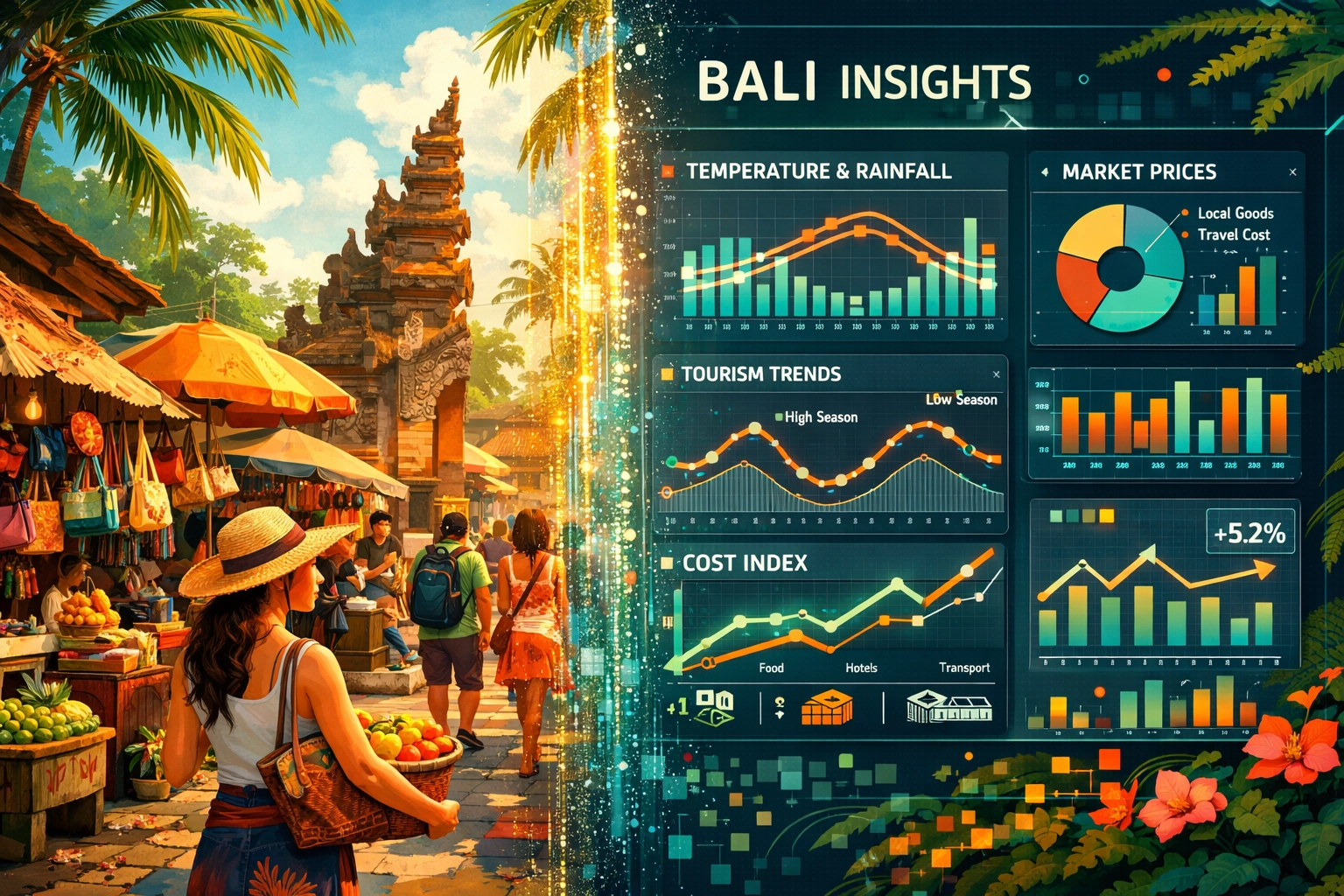
NomadList is a classic example of pSEO done right. They took data about cities (internet speed, cost, safety) and turned it into thousands of pages. In 2026, they have maintained their lead by adding real-time "Community Vibes" and AI-driven "Best time to visit" predictions based on live climate data.
They don't just tell you the cost of a coffee in Bali; they show you a live graph of how that cost has changed over the last six months. That is the level of technical depth required to win today.
Technical Deep Dive: Programmatic Internal Linking
Internal linking is often the difference between a pSEO project that gets indexed and one that sits in the "Discovered – currently not indexed" graveyard.
In 2026, we use Semantic Hubs. Instead of just a "Related Posts" section, we use vector embeddings to find pages that are contextually similar. If a user is looking at "Best CRM for Dentists in New York," our system automatically links to "Legal Compliance Software for Medical Professionals in NY" because the semantic relationship is high, even if the keywords are different.
The Role of SGE (Search Generative Experience) in 2026
By now, Google’s SGE has matured. It often provides a direct answer at the top of the search results. You might think this kills pSEO, but it actually enhances it for those who provide structured data.
When Google’s AI generates an answer, it cites sources. By having the most structured, easy-to-parse data on a specific long-tail topic, your programmatic page becomes the "Source of Truth" for the AI's answer. This leads to a "Verified Source" badge and a high-intent click-through.
Conclusion
Programmatic SEO in 2026 is no longer a "hack." It is a sophisticated engineering discipline. It requires a blend of data science, traditional SEO, and creative AI prompting.
If you can provide genuine value at scale, you can capture the vast ocean of long-tail search traffic that your competitors are too slow to reach. Start small, focus on data quality, and remember: the goal isn't to create pages; the goal is to answer questions better than anyone else on the internet.
About the Author: Malibongwe Gcwabaza
CEO, blog and youtube
Malibongwe Gcwabaza is a visionary leader in the digital marketing space, specializing in the intersection of AI-driven content and scalable SEO strategies. With over a decade of experience in building high-growth digital properties, Malibongwe has pioneered techniques in programmatic content generation that prioritize user value and technical excellence. Under his leadership, blog and youtube has become a go-to resource for businesses looking to navigate the complexities of the modern web. When he isn't deconstructing Google's latest algorithm updates, Malibongwe is an avid tech enthusiast and a mentor to upcoming digital entrepreneurs.
Frequently Asked Questions
Q: Is Programmatic SEO against Google’s Guidelines?
A: No. Google’s guidelines prohibit "automatically generated content intended to manipulate search rankings." However, if your content is automatically generated to provide value and uses high-quality data, it is perfectly legitimate.
Q: How much does it cost to start?
A: You can start with a basic spreadsheet and a WordPress site for under $100. However, a professional 2026-ready stack (Headless CMS, AI APIs, custom data) usually requires an initial investment in development time or a budget of $2,000+.
Q: Can I use pSEO for B2B?
A: Absolutely. B2B is one of the best use cases. Think "Integrations," "Comparison pages," and "Industry-specific landing pages."
About the Author


