
The global travel landscape in 2026 has moved beyond the simple concept of "sustainable" into the era of Regenerative Tourism. It is no longer enough to "leave no trace"; the modern traveler seeks to leave a destination better than they found it. Data from the World Travel & Tourism Council (WTTC) indicates that 48% of high-net-worth travelers now prioritize carbon-neutral transit and indigenous-led conservation projects over traditional luxury amenities.
As we navigate the mid-2020s, the "Greenwashing" of the past decade is being dismantled by strict ESG (Environmental, Social, and Governance) reporting requirements for airlines and hotel chains. For the discerning traveler, identifying a truly eco-friendly destination requires looking at local legislation, renewable energy grids, and the protection of biodiversity corridors.
This guide analyzes ten destinations that have pioneered technical and social frameworks to balance human exploration with ecological integrity.
1. Bhutan: The Carbon-Negative Pioneer
Bhutan remains the gold standard for high-value, low-impact tourism. Operating under the philosophy of Gross National Happiness (GNH), the kingdom mandates that at least 60% of its land remains under forest cover. In 2026, Bhutan’s Sustainable Development Fee (SDF) has been strategically recalibrated to fund the national grid's transition to 100% hydroelectric and solar power.
Travelers visiting the Trans-Bhutan Trail contribute directly to the "High Value, Low Volume" tourism model. Technically, your visit is a net positive for the planet; the sequestration of carbon by Bhutan’s vast forests far exceeds the emissions generated by your flight and stay. Properties like the Six Senses and Aman lodges now operate on closed-loop waste systems, converting organic waste into compost for local organic farms.
2. Swedish Lapland: Arctic Conservation and Sami Sovereignty
The Arctic is warming at four times the global average, making the preservation of Swedish Lapland a critical ecological mission. Sustainable travel here centers on the Sami people: the indigenous reindeer herders who have managed this land for millennia.
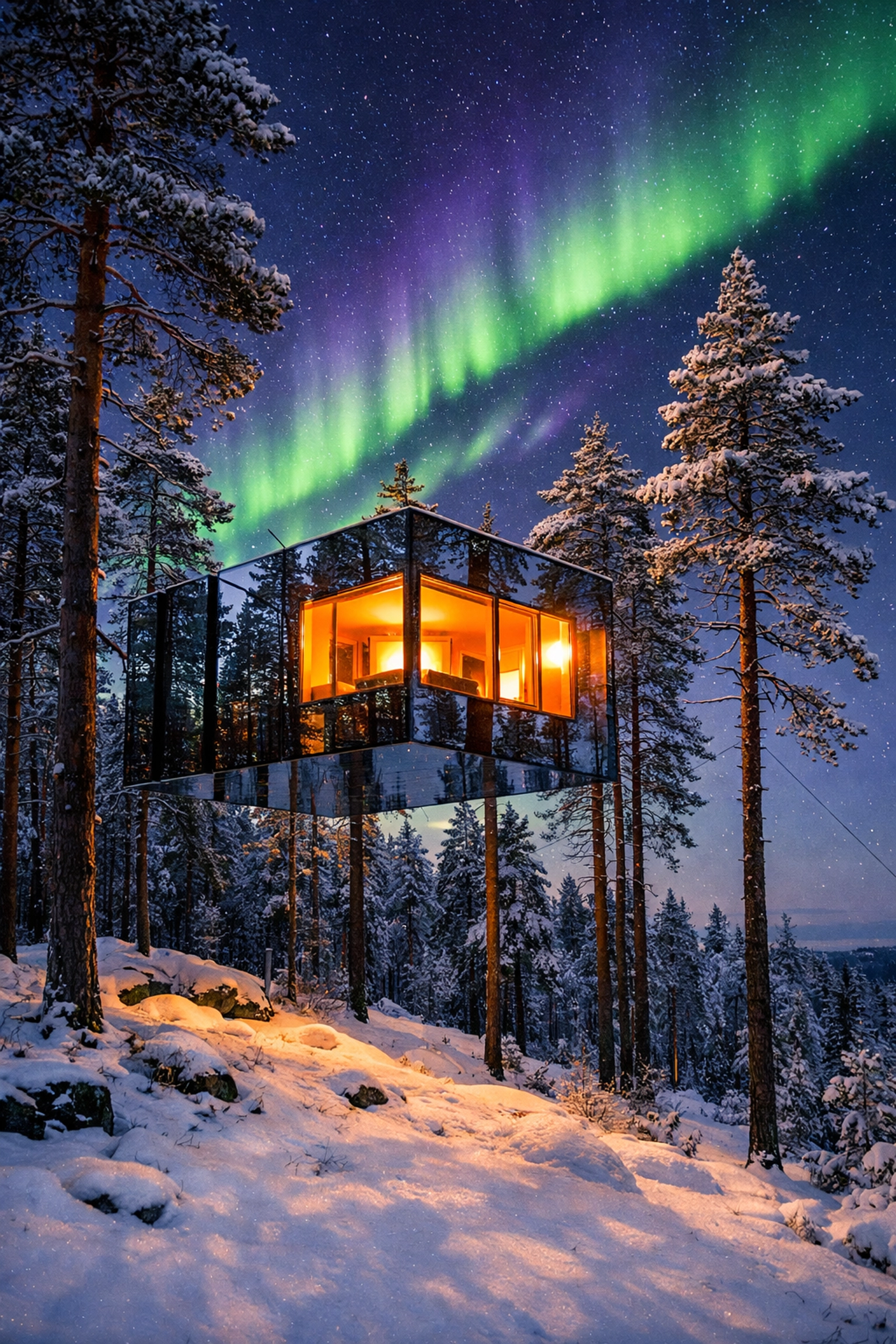
In 2026, the expansion of the Arctic Train rail network has drastically reduced reliance on short-haul flights within Scandinavia. Visitors can engage in Sami-led "Slow Travel," where the focus is on traditional ecological knowledge (TEK). Staying at the Treehotel or the Arctic Bath provides a masterclass in bio-climatic architecture: structures designed to leave zero permanent footprint on the forest floor or the Lule River.
3. Bacalar Lake, Mexico: Protecting "Living Fossils"
While the Riviera Maya faces overtourism, Bacalar: the "Lake of Seven Colors": has emerged as a strictly regulated eco-sanctuary. The lake is home to the world’s largest collection of microbialites (stromatolites), which are essentially living fossils that provide critical data on the evolution of life on Earth.
By 2026, the local government has implemented a ban on all internal combustion engines on the lagoon. Electric sailboats and solar-powered kayaks are the only approved modes of transport. To protect the fragile water chemistry, many boutique eco-resorts have replaced traditional plumbing with advanced dry-compost systems and greywater filtration wetlands. This technical approach ensures that the lagoon’s unique blue hues remain untainted by runoff.
4. Botswana: The Low-Density Conservation Model
Botswana’s approach to the Okavango Delta is a case study in how luxury can fund conservation. By limiting the number of beds per concession, the government prevents the environmental degradation seen in other safari hubs.
The technical innovation in Botswana for 2026 lies in its "Silent Safaris." Most premium camps, such as those operated by Wilderness Safaris, have transitioned to 100% electric Land Rovers and solar-powered safari boats. This reduces noise pollution, allowing for more natural animal behavior and a significantly smaller carbon footprint for the guest. The revenue from these high-yield bookings directly funds anti-poaching units and community-led wildlife corridors.
5. Copenhagen, Denmark: The Circular City
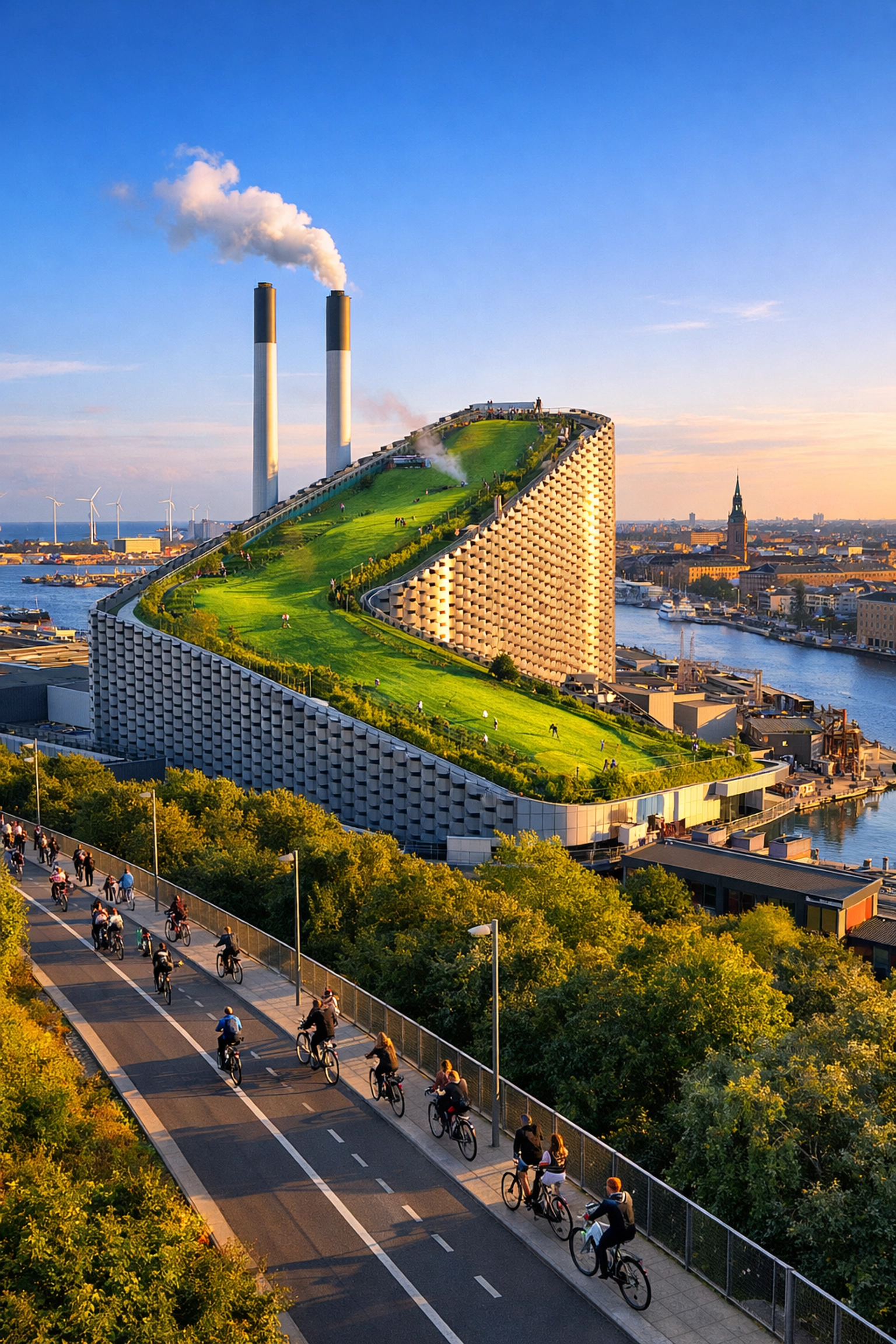
Sustainability isn't limited to the wilderness. Copenhagen is on track to be the world’s first carbon-neutral capital. The city’s infrastructure is a marvel of urban engineering, where the "CopenHill" waste-to-energy plant doubles as a year-round artificial ski slope.
For the eco-traveler, Copenhagen offers a "Green Key" certified hospitality ecosystem. Over 70% of the city's hotel rooms are eco-certified. The "CopenPay" initiative, launched a few years ago, has been fully integrated; visitors receive credits for public transport, museum entries, or free coffee by participating in green activities like litter-picking or cycling.
6. Tasmania, Australia: Rewilding the Edge of the World
Tasmania has achieved what few places can: it is powered by 100% renewable energy, primarily wind and hydro. The island's "Tasmanian Walking Company" has set the global benchmark for carbon-neutral trekking, utilizing off-grid eco-lodges that are helicoptered in and out to minimize soil compaction.
In 2026, Tasmania’s focus is on rewilding. Programs involving the Tasmanian Devil and the protection of ancient Huon Pines (some of which are over 3,000 years old) are funded by specialized "Conservation Levies" included in tour prices. This ensures that the influx of tourists directly supports the resilience of the island’s unique endemics.
7. Isla Holbox, Mexico: Marine Protection and Decarbonization
Located off the coast of the Yucatan Peninsula, Holbox is a car-free island that serves as a vital sanctuary for whale sharks. In 2026, the island has tightened its marine protection zones, using satellite tracking to prevent boat strikes on migrating sharks.
The infrastructure on Holbox is intentionally limited. Sand streets are never paved to allow for natural drainage and to prevent the "urban heat island" effect. Travelers here are encouraged to practice "Citizen Science," reporting wildlife sightings via a centralized app that helps marine biologists monitor the health of the local biosphere.
8. KwaZulu-Natal, South Africa: Community-Driven Restoration
The province of KwaZulu-Natal (KZN) has become a leader in the "Social Sustainability" pillar of eco-travel. Large-scale wildlife programs, such as those in the Phinda Private Game Reserve, have successfully rebounded rhino and big cat populations by integrating local Zulu communities into the economic structure of the park.
By 2026, KZN’s lodges have moved toward "Active Conservation Stays." Rather than passive viewing, guests can participate in technical conservation tasks, such as tracking collared elephants or assisting in habitat restoration projects. This provides deep educational value and ensures that tourism dollars stay within the local economy.

9. Alberta, Canada: Indigenous Guardians of the Rockies
Alberta’s national parks (Banff and Jasper) are global icons, but the 2026 travel model focuses on the regions managed by the Indigenous Peoples of Treaty 7 and Treaty 8. Indigenous-led tourism provides a perspective on land stewardship that western models often overlook.
Technical improvements in Alberta include the "Wildlife Overpass" system: the most advanced in the world: which allows grizzly bears, wolves, and elk to cross highways safely. Travelers can stay in eco-lodges that utilize geothermal heating, a necessity for the harsh Canadian winters, and participate in guided tours that emphasize the spiritual and ecological interconnectedness of the mountains.
10. Laos: The Serene Path to Sustainability
Laos has avoided the mass-market pitfalls of its neighbors by focusing on cultural preservation and decentralized tourism. The Luang Prabang region is a UNESCO World Heritage site that maintains a strict balance between visitor numbers and the preservation of monastic life.
In 2026, the high-speed rail link connecting Laos to China and Thailand is powered by a mix of local hydro and solar, providing a low-carbon alternative to regional air travel. Sustainable stays here, like the Rosewood Luang Prabang, utilize "Farm-to-Table" models where 90% of ingredients are sourced within a 20-mile radius, drastically reducing the "food miles" associated with luxury dining.
Technical Indicators: How to Vet Your Destination
When planning your 2026 eco-travel, look for these three technical benchmarks to ensure your trip is truly sustainable:
- GSTC Certification: The Global Sustainable Tourism Council provides the most rigorous criteria for destinations and hotels. If a location is GSTC-accredited, its claims are backed by third-party audits.
- Energy Mix: Check the destination's national or regional energy grid. A "sustainable" resort powered by a diesel generator is not sustainable. Prioritize regions like Costa Rica, Tasmania, or Iceland that utilize high percentages of renewables.
- The "Leakage" Rate: In mass tourism, up to 80% of money spent "leaks" out of the local economy to international hotel chains and airlines. Regenerative destinations aim for a leakage rate of less than 30%, ensuring local communities are the primary beneficiaries.

Data-Driven Insights: The Impact of Your Choice
Choosing a regenerative destination isn't just a moral choice; it's a market signal. For every $100 spent on sustainable tourism, approximately $65 stays in the local community, compared to just $5-$10 in the traditional cruise or all-inclusive resort model. Furthermore, carbon-neutral rail travel emits roughly 80-90% less CO2 per passenger mile than short-haul aviation.
By 2030, it is estimated that the regenerative travel sector will grow to a $1.2 trillion industry. By visiting these top 10 destinations in 2026, you are participating in a global shift toward a more resilient and equitable planet.
About the Author: Malibongwe Gcwabaza
Malibongwe Gcwabaza is the CEO of blog and youtube, a leading digital platform dedicated to the intersection of technology, sustainability, and global growth. With over 15 years of experience in strategic leadership and a deep passion for regenerative systems, Malibongwe focuses on how AI and data-driven insights can solve the world's most pressing environmental challenges. Under his guidance, blog and youtube has become a primary resource for ethical entrepreneurs and eco-conscious travelers seeking to navigate the complexities of the 2026 economy. When not leading the company, he is an avid explorer of off-grid destinations and a vocal advocate for indigenous-led conservation efforts.
About the Author


