By 2026, the digital landscape has shifted from "Chat-based AI" to "Agentic AI." If you’re still manually prompting an AI to write an email and then copying that email into your CRM, you’re essentially using a Ferrari to drive to your mailbox.
Agentic AI represents a fundamental move from Large Language Models (LLMs) that talk to Large Action Models (LAMs) and autonomous frameworks that do. In this guide, we’re going to look at the top 10 tools that allow businesses to build, deploy, and govern autonomous agents that handle end-to-end workflows without constant human hand-holding.
What Makes an AI Tool "Agentic" in 2026?
Before we dive into the list, let's define the technical baseline. For a tool to be considered "agentic" in the current market, it must possess three core capabilities:
- Reasoning and Planning: The ability to break down a high-level goal (e.g., "Onboard this new client") into a series of discrete steps without a pre-defined script.
- Tool Use (Function Calling): The capacity to interact with external APIs, browse the web, execute code, and manipulate software interfaces (GUI) just like a human would.
- Memory and Context Persistence: The ability to remember past interactions and maintain state across long-running tasks that might take days or weeks to complete.

1. Kore.ai: The Enterprise Orchestrator
Kore.ai has solidified its position as the heavyweight champion for multi-agent orchestration at scale. While many tools focus on a single agent, Kore.ai is built for the "Agentic Mesh": a network of specialized agents that talk to each other to solve complex problems.
- Best For: Fortune 2000 companies needing high-security, multi-cloud deployments.
- The Technical Edge: It offers a model-agnostic architecture. This means you can use GPT-5 for creative tasks, Claude 4 for reasoning, and a local Llama model for sensitive data processing, all within the same workflow.
- 2026 Use Case: A global bank uses Kore.ai to manage mortgage applications. One agent scrapes document data, another runs a risk assessment via an internal API, and a third handles the customer communication, all governed by a centralized "Super-Agent."
2. Microsoft Copilot Studio: The Legacy System Bridge
Microsoft has turned the "computer use" capability into a mainstream business reality. Copilot Studio allows you to build agents that don’t just use APIs but actually "see" and interact with legacy software that lacks modern integration points.
- Best For: Organizations heavily invested in the Microsoft 365 ecosystem.
- The Technical Edge: Direct integration with Power Automate and the ability for agents to operate GUIs. If your business relies on an old Windows-based ERP system from 2005, Copilot Studio agents can navigate it like a human user.
- 2026 Use Case: Automating supply chain updates where the agent logs into a supplier's ancient web portal, downloads a CSV, parses it, and updates Dynamics 365.
3. Salesforce Agentforce (Einstein 1 Studio)
Salesforce rebranded its entire AI stack around the concept of "Agentforce." The big shift here is the move away from rigid "if-then" bots to autonomous agents that have full access to your Data Cloud.
- Best For: Customer Success and Sales teams.
- The Technical Edge: "Atlas Reasoning Engine." This engine allows the agent to check real-time customer data, identify a pending invoice issue, and proactively reach out to the customer with a resolution plan before the customer even files a ticket.
- 2026 Use Case: A customer asks about a refund. The agent doesn't just provide the policy; it checks the customer's loyalty status, verifies the shipment was delayed via a FedEx API, processes the refund in the billing system, and sends a discount code for the next purchase.
4. CrewAI Enterprise: The Multi-Agent Framework
Originally an open-source darling, CrewAI Enterprise is now the go-to for companies that want to build "crews" of agents with specific roles. It’s highly technical and favors developers who want granular control over how agents collaborate.
- Best For: Content powerhouses and research-heavy firms.
- The Technical Edge: Hierarchical and process-based task management. You can define a "Manager Agent" that delegates tasks to "Worker Agents" (e.g., a Researcher, a Writer, and an Editor) and ensures the output meets a specific quality threshold before finalizing.
- 2026 Use Case: Automating a weekly 50-page industry intelligence report. One agent monitors 500 RSS feeds, another synthesizes the data, and a third formats it into a brand-aligned PDF.
5. Google Vertex AI Agent Builder
Google’s play is all about scale and the power of Gemini’s massive context window. Vertex AI Agent Builder allows developers to build "grounded" agents that use your internal company data as their primary source of truth.
- Best For: High-growth startups and tech-forward enterprises.
- The Technical Edge: Native integration with Google Search and high-fidelity "Agentic RAG" (Retrieval-Augmented Generation). It minimizes hallucinations by forcing the agent to cite its sources from your internal BigQuery or Google Drive data.
- 2026 Use Case: A legal firm uses Vertex AI to build a "Discovery Agent" that can scan 100,000 documents for a specific litigation trigger and summarize the findings with exact page citations.
6. Beam AI: The Vendor-Neutral Choice
Beam AI has emerged as the leading alternative for businesses that are terrified of "vendor lock-in." It serves as a system bridge, allowing you to deploy agents across different CRMs and project management tools without being tied to a single ecosystem like Microsoft or Salesforce.
- Best For: Agencies and mid-sized businesses using a "Best of Breed" software stack (e.g., Slack + HubSpot + Asana).
- The Technical Edge: Focus on "Agentic Memory." Beam AI agents are particularly good at remembering context over long intervals, making them ideal for long-term project management.
- 2026 Use Case: An advertising agency uses Beam AI to manage campaign launches. The agent coordinates between the designer (on Slack), the client (via Email), and the project board (on Monday.com).
7. UiPath Agentic Automation Platform
UiPath was the king of Robotic Process Automation (RPA), and they’ve successfully pivoted to Agentic AI. They’ve combined the "muscle" of RPA (the ability to move data) with the "brain" of Agentic AI (the ability to decide which data to move).
- Best For: Manufacturing, Logistics, and highly regulated industries.
- The Technical Edge: Integration of "Autopilot" for developers and "Clipboard AI." It provides a single control plane where you can manage both old-school robots and new-age autonomous agents side-by-side.
- 2026 Use Case: Managing complex insurance claims. The agent reads the claim, uses a robot to pull data from a legacy mainframe, uses an LLM to check for fraud, and then makes a recommendation for approval.

8. AWS Bedrock AgentCore
Amazon’s approach is centered on the developer and security. AgentCore within AWS Bedrock simplifies the creation of agents that can securely execute code in a sandbox environment.
- Best For: SaaS companies and businesses with strict data residency requirements.
- The Technical Edge: Provisioned Throughput and VPC security. You can run your agents entirely within your own private cloud, ensuring that your proprietary data never touches the public internet.
- 2026 Use Case: A fintech startup uses Bedrock Agents to perform real-time fraud detection on millions of transactions, executing Python scripts in a secure sandbox to calculate risk scores.
9. IBM watsonx Orchestrate
IBM has focused heavily on the "Governance" aspect of AI. In 2026, compliance is a major hurdle, and watsonx Orchestrate is designed to provide a transparent audit trail for every action an AI agent takes.
- Best For: HR, Finance, and Legal departments.
- The Technical Edge: "Lineage Tracking." You can see exactly why an agent made a decision, what data it looked at, and what policy it followed. This is crucial for GDPR and AI Act compliance.
- 2026 Use Case: An HR department uses watsonx to handle initial candidate screenings. The agent ensures every candidate is evaluated against the same non-biased criteria and logs the reasoning for the audit.
10. Lindy.ai: The Personal Business Assistant
While the others on this list are "platform" plays, Lindy.ai is more of a "product" play. It’s designed to be a plug-and-play autonomous employee that you can "hire" for specific roles like Recruiter, Customer Support, or Sales SDR.
- Best For: Solopreneurs and small business owners.
- The Technical Edge: Exceptionally low-code. You "train" a Lindy by talking to it and showing it how you do a task. It then replicates that behavior autonomously.
- 2026 Use Case: A small e-commerce store "hires" a Lindy to handle all returns. The Lindy talks to the customer, generates a shipping label, and updates the Shopify inventory without the owner ever being involved.
Comparison of Top Agentic Platforms (2026 Data)
| Tool | Primary Strength | Technical Complexity | Ideal User |
|---|---|---|---|
| Kore.ai | Multi-agent Mesh | High | Enterprise IT |
| Copilot Studio | MS Ecosystem/GUI Use | Medium | Business Analysts |
| Salesforce | CRM Data Integration | Medium | Sales/CS Teams |
| CrewAI | Collaborative Crews | High | Developers |
| Lindy.ai | Ease of Use | Low | Small Business |
Key Considerations for Implementation
Moving to agentic automation isn't just about picking a tool; it’s about rethinking your workflow. Here are three technical hurdles you need to solve:
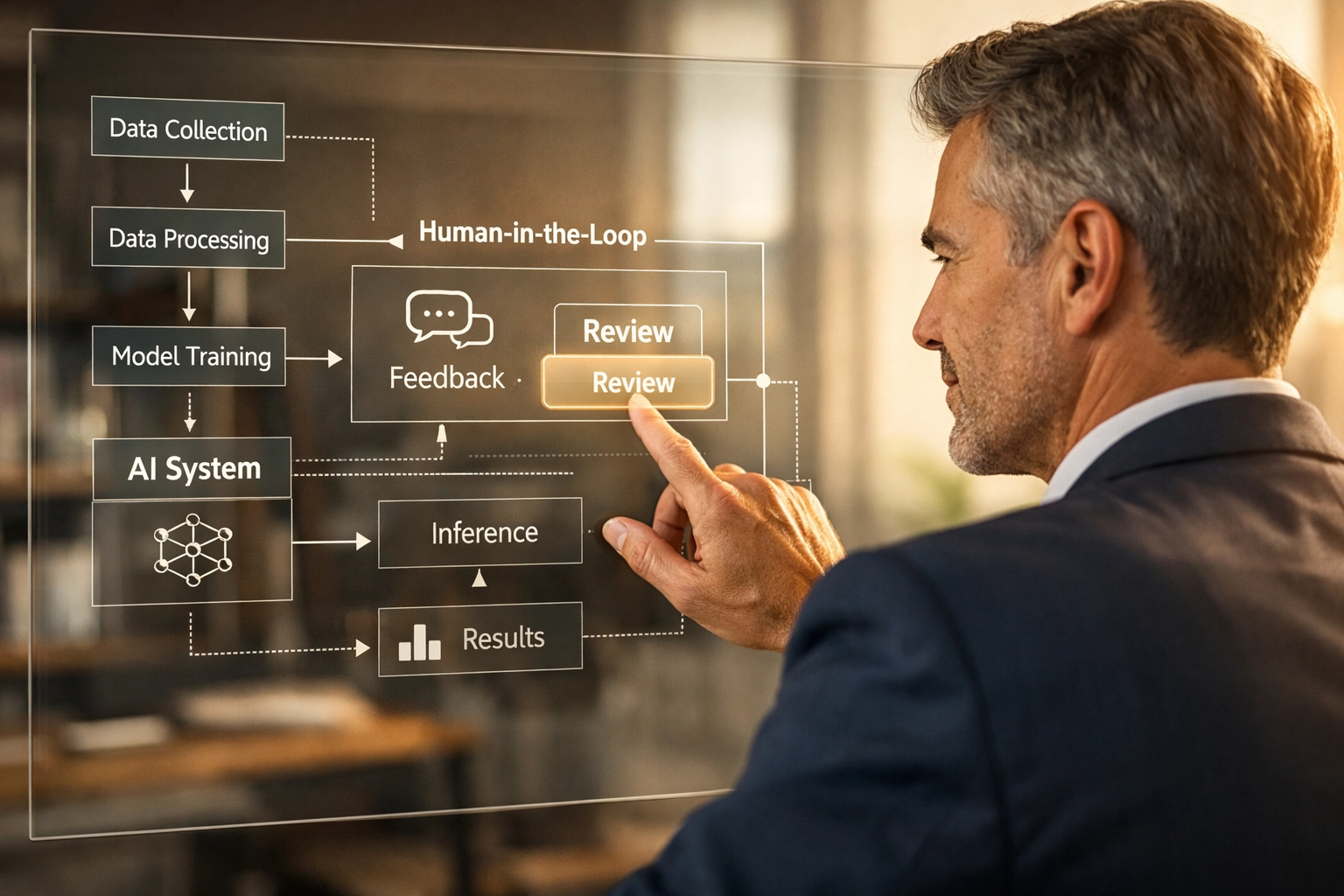
1. The "Human-in-the-Loop" (HITL) Requirement
No matter how good the AI is in 2026, you need a "kill switch" and a review process. Most of these tools now offer "Interruptible Workflows," where an agent will pause and ask for permission before taking a high-stakes action (like spending more than $500 or deleting a user).
2. Token Costs vs. Action Costs
In 2026, we are moving away from paying per token to paying per "successful task." Tools like UiPath and Salesforce are leading the charge on this outcome-based pricing. When choosing a tool, calculate your ROI based on the hours of human labor saved, not the cost of the API calls.
3. Agentic RAG and Data Freshness
An agent is only as good as the data it can access. If your internal documentation is a mess, your agent will be an "autonomous idiot." Before deploying these tools, ensure your data is cleaned and accessible via vector databases or high-quality APIs.
The Future: From RPA to Autonomous Workforces
The goal of Agentic AI in 2026 is to build a "Digital Twin" of your business processes. We are entering an era where your role as a manager shifts from doing the work to managing the agents that do the work. The tools listed above aren't just software; they are the infrastructure for the next generation of business productivity.
If you’re just starting, I recommend beginning with a low-stakes process: like meeting scheduling or internal FAQ handling: using a tool like Lindy or Copilot Studio. Once you understand the "agentic mindset," you can scale up to complex multi-agent orchestrations with Kore.ai or CrewAI.
About the Author: Malibongwe Gcwabaza
Malibongwe Gcwabaza is the CEO of blog and youtube, a leading digital media company dedicated to demystifying emerging technologies for business leaders. With over a decade of experience in digital transformation and automation, Malibongwe focuses on the intersection of AI, business efficiency, and future-proof strategy. He believes that the key to 2026's economy isn't working harder, but building smarter autonomous systems that allow humans to focus on creative and high-level strategy.
About the Author


