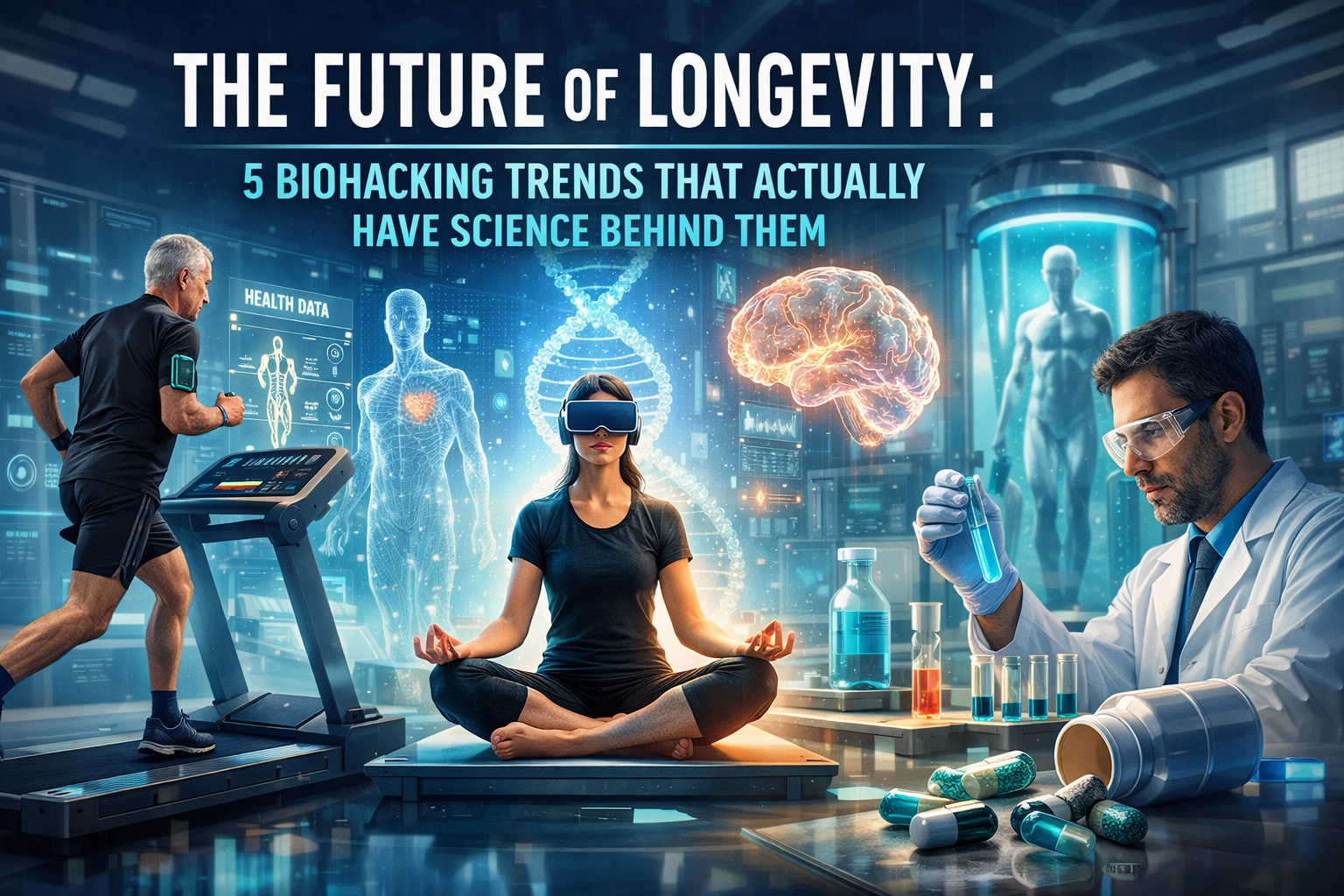
For decades, "longevity" was a term relegated to the fringes of science and the marketing materials of unverified supplement brands. However, by 2026, the landscape has fundamentally shifted. We are no longer chasing a mythical "fountain of youth"; instead, we are witnessing the emergence of Longevity Medicine: a data-driven, clinical discipline focused on extending "healthspan" (the period of life spent in good health) rather than just "lifespan."
This transition is fueled by the convergence of artificial intelligence, multi-omic testing, and a deeper understanding of the molecular hallmarks of aging. While early biohacking often relied on anecdotal evidence and self-experimentation, the current trends are rooted in rigorous clinical trials and measurable biomarkers.
Here are the five most significant, science-backed biohacking trends currently reshaping the future of human longevity.
1. Epigenetic Clocks: Moving Beyond Chronological Age
The single most important metric in longevity science today is the distinction between your chronological age (the number of birthdays you’ve had) and your biological age (how fast your cells and tissues are actually declining).
In 2026, Epigenetic Clocks have become the gold standard for this assessment. These tests analyze DNA methylation: a process where "methyl groups" attach to your DNA, acting as switches that turn genes on or off. As we age, these patterns change in predictable ways.
The Power of DunedinPACE
While early versions like the Horvath Clock provided a snapshot of biological age, the latest iteration, DunedinPACE (Pace of Aging Combined from the Epigenome), measures the velocity of aging. Think of it as a speedometer for your body. Developed by researchers at Duke University and Columbia University, DunedinPACE analyzes 17 different biomarkers across multiple organ systems.
The data is sobering: individuals with a faster pace of aging (even by a small fraction) show a 56% increased risk of mortality and a 54% higher risk of developing chronic diseases over a seven-year period. Conversely, interventions that slow this pace: such as caloric restriction, specific exercise protocols, or senolytic therapies: can be tracked in near real-time.
Clinical Application
Clinicians now use these clocks to validate the efficacy of lifestyle changes. If a patient adopts a Mediterranean-style diet and high-intensity interval training (HIIT), we no longer wait a decade to see if it worked. We check the DunedinPACE score in six months. If the rate of aging has dropped from 1.1 (aging 1.1 years for every chronological year) to 0.85, the intervention is working.
2. AI-Driven Microbiome Modulation: The End of "One-Size-Fits-All" Probiotics
For years, the advice for gut health was generic: "Eat more fiber" or "Take a broad-spectrum probiotic." We now know that the human microbiome is as unique as a fingerprint, and what helps one person may cause inflammation in another.
Metagenomic Sequencing and the Gut-Brain Axis
The current trend has shifted toward Metagenomic Sequencing. Unlike older 16S rRNA testing, metagenomics sequences all the genetic material in a sample, identifying not just which bacteria are present, but what they are doing (their functional potential).
AI algorithms now process these massive datasets to identify specific metabolites, such as Short-Chain Fatty Acids (SCFAs) like butyrate, which are critical for maintaining the intestinal barrier and reducing systemic inflammation. We are seeing a direct link between specific microbial imbalances and neurodegenerative conditions, leading to the rise of "psychobiotics": targeted microbial interventions designed to influence the gut-brain axis.
Hyper-Personalized Nutrition
In 2026, AI-driven platforms can analyze your gut microbiome alongside your post-prandial glucose response (how your blood sugar reacts after eating). This data allows for the creation of a "precision nutrition" plan. For instance, while bananas might be considered "healthy," your specific microbiome might process them in a way that causes a significant glucose spike, which accelerates aging via glycation. Biohackers are now using these insights to select foods that maintain stable blood sugar and optimize their unique microbial ecosystem.
3. The Multi-Omic Stack: 800+ Biomarker Analysis
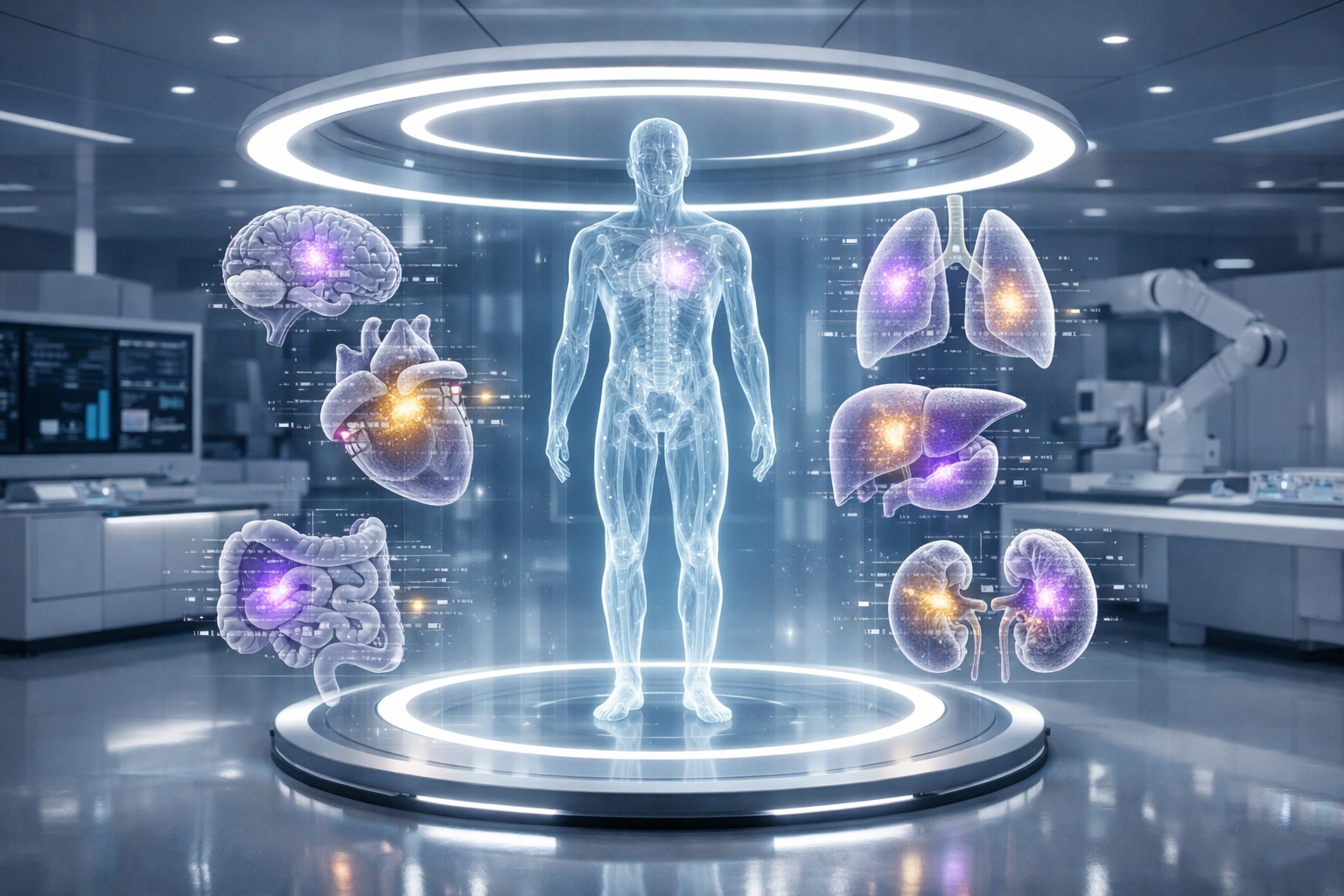
The traditional annual physical, which checks perhaps 20 to 30 markers (like LDL cholesterol and glucose), is increasingly viewed as obsolete by the longevity community. The new standard is the Multi-Omic Stack, which integrates genomics, proteomics (proteins), metabolomics (metabolites), and transcriptomics (RNA).
AI-Assisted Treatment Planning
The sheer volume of data generated by 800+ biomarkers is impossible for a human physician to synthesize alone. Clinical AI systems are now employed to cross-reference these biomarkers against thousands of peer-reviewed studies.
This approach identifies "subclinical" issues long before they manifest as disease. For example:
- Inflammaging: Identifying high-sensitivity C-reactive protein (hs-CRP) and IL-6 levels that indicate chronic, low-grade inflammation.
- Metabolic Flexibility: Measuring fasting insulin and HOMA-IR to detect insulin resistance years before a Type 2 Diabetes diagnosis would occur.
- Hormetic Stressors: Adjusting vitamin D, magnesium, and zinc levels to optimize cellular repair mechanisms.
By ranking interventions based on their potential impact on a specific individual's unique biological profile, AI helps practitioners demonstrate meaningful physiological improvements within 3 to 6 months.
4. Proactive Screening: AI-Enhanced Full-Body MRI and Liquid Biopsies
One of the core tenets of biohacking is that "early detection is the best cure." However, traditional screening often misses early-stage issues or results in "false positives" that lead to unnecessary procedures.
The Rise of the "Prenuvo" Model
Full-body MRI screening, enhanced by AI, has become significantly more accessible. These scans can detect tumors as small as 1 centimeter and identify early signs of neurodegeneration or cardiovascular issues (like visceral fat accumulation or arterial plaque). AI filters out the "noise," helping radiologists focus on genuine anomalies that require attention.
Multi-Cancer Early Detection (MCED)
Complementing imaging is the "liquid biopsy." Tests like Galleri analyze cell-free DNA (cfDNA) in the blood to detect signals for over 50 types of cancer, many of which are not screened for in routine medicine (such as pancreatic or ovarian cancer). By the time symptoms appear for these cancers, they are often in late stages. Identifying them at Stage 1 or 2 through high-tech screening is a cornerstone of the 2026 longevity protocol.
5. Next-Generation Peptide Therapy and Sublingual Delivery
Peptides: short chains of amino acids that act as signaling molecules: have been a staple of "underground" biohacking for years. In 2026, they have moved into the clinical mainstream with more sophisticated delivery systems.
Beyond Injections
The primary barrier to peptide adoption was the requirement for subcutaneous injections. New sublingual delivery systems: dissolvable strips that sit under the tongue: have changed the game. These strips allow peptides to enter the bloodstream directly through the mucosal membrane, bypassing the digestive system where they would otherwise be broken down.
Key Peptides in Focus:
- BPC-157 & TB-500: Used for systemic tissue repair and reducing gut inflammation.
- GHK-Cu: A copper peptide known for its ability to stimulate collagen and promote DNA repair.
- CJC-1295 & Ipamorelin: Growth hormone secretagogues that help maintain muscle mass and bone density as we age.
- Epitalon: Studied for its potential effects on telomerase activation and pineal gland regulation.
While the "Wild West" of unverified peptides still exists, the trend is toward pharmaceutical-grade, lab-tested formulations prescribed by longevity physicians who monitor organ function and IGF-1 levels to ensure safety and efficacy.

The Synthesis: Building Your Longevity Stack
Biohacking is no longer about finding a "magic pill." It is about creating a personalized, data-driven "stack" that addresses the hallmarks of aging.
The future of longevity is integrated. It looks like this:
- Monthly: Monitoring glucose and sleep via wearable sensors.
- Quarterly: Checking the "speed of aging" via epigenetic clocks.
- Annually: Undergoing AI-enhanced imaging and multi-omic blood panels.
By shifting our focus from reactive treatment to proactive optimization, we are finally moving the needle on human healthspan. The science is no longer in question; the only remaining hurdle is the widespread adoption of these technologies into standard medical practice.
Author Bio: Malibongwe Gcwabaza
Malibongwe Gcwabaza is the CEO of blog and youtube and a leading voice in the intersection of technology and human performance. With a background in strategic leadership and a passion for data-driven wellness, Malibongwe focuses on making complex scientific breakthroughs accessible to a global audience. Under his leadership, blog and youtube has become a primary resource for entrepreneurs and professionals looking to leverage AI and biotechnology to optimize their lives and businesses. He believes that the future of health is decentralized, personalized, and powered by intelligent data.
About the Author


