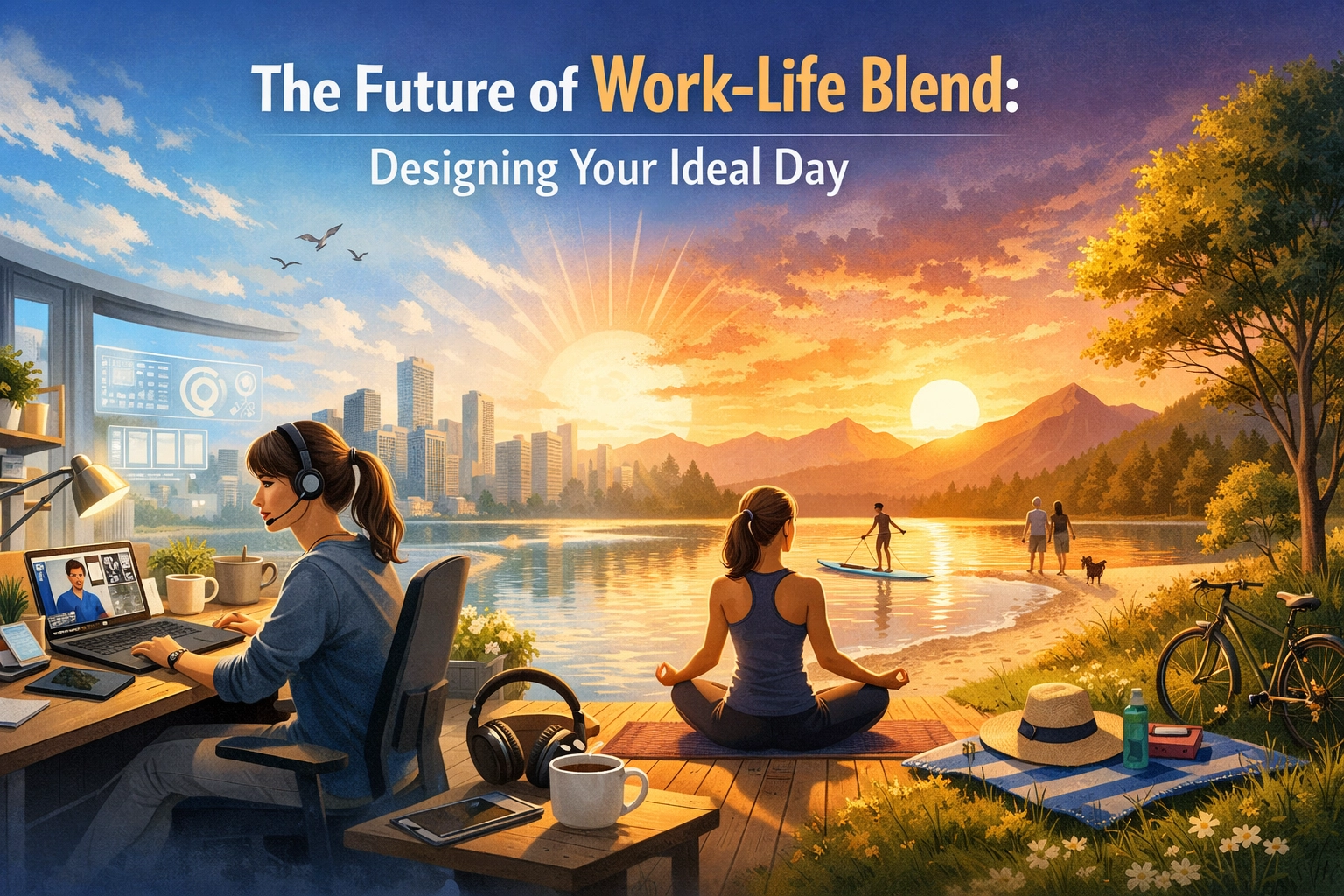
By mid-2026, the concept of "work-life balance" has been largely archived as a relic of the industrial age. The binary struggle, where "work" and "life" were viewed as two opposing weights on a scale, proved insufficient for a world powered by ubiquitous connectivity and artificial intelligence. Instead, we have moved into the era of the Work-Life Blend.
This shift is not merely linguistic. It represents a fundamental restructuring of how we occupy time and space. In this new landscape, productivity is no longer measured by the duration of your presence in a specific seat, but by the orchestration of your cognitive energy across a decentralized network of tasks, environments, and collaborators. Designing an ideal day in 2026 requires more than a calendar app; it requires an understanding of your own biological rhythms, the technical infrastructure of your "phygital" workspace, and the strategic offloading of routine execution to AI agents.
The Paradigm Shift: From Balance to Blend
The traditional 9-to-5 model was built for a time when work required physical proximity to specialized machinery or paper-based filing systems. As digital transformation reached its zenith between 2023 and 2025, the friction between rigid schedules and the fluidity of digital life became unsustainable. A 2025 Gallup study revealed that 70% of remote-capable employees viewed schedule flexibility as a non-negotiable right, rather than a corporate perk.
The "Work-Life Blend" acknowledges that life happens during the workday and work happens during "life" hours. It treats a career as one of several high-priority streams, alongside health, family, and personal growth, that flow concurrently. To manage this, the most successful professionals in 2026 have abandoned the "all-at-once" approach for a model of asynchronous orchestration. This means prioritizing tasks based on their cognitive demand and aligning them with the periods of the day when you are most neurologically equipped to handle them.
The Biological Imperative: Chronotypes and Neurological Peak Hours
One of the most significant technical advancements in workplace design isn't a piece of software, but the widespread adoption of chronobiology. We now know that the "one-size-fits-all" morning meeting is a recipe for collective burnout. Human beings generally fall into four chronotypes, Lions (early risers), Bears (middle-of-the-day peaks), Wolves (late-day energy), and Dolphins (irregular sleepers), and forcing a "Wolf" to be creative at 8:00 AM is a waste of human capital.
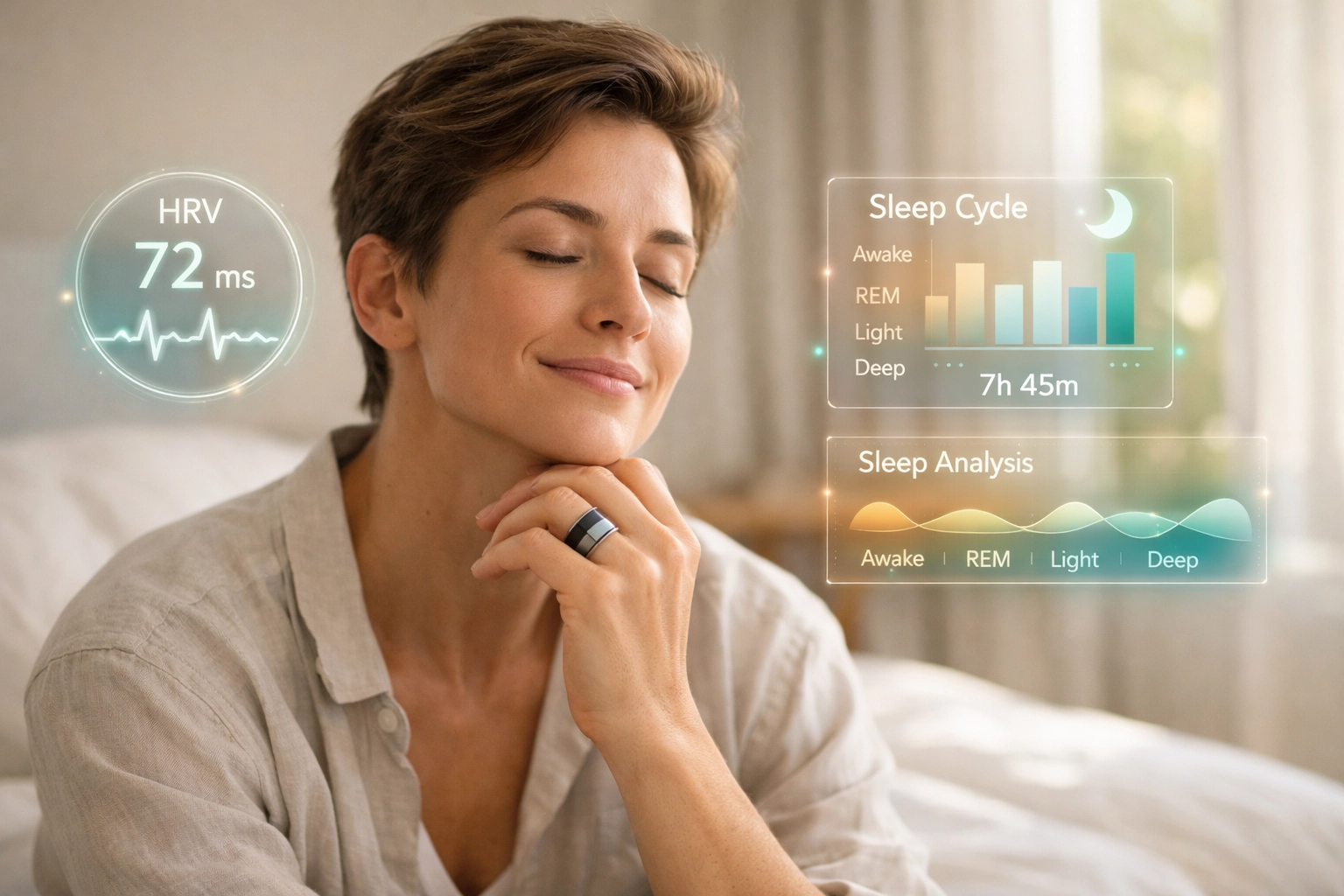
In 2026, the ideal day starts with a biological audit. Smart wearables and integrated wellness platforms now sync with professional calendars. If your biomarkers suggest a night of poor REM sleep, your AI scheduling assistant might automatically push deep-focus tasks to the afternoon and prioritize low-stakes administrative work for the morning.
Leveraging the Ultradian Rhythm
Beyond the 24-hour circadian cycle, we operate on 90-to-120-minute ultradian rhythms. These are cycles of high-frequency brain activity followed by a period of required recovery. Designing your ideal day means scheduling work in "sprints" that respect these windows. Data-driven professionals are now using EEG-integrated headphones to monitor "flow state" entrance and exit points, ensuring they take a 20-minute cognitive break before the brain enters a period of diminishing returns.
The Phygital Infrastructure of 2026
The term "phygital" (physical + digital) describes the seamless transition between our physical surroundings and our digital workspaces. In 2026, your office isn't just a room; it’s an interactive environment.
The Smart Home Office
The 2026 home office is equipped with IoT sensors that adjust lighting temperature (Kelvin levels) based on the task at hand. Cool, blue-toned light (5000K-6500K) is automatically deployed during "Deep Work" blocks to suppress melatonin and enhance alertness. Conversely, warmer, amber tones (2700K) kick in during the late afternoon to signal the start of the "winding down" phase of the blend.
Extended Reality (XR) and Spatial Computing
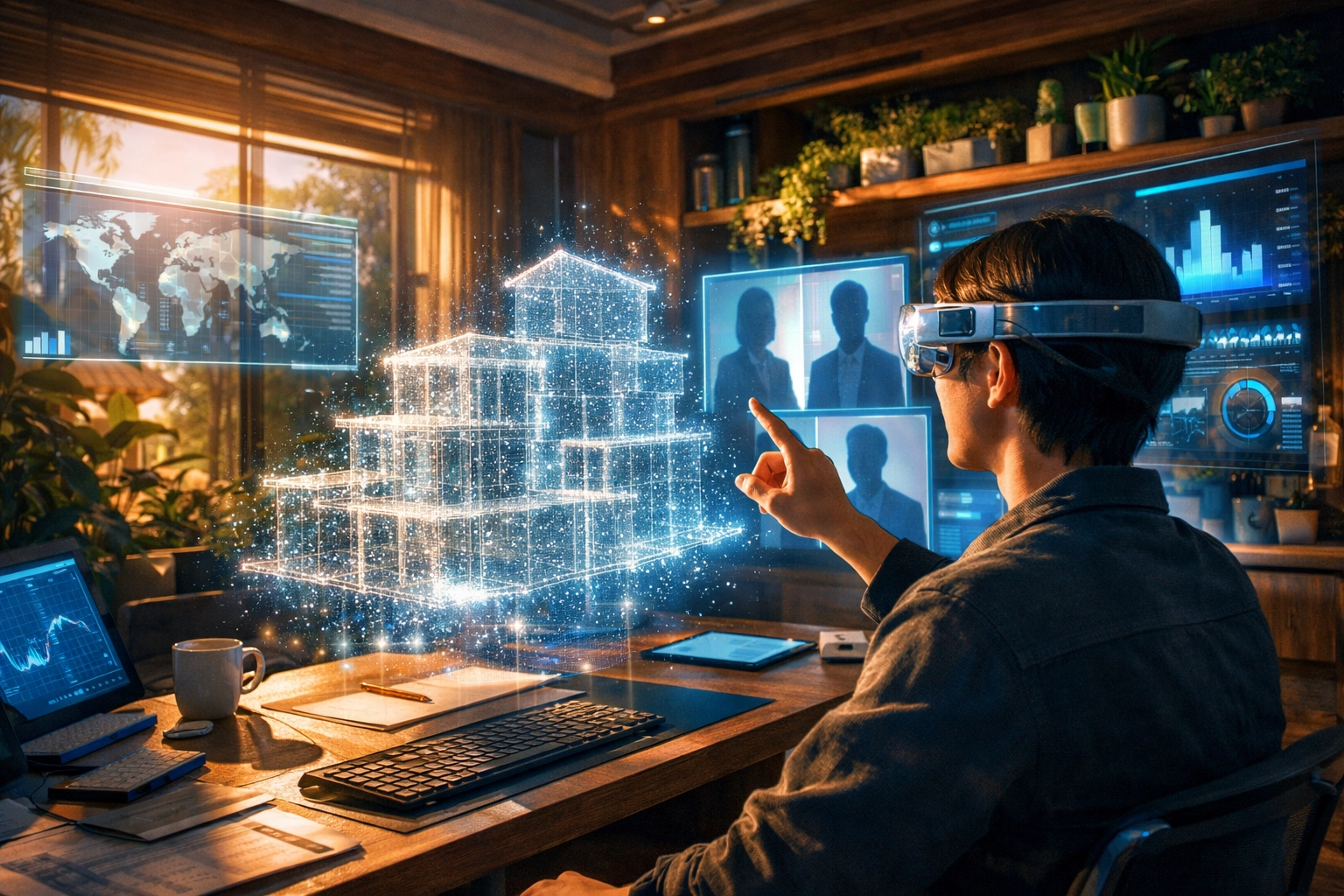
With the maturation of spatial computing, the limitation of physical monitor space has vanished. An ideal day might involve donning a lightweight XR headset to visualize complex data sets in 3D or to sit in a virtual "war room" with colleagues from three different continents. This technology has solved the "presence disparity" problem that plagued early hybrid work, allowing for spontaneous "water cooler" moments to happen in persistent virtual environments without the need for a commute.
AI Agent Orchestration: Reclaiming the Cognitive Load
The biggest differentiator in the 2026 workflow is the transition from AI as a "tool" to AI as an "agent." In the past, you might have used an LLM to help draft an email. Today, your AI agent manages the entire lifecycle of routine projects.
The Execution Layer
Success in 2026 involves delegating the "execution layer" to autonomous agents. These agents handle:
- Meeting Synthesis: Summarizing key decisions and action items from asynchronous video updates.
- Information Retrieval: Finding that one specific data point mentioned in a Slack thread six months ago.
- Calendar Tetris: Negotiating meeting times with other agents without human intervention.
By offloading these high-friction, low-value tasks, the human worker can focus on what the Gallup research identifies as the key drivers of productivity: analytical thinking, creativity, and resilience. Your ideal day is no longer cluttered with "work about work." Instead, it is built around 3 to 4 hours of high-impact strategic thinking.
Purposeful Abundance: The New Physical Workspace
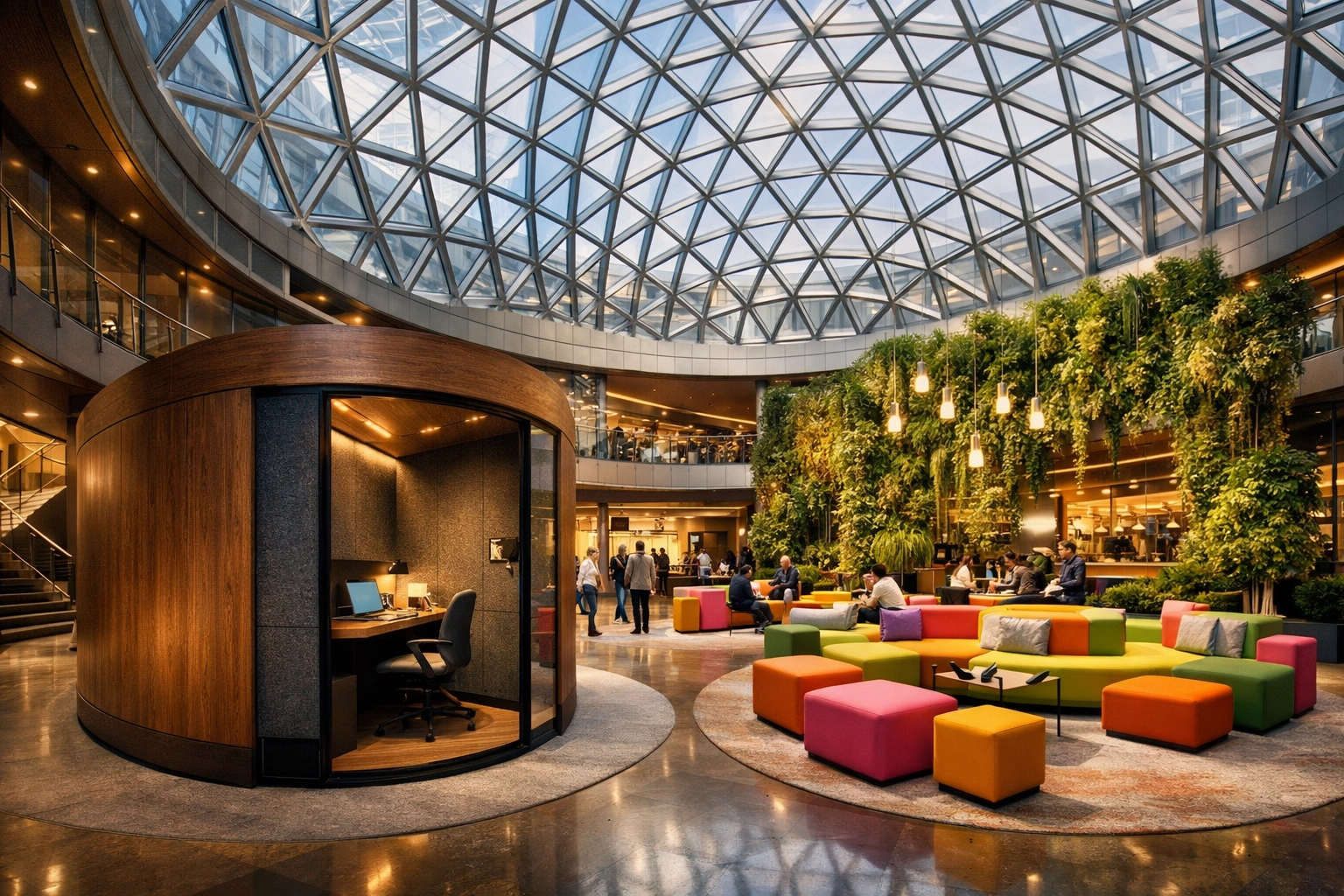
While the home office is the cockpit, the corporate "hub" has been redesigned around the concept of purposeful abundance. Organizations have moved away from the sea of cubicles and the dreaded open-plan office. Instead, the modern office is a collection of "mindset-specific" zones.
Quiet Corners vs. Vibrant Hubs
If your day requires intense collaboration, you head to a Vibrant Hub: a space optimized for acoustic energy and high-speed brainstorming. If you need to enter a state of deep reflection, the office provides "wellness nooks" or "monastic cells" designed for zero distraction. The 2026 office is a destination you choose for a specific purpose, rather than a place you go by default.
Role-Based Flexibility and the Death of the 9-to-5
One of the most critical technical shifts in 2026 is the adoption of role-based flexible models. Rather than applying a blanket "three days in office" rule, companies now analyze roles based on their "collaboration-to-concentration" ratio.
For instance, a software architect might spend 90% of their month in a remote, focused state, only coming into the physical hub for a two-day "sprint kickoff." A community manager might spend 70% of their time in physical spaces. The ideal day is now tailored to the function of the work, not the convenience of the manager. This role-based approach has significantly reduced the carbon footprint of urban centers and lowered the attrition rates for caregivers and those with disabilities, who were previously sidelined by rigid on-site requirements.
Measuring Success: Impact Over Activity
To support the work-life blend, the metrics of management had to evolve. In 2026, "activity tracking" software is considered an ethical and practical failure. Instead, leading organizations use Impact-Based Metrics.
Technical depth in management now involves tracking "Value-Add Points" or "Outcome Keys." Using blockchain-verified project management tools, teams can see the direct contribution of an individual to a project’s success regardless of when or where the work was done. This transparency builds trust and eliminates the "performance theater" where employees feel the need to stay online just to appear busy.

A Day in the Life: The 2026 Blueprint
To see how these concepts coalesce, let’s look at a typical day for a high-level strategist in 2026:
- 07:00 – 08:30: Biological Optimization. Waking up without an alarm (synced to the lightest phase of sleep). Light exercise and hydration. No digital inputs to preserve "morning clarity."
- 08:30 – 11:30: Deep Work Block. The phone is in "Focus Mode." The smart office lighting is set to 5500K. This is when the most difficult, high-leverage task is tackled. AI agents are currently screening all incoming communications.
- 11:30 – 13:00: The Blend. A long lunch, perhaps a mid-day run or a school pick-up. Because the morning was highly productive, this period is guilt-free.
- 13:00 – 15:00: Asynchronous Orchestration. Reviewing AI-generated summaries of the morning’s global activity. Recording short, 2-minute video briefs for the team to watch at their convenience.
- 15:00 – 16:30: Collaborative Hub. A VR-based brainstorming session for a new product launch. High-intensity, high-connection.
- 16:30 – 17:30: Administrative Sweep. Cleaning up the edges. Delegating tasks to AI agents for the overnight "execution" phase.
- 18:00 Onwards: Disconnect. The smart office shifts to warm tones. Digital notifications are hard-disabled until the next biological peak.
The Social Contract: Reclaiming Human Connection
Despite the heavy integration of technology, the ultimate goal of the work-life blend is to make us more human. By automating the mundane and optimizing the environment, we reclaim the time necessary for authentic connection.
The future of work is not about being a cog in a machine that never sleeps; it’s about being the conductor of a digital symphony that works for you. As we navigate the remainder of 2026, the individuals and organizations that thrive will be those who stop trying to balance their lives and start designing them.
About the Author: Malibongwe Gcwabaza
Malibongwe Gcwabaza is the CEO of blog and youtube, a forward-thinking media organization dedicated to exploring the intersection of technology, productivity, and human potential. With a background in strategic leadership and a passion for decentralized work models, Malibongwe has spent the last decade helping organizations transition from industrial-age structures to the fluid, AI-enhanced workflows of the future. Under his leadership, blog and youtube has become a primary resource for professionals looking to optimize their digital lives through data-driven insights and technical rigor. When he isn’t shaping the future of work, Malibongwe is an advocate for sustainable tech and "phygital" design.
About the Author


