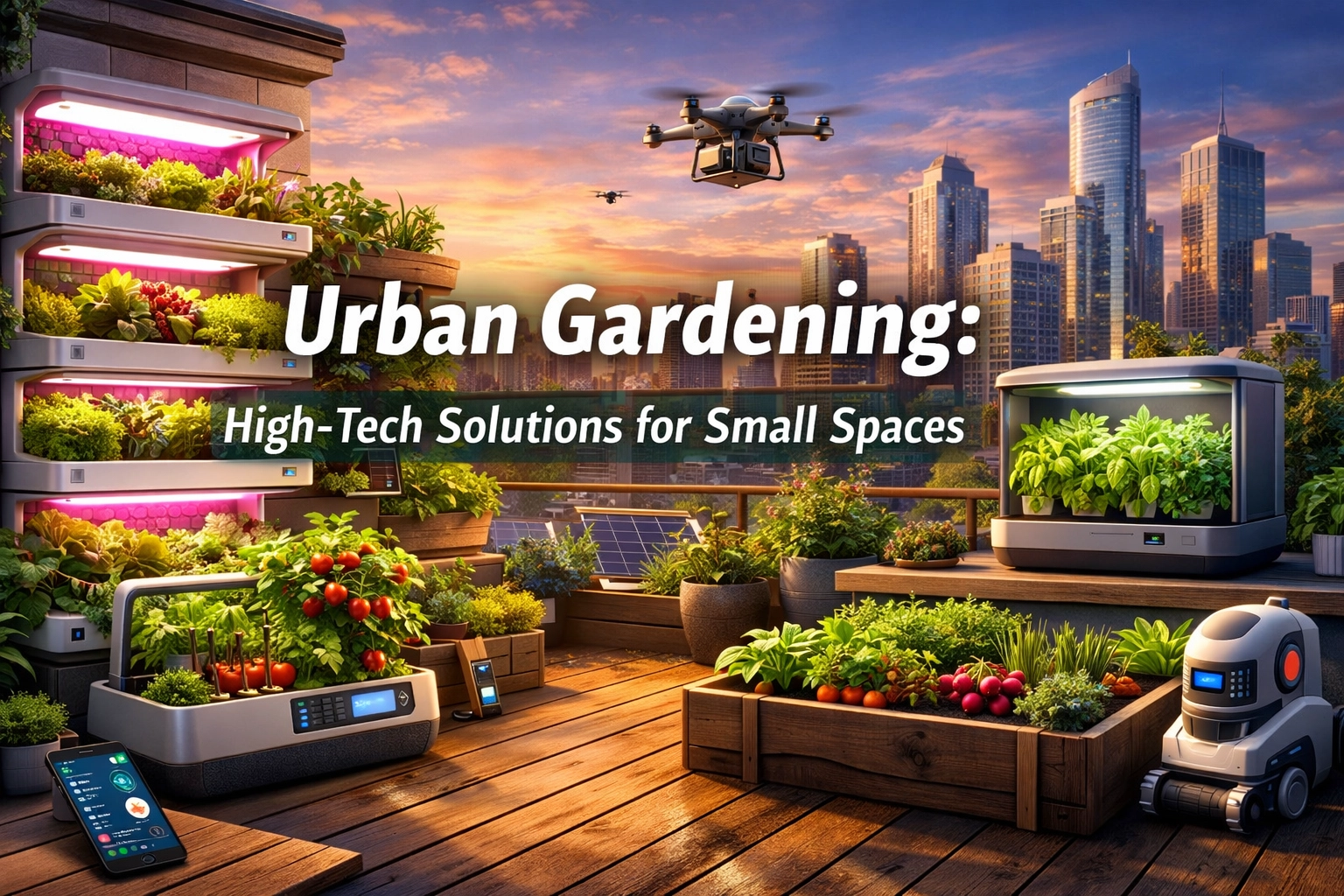
The dream of picking fresh basil or cherry tomatoes for dinner used to require a backyard, several bags of topsoil, and a constant battle against local pests. In 2026, the reality of urban living: characterized by high-density apartments and micro-living spaces: has shifted the focus from the horizontal garden to the vertical, tech-integrated system. We are no longer limited by the square footage of a balcony or the quality of natural light hitting a windowsill. High-tech urban gardening has matured into a sophisticated intersection of botany, data science, and Internet of Things (IoT) hardware.
If you’re living in a 400-square-foot studio, you aren't just "growing plants"; you're managing a localized food production node. Let’s dive into the hardware and software making this possible.
The Foundation: Beyond Soil
Traditional soil is heavy, messy, and can harbor pathogens that thrive in indoor environments. Modern urban solutions have largely abandoned dirt in favor of more efficient delivery mechanisms: Hydroponics and Aeroponics.
Hydroponics: The Nutrient Film Revolution
Hydroponics involves growing plants in a nutrient-rich water solution. In small spaces, the most common implementation is the Nutrient Film Technique (NFT) or Deep Water Culture (DWC).
- NFT Systems: These use a constant flow of nutrient solution that runs over the roots of the plants, which are held in small net pots. This is ideal for leafy greens like kale and spinach.
- DWC Systems: The roots are completely submerged in an oxygenated nutrient reservoir. For urbanites, the "Kratky Method": a passive form of DWC: has gained massive popularity because it requires no electricity, though high-tech versions now use silent ultrasonic sensors to monitor water levels and nutrient concentration (Electrical Conductivity or EC).
Aeroponics: Misting for Maximum Growth
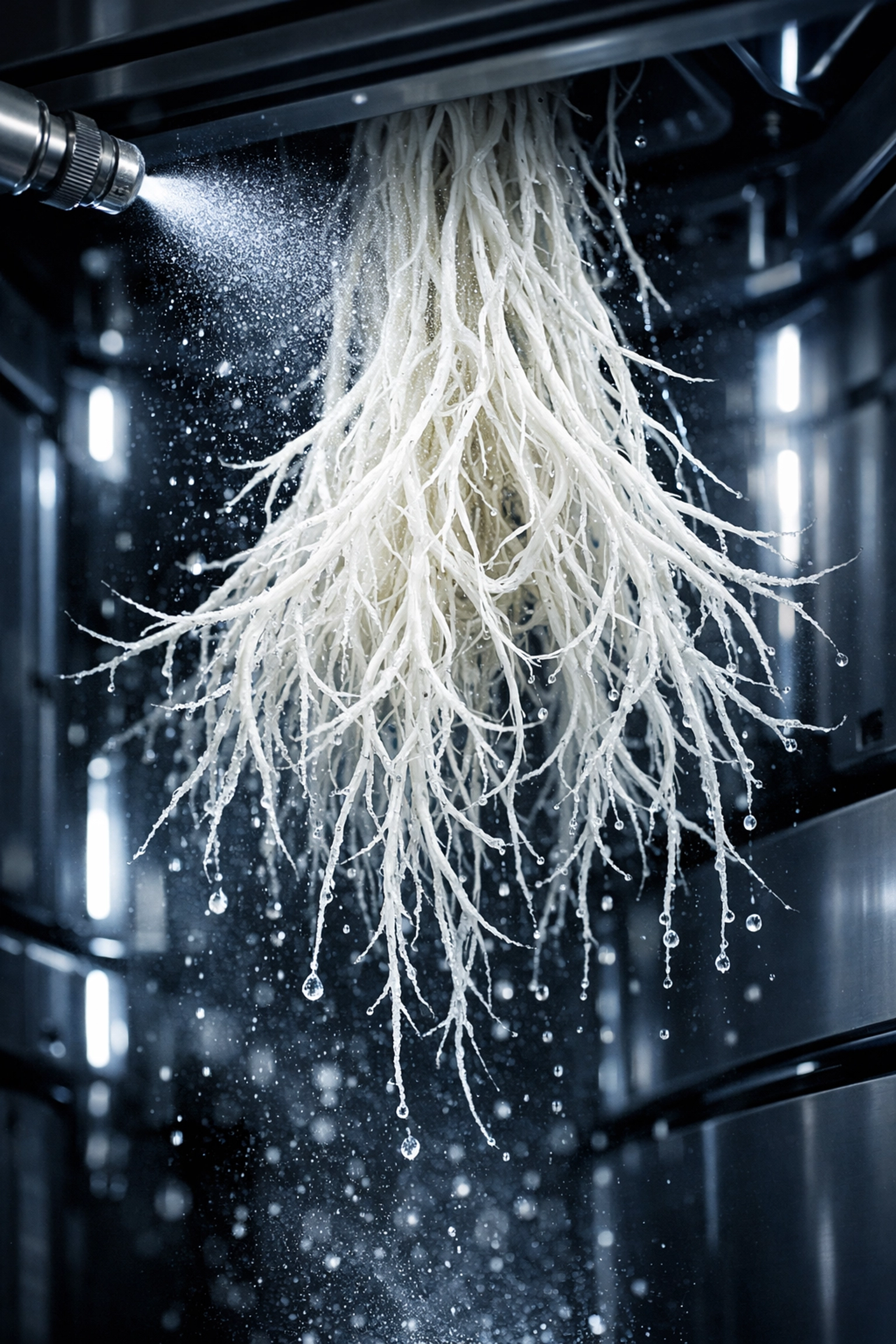
Aeroponics is the "high-performance" tier of urban gardening. Instead of sitting in water, plant roots hang in the air and are periodically misted with a high-pressure nutrient solution.
The technical advantage here is oxygenation. Because the roots are exposed to the air 100% of the time, they absorb nutrients and oxygen much more efficiently than in soil or even traditional hydroponics. Research shows that aeroponic systems can reduce water usage by up to 95% compared to traditional farming and can increase growth rates by 30% to 50%.
The IoT Backbone: Sensors and Automation
The biggest barrier to entry for gardening has always been the "black thumb": the tendency to forget to water or feed plants. In 2026, automation has solved this through integrated IoT stacks.
Precision Monitoring
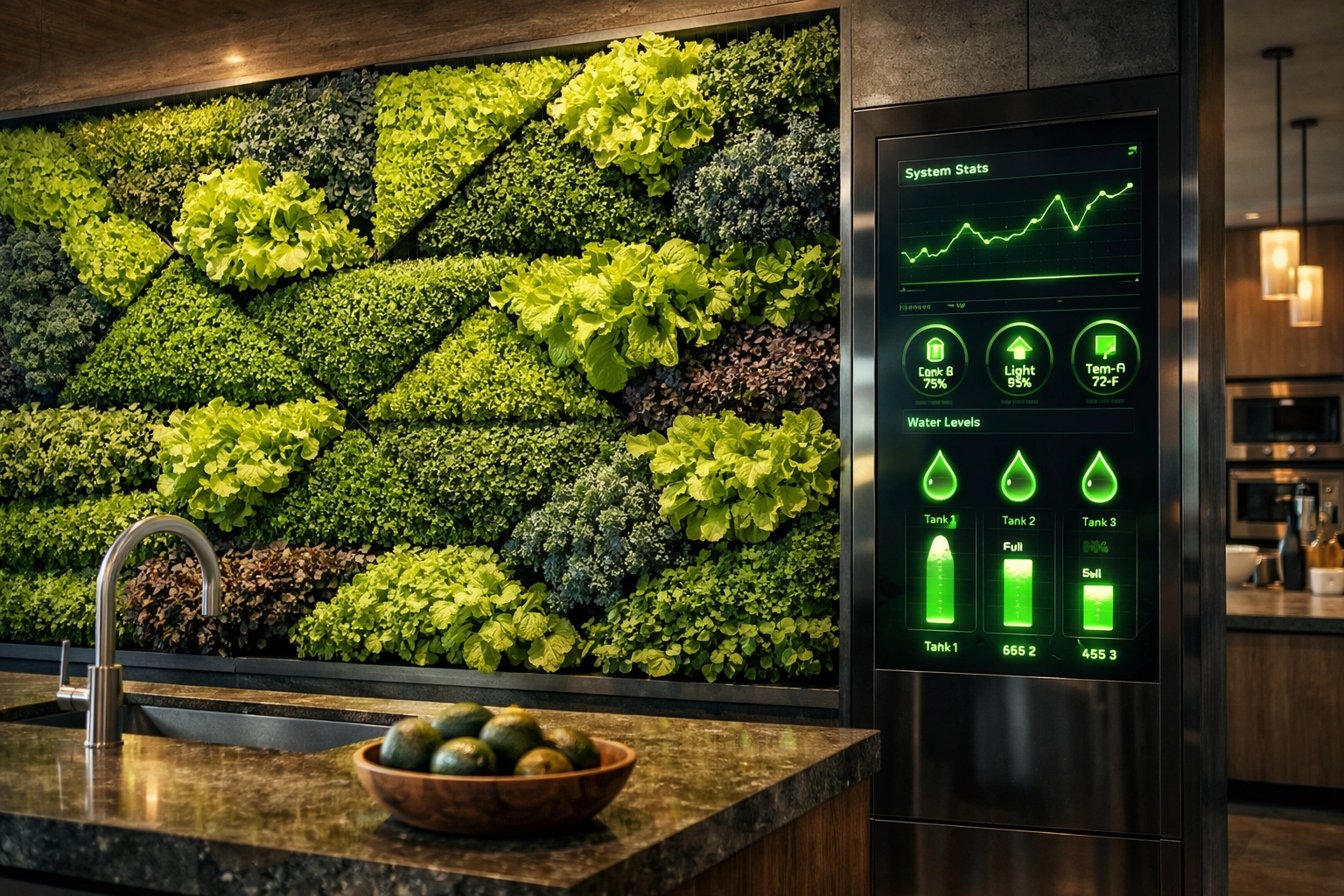
A high-tech indoor garden isn't complete without a suite of sensors. To maintain a "set it and forget it" system, the following metrics are tracked in real-time:
- pH Sensors: Maintaining a pH between 5.5 and 6.5 is critical. If the water becomes too alkaline or acidic, the plant enters "nutrient lockout," where it can no longer absorb minerals regardless of how many are present.
- EC (Electrical Conductivity) Sensors: These measure the "salinity" of the water, which tells the system exactly how much fertilizer is dissolved.
- DO (Dissolved Oxygen) Probes: Particularly in DWC systems, ensuring the water is oxygenated prevents root rot (Pythium).
- Hygrometers and Thermometers: Urban apartments can get incredibly dry, especially with HVAC systems. Smart gardens now trigger ultrasonic humidifiers to keep the local micro-climate at an optimal 50-60% humidity.
AI-Driven Micro-Management
Systems like the Gardyn or DIY setups running on Home Assistant use computer vision to monitor leaf health. By utilizing a small camera and a machine-learning model (trained on thousands of images of plant deficiencies), the system can send a notification to your phone saying, "Your Swiss Chard is showing signs of magnesium deficiency; adjusting nutrient dose now."
Lighting Science: PAR, Not Lumens
One of the most common mistakes in urban gardening is using "bright" lights that are actually useless for plants. Plants don't care about lumens (which measure brightness to the human eye); they care about PAR (Photosynthetically Active Radiation).
The Shift to Full-Spectrum LEDs
In the early days of indoor tech, "blurple" (blue and red) lights were the standard. While they targeted the chlorophyll absorption peaks, they made it impossible to inspect your plants for pests or disease.
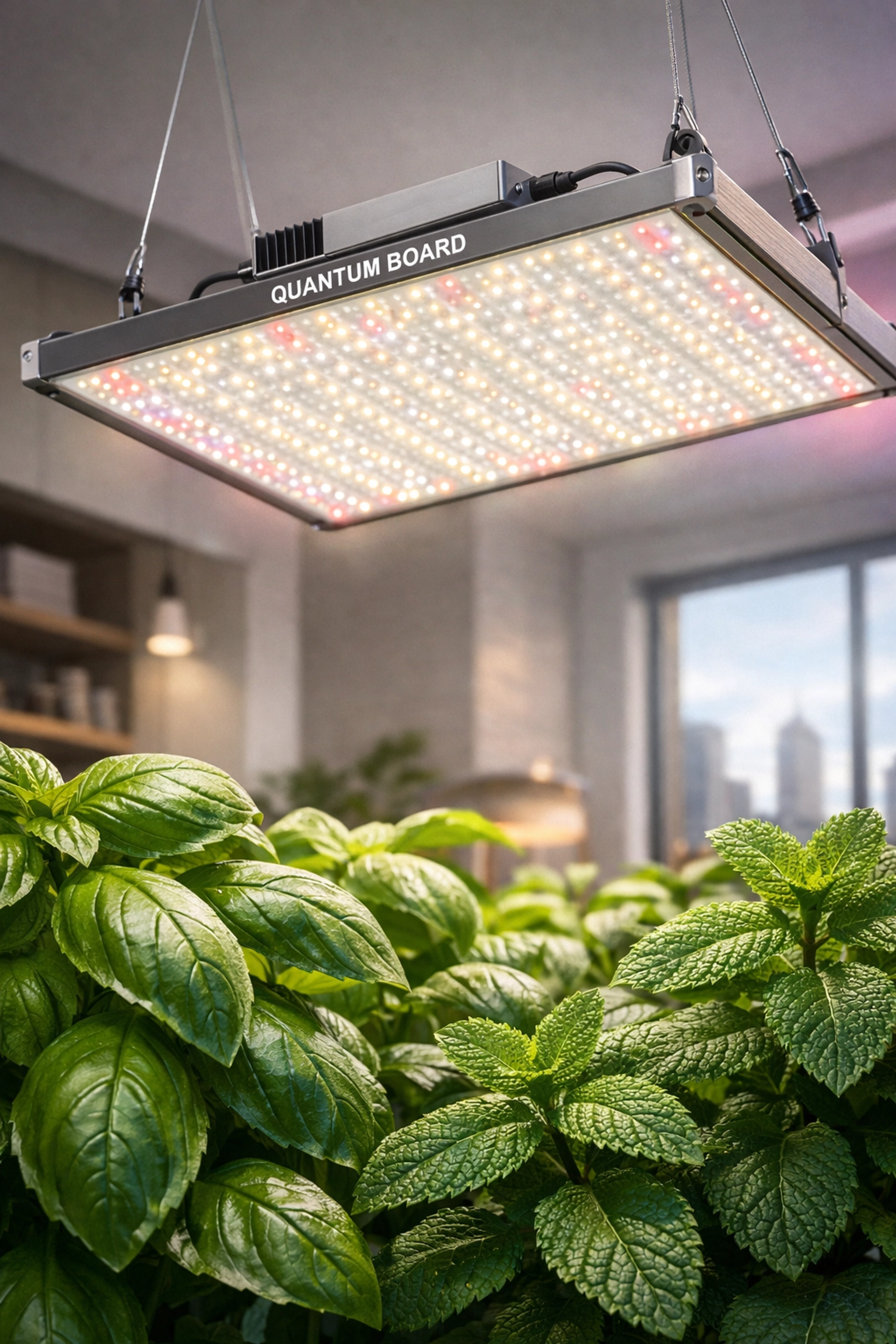
Today’s high-tech solutions use COB (Chip on Board) LEDs or Quantum Boards. These provide a full-spectrum white light that mimics the sun, including ultraviolet (UV) and far-red (FR) wavelengths. UV light, in small doses, encourages the production of secondary metabolites: this is what makes your indoor basil smell more pungent and your peppers taste hotter.
Photoperiod Automation
Modern systems allow you to simulate "Sunrise" and "Sunset" by gradually dimming the LEDs. This reduces the stress on the plants' vascular systems. Furthermore, by manipulating the photoperiod (the amount of light vs. dark), you can trick plants into staying in a "vegetative" state (for more leaves) or moving into a "flowering" state (for fruit).
Space-Saving Hardware: Verticality and Modular Design
When floor space is at a premium, you have to go up.
Vertical Towers
The "Tower Garden" model is the gold standard for balcony and corner gardening. These systems use a central column to pump water to the top, which then trickles down through a series of "pockets" holding the plants. A single tower occupying only 3 square feet can hold up to 30 plants.
Modular Living Walls
For those who want aesthetics alongside utility, modular living walls have become a staple of biophilic interior design. These systems are often "plumbed-in" to the home’s water supply (with a backflow preventer) and use a felt-based or rockwool medium. They act as both a food source and a natural air purifier, scrubbing CO2 and VOCs (Volatile Organic Compounds) from the apartment air.
The Data: Yields and ROI
Is it actually worth it? Let’s look at the numbers.
According to data from commercial-scale vertical farms like InFarm and Agricool, which have scaled their tech down for consumer use, the efficiency gains are staggering:
- Yield Density: High-tech vertical systems can produce up to 400 times more food per square foot than traditional field farming.
- Water Efficiency: Because these are closed-loop systems (the water is recycled rather than soaking into the ground), they use 90-95% less water.
- Time to Harvest: A head of lettuce that takes 60 days in a field can be harvested in 25-30 days in a climate-controlled aeroponic system.
From a financial perspective, the ROI for a $500–$800 smart garden usually hits the break-even point within 18–24 months, depending on how much high-value produce (like microgreens or out-of-season berries) you grow.
Challenges and Technical Hurdles
It isn't all automated bliss. High-tech gardening introduces "single points of failure" that a dirt garden doesn't have.
- Power Outages: In an aeroponic system, the roots are exposed. If the power goes out and the misters stop, your plants can die within hours. High-end systems in 2026 now include small LiFePO4 battery backups to keep the pumps running for at least 12 hours.
- Biofilm and Clogging: Small-scale pumps and misting nozzles are prone to mineral buildup (scaling) or biofilm growth. Regular maintenance using a mild citric acid solution or specialized enzymes is required to keep the "veins" of the system clear.
- Noise: While pumps have become significantly quieter, the "trickle" of water or the hum of a fan can be annoying in a small studio. Decibel-rated acoustic enclosures for pumps are a common upgrade for the serious urban grower.
DIY vs. Turnkey Solutions
If you're looking to start, you have two main paths:
The Turnkey Path (e.g., Gardyn, Rise Gardens)
These are the "Apples" of the gardening world. They come with everything: the lights, the sensors, the seeds, and a subscription-based AI assistant.
- Pros: Beautiful design, extremely high success rate, minimal learning curve.
- Cons: Expensive, proprietary seed pods, monthly subscription fees.
The DIY Path (Raspberry Pi & PVC)
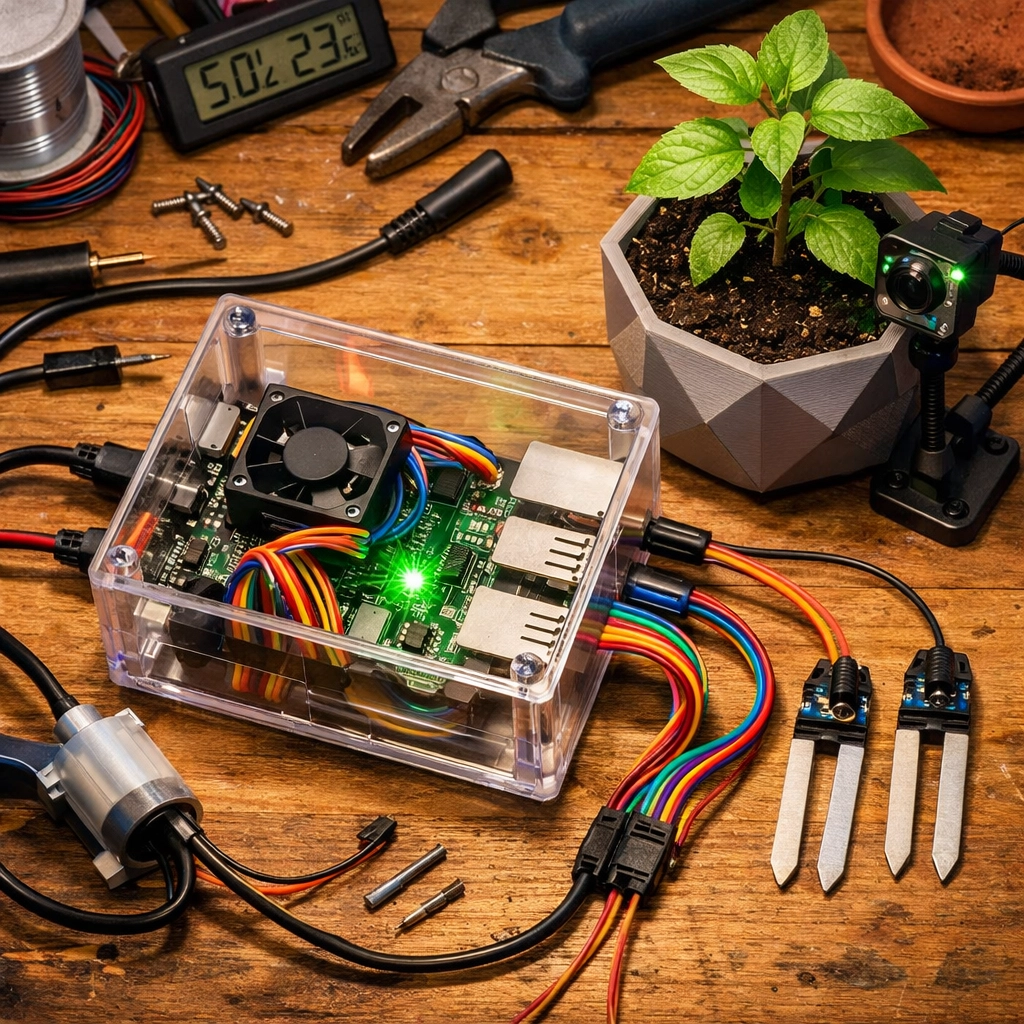
For the tech-savvy, building a system from scratch is more rewarding. Using a Raspberry Pi or an ESP32 microcontroller, you can wire up your own sensors and use Home Assistant to create a dashboard for your garden.
- Pros: Fully customizable, much cheaper in the long run, no subscriptions.
- Cons: High "tinker" requirement, looks like a science experiment in your living room.
Future Outlook: The Biophilic City
By 2030, we expect integrated "Grow-Zones" to be a standard feature in new apartment builds, much like a dishwasher or a microwave. We are moving toward a future where the supply chain for leafy greens is reduced from "thousands of miles" to "the distance between your kitchen and your living room wall."
High-tech urban gardening isn't just a hobby for gadget lovers; it’s a necessary adaptation to a world where we need to produce more with less. By leveraging IoT, advanced LED spectrums, and soil-less growing mediums, we can turn any dark corner into a hyper-productive, life-sustaining ecosystem.
About the Author: Malibongwe Gcwabaza
Malibongwe Gcwabaza is the CEO of blog and youtube, a leading digital media firm specializing in the intersection of sustainable technology and urban infrastructure. With over a decade of experience in tech leadership and a passion for decentralized food systems, Malibongwe has been at the forefront of the "Smart City" movement.
Under his leadership, the company has explored how emerging technologies: from AI-driven hydroponics to blockchain-verified supply chains: can solve modern urban challenges. When he’s not analyzing the latest in IoT hardware, Malibongwe is an avid proponent of biophilic design and spends his time optimizing his own high-altitude aeroponic systems. He believes that the future of humanity lies in our ability to integrate the natural world into our digital lives.
About the Author


